
Macrocopturus
Macrocopturus
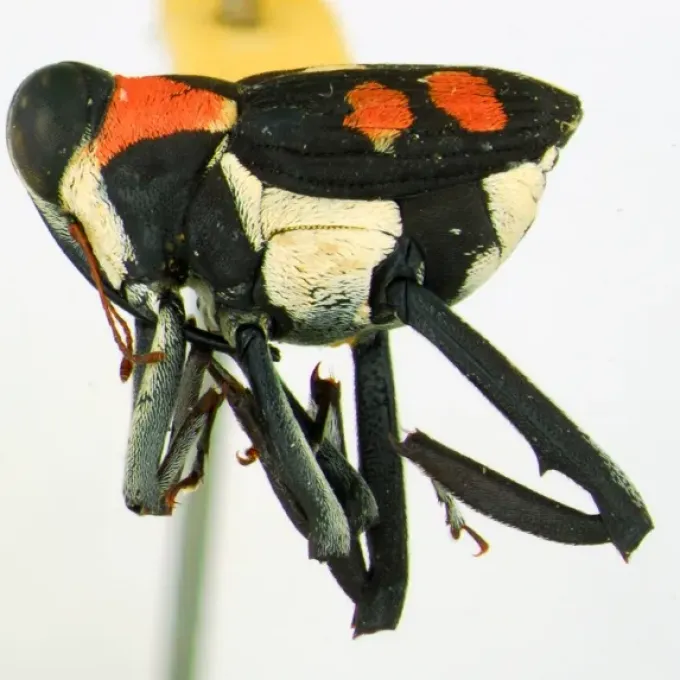
Description
How to identify
Macrocopturus is a genus of weevils (family Curculionidae) within the order Coleoptera. These beetles are characterized by their elongated rostrum and robust, often mottled bodies covered in scales that provide excellent camouflage against tree bark.
Adult insects typically measure between 3 to 7 millimeters in length. Their coloration, ranging from earthy browns to grays, allows them to blend seamlessly into their natural environment, making them difficult to spot during daytime.
The larvae are legless, C-shaped grubs with highly sclerotized heads. This anatomical feature is specialized for boring through tough plant tissues, allowing them to remain protected inside stems or branches throughout their development.
The genus includes numerous species primarily distributed across the Americas. Many species have co-evolved with specific host plants, establishing a specialized relationship that often leads to significant agricultural damage.
Identification of specific species usually requires detailed examination of morphological structures, particularly genitalia, as many members of the genus appear nearly identical to the naked eye.
What it damages
The primary damage is caused by the larval stage. As they feed, they bore intricate galleries within the plant's internal tissues, disrupting the flow of water and nutrients essential for the plant's survival.
Macrocopturus species are known to infest various woody plants, including crops of economic importance. The larvae focus their efforts on branches, stems, or fruits depending on the species-specific host preference.
In response to the internal tunneling, plants often form galls or irregular swellings. These structures serve as protection for the larvae but significantly weaken the overall structural integrity of the affected plant.
Mass infestations lead to the wilting and eventual death of branches. In severe cases, particularly with young trees, the entire plant may perish if the damage to the conductive tissue is extensive enough.
Fruit damage, occurring when larvae infest the reproductive organs, leads to severe deformity, premature abscission, and render the harvest commercially non-viable due to loss of quality.
When it appears
The biological cycle of Macrocopturus is deeply influenced by regional climate patterns. In tropical and subtropical regions, breeding cycles may be continuous, provided there is a steady supply of host plants.
Adult beetles are most active during the host plant's peak growth phases. During this time, females seek out suitable oviposition sites, typically making small incisions in the bark or tender stems to deposit their eggs.
Upon hatching, larvae immediately bore into the plant tissue. This internal lifestyle provides a consistent microclimate and shields them from environmental fluctuations and many common predators found in the canopy.
Pupation occurs within the plant itself, inside a specially prepared chamber. The time required for this transition is regulated by temperature, making it a predictable phase that agronomists can utilize for management.
Understanding the synchronization between beetle activity and plant phenology is vital for effective pest management, allowing for precise timing of interventions before the next generation of larvae begins boring.
Signs of infestation
The most reliable sign of a Macrocopturus infestation is the presence of small, circular exit holes on the bark or stems. These holes are created by the adults as they emerge from the plant.
Observers often find "frass" or boring dust accumulation near these holes. This material consists of excreted matter and wood particles, which serves as a clear indicator of active tunneling by larvae inside.
Deformations, such as localized swelling or galls on the branches, are visible symptoms that the plant is attempting to wall off the damage caused by the feeding larvae.
The sudden yellowing or dieback of isolated branches during the growing season, while the rest of the plant appears healthy, is a classic sign of internal vascular disruption.
- Tiny, perfectly round exit holes on branches.
- Accumulations of sawdust or frass on the bark surface.
- Unusual galls or tumor-like growths on stems.
- Unexpected wilting of specific limb sections.
Control measures
Sanitation is the cornerstone of control. Pruning and immediate burning of infested plant parts drastically reduce the population by eliminating larvae before they can mature into adults.
Chemical control focuses on the application of systemic insecticides during the peak adult activity window. These compounds are absorbed by the plant, targeting the beetles as they graze on the bark.
Biological control alternatives, such as the use of entomopathogenic fungi, are being explored to target larvae inside their galleries, offering a sustainable way to suppress populations without harming beneficial insects.
Maintaining high plant vigor through proper nutrition and irrigation is essential. Healthy plants exhibit faster wound healing and greater tolerance to larval feeding, reducing the overall impact of the infestation.
Implementation of a monitoring program using pheromone or sticky traps allows for the early detection of adult migration, ensuring that control measures are deployed only when thresholds are exceeded.
Taxonomy
- Latin name
- Macrocopturus
- Order
- Coleoptera (beetles)
- Family
- Curculionidae
- EPPO code
- MCPTSP
Discussion
No discussions yet — be the first.