
Macrocheles robustulus
Macrocheles robustulus
Description
How to identify
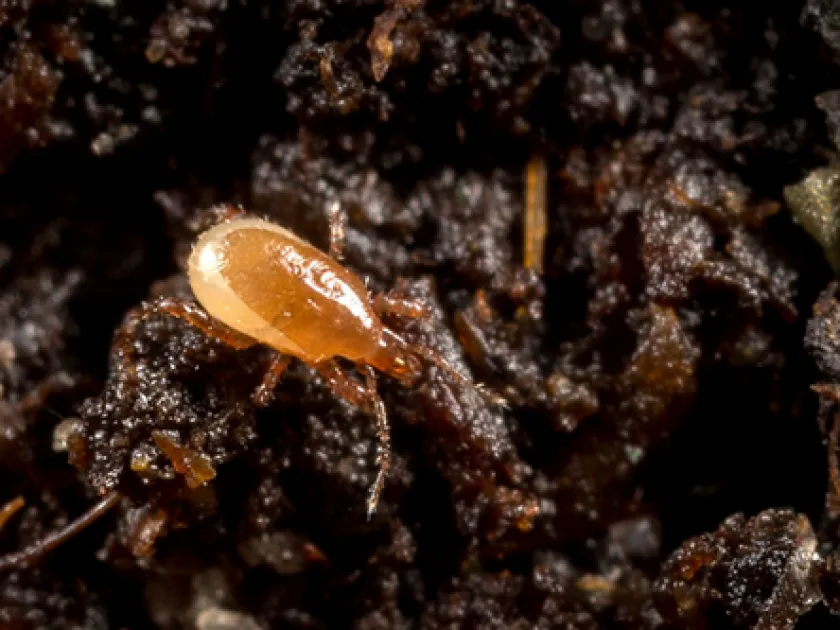
Macrocheles robustulus is a soil-dwelling mite belonging to the family Macrochelidae and the order Mesostigmata, often studied for its complex ecological role.
The adult mite is oval in shape, typically measuring between 0.5 and 0.8 mm in length, and displays a characteristic brownish coloration.
The biological cycle progresses through egg, larva, protonymph, deutonymph, and adult stages, allowing for rapid population growth under favorable conditions.
It prefers high-humidity environments and substrates rich in organic matter, where it thrives and reproduces effectively.
The mite exhibits phoresy, attaching itself to insects to move across different areas, which contributes to its rapid dispersal within greenhouse environments.
What it damages
The damage caused by this species is primarily observed in vegetables and ornamental plants cultivated in peat-based or organic-rich greenhouse substrates.
Key crops at risk include tomatoes, cucumbers, peppers, and various nursery-grown floral species that require consistent soil moisture.
The primary target of this pest is the delicate root system, especially in young seedlings or plants with recently developed root structures.
By feeding on root tissues, the mites impair the plant's ability to absorb water and nutrients, leading to stunted growth and reduced vigor.
Severe infestations can lead to significant crop loss, particularly in commercial greenhouses where large populations of mites can develop rapidly.
Signs of infestation
The initial signs of infestation include unexplained yellowing of lower leaves and a lack of vitality in the plant despite adequate fertilization.
Examination of the roots often reveals necrotic lesions and browning, which are typical symptoms of damage caused by root-feeding mites.
Visible symptoms also include a failure of the plants to thrive or reach maturity, often manifesting as a prolonged phase of stunted development.
Microscopic inspection of the upper layer of the growing medium may reveal the presence of the mites, especially in areas with localized high moisture.
Because these symptoms mimic other root diseases, growers often mistake the damage for fungal infections, delaying correct identification and treatment.
Control measures
Successful management of Macrocheles robustulus starts with stringent cultural practices, including the sterilization of potting media before planting.
Managing the moisture levels in the substrate is critical; keeping the soil surface relatively dry helps to restrict the mite's ability to proliferate.
Biological control agents, such as entomopathogenic fungi like Beauveria bassiana, have shown efficacy in suppressing mite populations in greenhouse settings.
In cases where biological measures are insufficient, targeted soil-applied acaricides may be used, though careful adherence to labels is mandatory.
Routine monitoring of the root zones and employing strict hygiene protocols within the greenhouse are the best strategies to prevent significant outbreaks.
Taxonomy
- Latin name
- Macrocheles robustulus
- Order
- Mites
- Family
- Macrochelidae
- EPPO code
- MACHRO
Discussion
No discussions yet — be the first.