
Forster's Tortrix
Lozotaenia forsterana
Description
How to identify
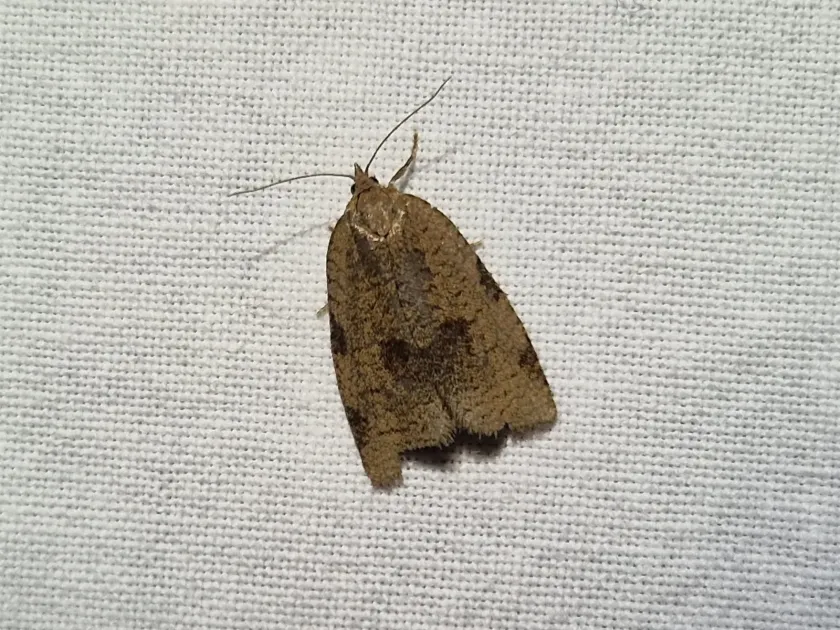
Forster's Tortrix (Lozotaenia forsterana) is a moth belonging to the family Tortricidae, known as leafrollers. The adult moth typically has a wingspan of 18–26 mm, with a pale yellow to brownish ground color on the forewings, marked with darker, wavy bands.
The larvae, or caterpillars, grow up to 20–25 mm in length. Their appearance is generally characterized by a dirty green or brownish body with a darker head and thoracic plate, which helps them blend into the foliage of their host plants.
One of the most distinct behaviors of these larvae is their agility. When disturbed, the caterpillar quickly drops from the leaf, suspended by a fine silk thread, allowing it to escape predators or physical removal efforts by the gardener.
Pupation occurs within the safety of the foliage. The caterpillar spins a small, protected chamber by binding leaves together with silk, providing a secure environment for the pupa to develop until the adult moth emerges.
Eggs are laid in batches, appearing as small, flat, tile-like clusters on the upper surfaces of leaves. These egg masses are often difficult to spot due to their cryptic coloration, which perfectly matches the texture of the leaf surface.
What it damages
This species is highly polyphagous, meaning it feeds on a wide range of host plants. It is commonly found on fruit trees like apples, pears, and plums, as well as various berry bushes, including currants and gooseberries, and even ivy.
The larvae are responsible for the damage. Young larvae skeletonize the leaves by eating the soft tissue between the veins, while older larvae create large, irregular holes that significantly impair the plant's ability to photosynthesize effectively.
In cases of high infestation, larvae may move from foliage to young fruitlets. By burrowing into the developing fruit, they cause physical deformation, rot, and premature fruit drop, leading to significant yield losses for the grower.
The habit of binding leaves together creates a protective micro-environment where the larvae can feed safely. This webbing disrupts the structural integrity of the leaf and can cause the plant to look ragged and unkempt.
Chronic infestation weakens the overall health of the host plant. By continuously consuming leaf area throughout the growing season, the larvae reduce the energy reserves stored by the tree for winter, making it susceptible to secondary stressors.
When it appears
Forster's Tortrix typically completes one generation per year. Its life cycle is finely tuned to the local climate, ensuring that the most vulnerable stages of development occur when environmental conditions are optimal for survival.
The species overwinters as young larvae. They construct sturdy, silk-lined overwintering hibernacula in crevices of tree bark or within clusters of dead leaves that remain attached to the branches, protecting them from cold winter temperatures.
In the spring, as temperatures rise above 10°C, the larvae emerge from their winter shelters and begin feeding on developing buds and young, tender leaves, coinciding with the early growth phase of the trees.
Adult moths are typically active during the summer months, with the flight period usually occurring in June and July. During this time, they mate and lay eggs on the leaves, starting the next generation's cycle.
Environmental factors such as rainfall and humidity play a critical role in the population dynamics of the pest. Excessive heat or prolonged drought can sometimes suppress populations by impacting the survival rate of the larvae in their webbed nests.
Signs of infestation
The most visible sign of an infestation is the presence of rolled or folded leaves. If you see leaves stuck together with silken webbing, you can be fairly certain that a tortrix larva is hiding inside the structure.
Small, granular droppings (frass) visible on the surfaces of leaves below the webbed nests are a clear indicator of active feeding. This provides a diagnostic clue that the caterpillar is currently present and feeding within that area.
Damaged buds in the early spring are another key sign. If the buds fail to open or show signs of being chewed from the inside, it suggests that the larvae have targeted the vital growing points of the plant, potentially limiting future growth.
The appearance of necrotic, brown, or dried-out patches on the foliage suggests that the larva has been feeding in that spot for a prolonged period, causing tissue death that extends beyond the immediate area of consumption.
While adult moths are mostly nocturnal, they can sometimes be seen fluttering around the canopy on calm summer evenings. Monitoring for this behavior can provide an early warning of an impending egg-laying period in your garden.
Control measures
Cultural control is the first line of defense. Regularly removing fallen leaves and pruning away heavily infested branches during the dormant season helps eliminate overwintering sites, significantly reducing the population for the following year.
For smaller infestations, manual removal of the webbed leaf nests is highly effective. By inspecting plants regularly and crushing the larvae inside the rolled leaves, you can prevent the damage from spreading without using chemicals.
Biological control, including the use of sprays containing Bacillus thuringiensis, is a targeted and environmentally friendly option. This bacteria specifically affects the caterpillars while leaving beneficial insects, such as bees, unharmed.
Using pheromone traps or sticky traps can help monitor the population levels of adult moths. These tools are useful for determining the timing of control measures, ensuring that treatments are applied when they are most effective.
Chemical intervention should be considered a last resort when infestation levels are severe. If insecticides are required, they should be applied early in the larval development stage to maximize efficacy and minimize the impact on the garden's ecosystem.
Taxonomy
- Latin name
- Lozotaenia forsterana
- Order
- Lepidoptera (butterflies)
- Family
- Tortricidae
- EPPO code
- LOZOFO
Discussion
No discussions yet — be the first.