
Garden leafroller
Lozotaenia cupidinana
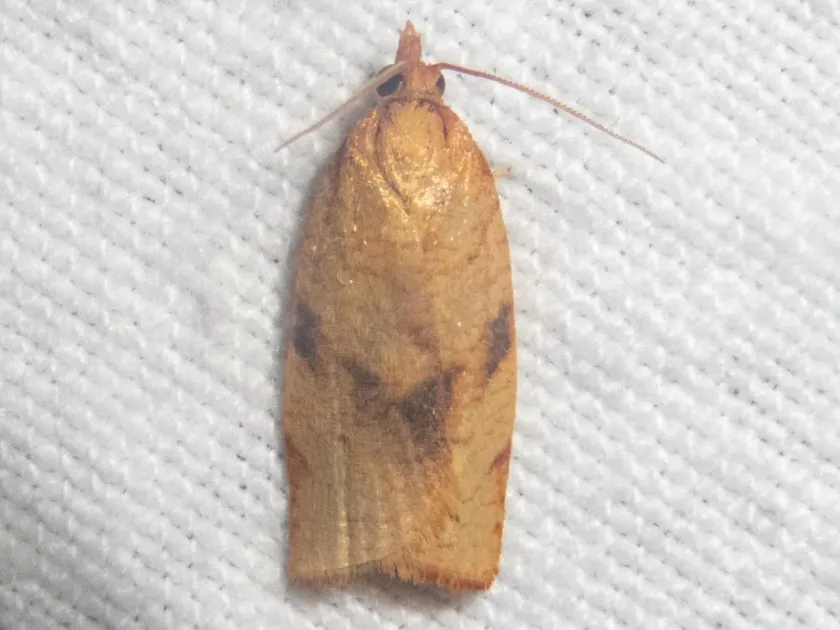
Description
How to identify
The garden leafroller (Lozotaenia cupidinana) is a moth belonging to the Tortricidae family. It is a recognized pest that affects various woody plants and fruit-bearing trees within temperate climates.
Adult moths have a wingspan typical for the genus, characterized by brown-patterned forewings that provide excellent camouflage against tree bark. The hindwings are generally lighter in shade.
The larvae are the primary damaging stage. They are typically cylindrical with a distinct head capsule and move with a characteristic wiggling motion when disturbed, often dropping on a silk thread.
The life cycle is synchronized with the vegetative season of the host plants. Depending on the region, the species may have one or more generations per year, with pupation occurring within protected leaf rolls.
Correct identification often involves examining the specific pattern on the moth's wings or monitoring adult activity via specialized pheromone traps during the mating season.
What it damages
The garden leafroller larvae feed on young foliage, buds, and fruit, causing significant physiological stress to the host plants during the critical early-season growth phase.
By spinning silk webs to pull leaves together, the larvae create protective shelters. These structures hinder the plant's ability to maximize sunlight capture for photosynthesis.
In orchards, larvae may feed on the surface of developing fruits, leaving scars that reduce the commercial value and marketability of the produce.
The damage to growing tips and terminal buds can result in the loss of apical dominance, leading to stunted or distorted growth of the affected branches.
Severe infestations can lead to partial defoliation, which reduces the plant's carbohydrate reserves and impacts its ability to set fruit in the following season.
Signs of infestation
The most prominent sign of infestation is the presence of rolled or folded leaves held together by delicate, white silken webbing that is easily seen upon close inspection.
Brownish frass (excrement) pellets found within the rolled leaf shelters are a sure indicator of larval activity and recent feeding.
Small holes or irregular feeding marks on the margins of leaves, especially on new terminal growth, are common early-season symptoms of the pest's presence.
Unexpected flower bud or fruit drop can sometimes be linked to larval boring or feeding, which weakens the attachment points of the reproductive organs.
The presence of adult moths during twilight hours around the canopy indicates that oviposition (egg-laying) is likely occurring, signaling the start of a new generation.
Control measures
Integrated Pest Management (IPM) is the most sustainable approach, starting with regular field scouting to monitor larval populations and moth flight patterns.
Manual removal of infested, rolled leaves is a practical and effective cultural control method for smaller gardens or during the early stages of an outbreak.
Encouraging natural predators and parasitoids, such as lacewings and parasitic wasps, can help suppress leafroller populations without the need for chemical intervention.
If chemical application is necessary, timing is crucial. Applications should target the young larvae before they become fully protected within the tightly rolled leaf shelters.
Always utilize selective insecticides to preserve beneficial insect populations and ensure that all treatments follow local safety regulations and label instructions for the specific crop.
Taxonomy
- Latin name
- Lozotaenia cupidinana
- Order
- Lepidoptera (butterflies)
- Family
- Tortricidae
- EPPO code
- LOZOCU
Discussion
No discussions yet — be the first.