
Loricula
Loricula
Description
How to identify
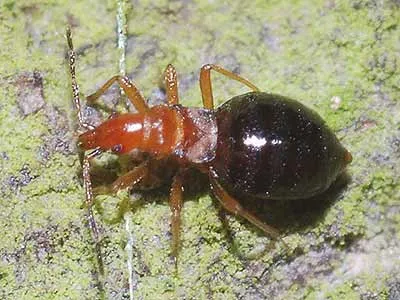
Loricula is a genus of minute bugs belonging to the family Microphysidae. These insects are very small, typically measuring only 2 to 3 mm in length, making them difficult to detect in the field.
The genus displays significant sexual dimorphism, where males are often winged and capable of flight, while females are frequently brachypterous (short-winged) or entirely wingless.
Their bodies are flattened and usually dark brown or black in color, which provides excellent camouflage against tree bark or plant debris.
They possess a short but robust proboscis, adapted for piercing plant tissues to extract sap or for preying upon other small arthropods.
Nymphs resemble the adults in structure but are smaller and exhibit cryptic behavior, often remaining hidden in crevices throughout their life cycle.
What it damages
Loricula bugs act as both facultative predators and phytophagous insects, capable of feeding on various woody plants and shrubs.
They primarily damage young shoots, buds, and fruitlets by sucking cell sap, which leads to stunted growth and deformation of the plant's vegetative parts.
Feeding punctures serve as entry points for secondary infections, including fungal spores and bacteria, which can cause localized necrosis or tissue decay.
In orchards, their feeding activity can reduce overall vigor and yields, especially in nursery settings where young plants are most susceptible.
Because of their small size, the damage is often overlooked until significant symptoms of plant decline, such as yellowing or leaf curling, become apparent.
When it appears
Adult activity of Loricula typically begins in early spring, synchronized with the onset of favorable temperatures and plant growth.
They overwinter primarily as eggs or adults, seeking refuge in crevices of tree bark, under bud scales, or within organic matter on the soil surface.
The highest levels of activity occur during the bud-burst and flowering stages, when plants have a high concentration of nutrients in their tender tissues.
One or two generations per year are common, depending on regional climatic conditions and the availability of suitable hosts.
As autumn approaches, activity decreases as insects seek out protected overwintering sites to survive the cold season.
Signs of infestation
Detecting Loricula is often achieved through the identification of indirect signs of feeding rather than direct observation of the insects.
Characteristic symptoms include pinpoint necrosis on foliage, which may expand and eventually lead to leaf desiccation or premature abscission.
- Stippling or small puncture marks on young stem tissues.
- Deformed or dried-up buds that fail to open correctly.
- Leaf curling or localized chlorosis around feeding sites.
- Presence of shed exoskeletons on bark surfaces during inspections.
The use of a hand lens for inspecting bark crevices or the tap-sampling method is recommended for accurate detection of the pest.
Control measures
Effective management of Loricula relies on an integrated pest management (IPM) strategy that combines cultural and chemical approaches.
Sanitation measures, such as removing loose bark and pruning damaged wood, are essential to destroy overwintering habitats.
Insecticides with contact or systemic action may be applied during the early season if population thresholds indicate a high risk of crop loss.
Preserving natural enemies, including predatory mites and beneficial insects, is crucial for maintaining ecological balance and natural pest suppression.
Regular monitoring of plant health throughout the growing season is necessary to implement timely interventions and prevent significant infestations.
Taxonomy
- Latin name
- Loricula
- Order
- Hemiptera (bugs, aphids, leafhoppers)
- Family
- Microphysidae
- EPPO code
- LORCSP
Discussion
No discussions yet — be the first.