
Lophopus crystallinus
Lophopus crystallinus
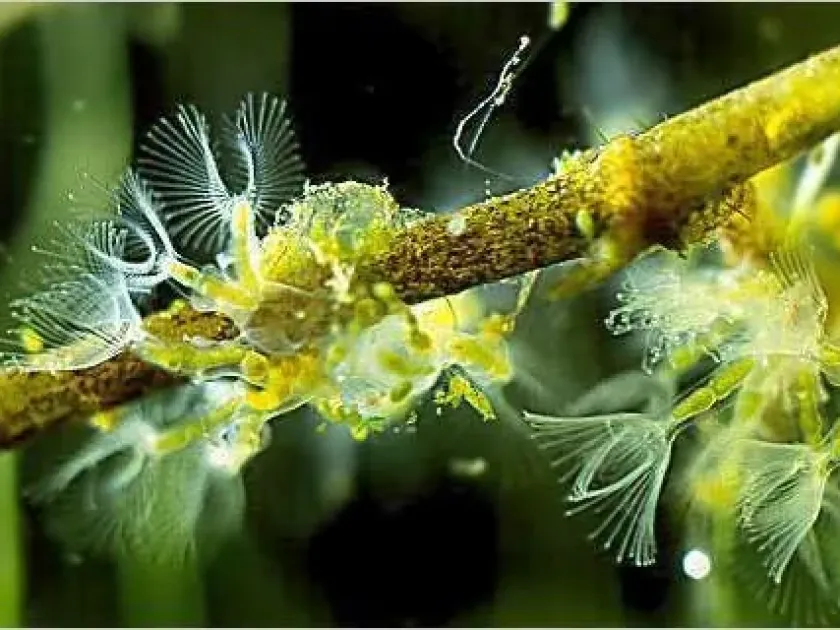
Description
How to identify
Lophopus crystallinus is a colonial freshwater organism belonging to the phylum Bryozoa. These organisms are not insects but act as significant members of aquatic ecosystems.
Colonies typically appear as gelatinous, transparent masses, often with a distinctly branched structure. Inside the transparent envelope, individual zooids are visible, attached to the substrate by a powerful base.
The species is known for its ability to form large aggregations that can cover significant surface areas on submerged objects or infrastructure.
Systematically, this organism belongs to the class Phylactolaemata and the family Lophopodidae. It prefers clear, slow-flowing, or stagnant freshwater with sufficient dissolved oxygen levels.
Reproduction occurs both sexually and through the formation of statoblasts — specialized buds capable of surviving harsh environmental conditions.
What it damages
Lophopus crystallinus acts as a specific biological pest in aquaculture facilities and industrial systems used for growing aquatic crops.
The main damage is caused by the excessive growth of colonies on filters, pipes, and water intake screens, which leads to equipment clogging and obstructed water flow.
During massive outbreaks, these bryozoan colonies compete for nutrients with phytoplankton, which is essential for the growth of fish fry in aquaculture ponds.
In recirculating aquaculture systems (RAS), the accumulation of decaying colonies degrades water quality by increasing ammonia levels and reducing transparency.
While bryozoans do not consume crops directly, their presence in irrigation channels creates critical obstructions for pump and filtration operations.
When it appears
The active vegetation and growth phase of the colonies begins when water temperatures rise to 15–20 degrees Celsius.
Peak population density is typically observed in summer months when biological processes in water bodies are at their most intense.
As autumn approaches or temperatures drop, colonies begin to die off, forming a large number of overwintering statoblasts.
The appearance of new colonies from statoblasts is strictly tied to the warming of bottom water layers during the spring season.
The life cycle of an individual colony is limited to one season, though the accumulated statoblasts ensure the population's annual resurgence.
Signs of infestation
The first sign of a bryozoan infestation is the formation of slimy, translucent growths on concrete or metal surfaces submerged in water.
A noticeable drop in pump efficiency and decreased filter capacity occur due to the accumulation of organic biofilms and colonial structures.
Visual inspection of the water body may reveal specific jelly-like clumps attached to aquatic plant stems or bridge supports.
Reduced dissolved oxygen levels at night indicate the onset of colony decomposition or an excessive concentration of organic matter.
- Reduced water flow in technical irrigation channels.
- Presence of transparent gelatinous fragments in water samples.
- Clogging of mesh filters with specific biological biomass.
Control measures
The most effective control method is mechanical cleaning of surfaces during the period preceding mass reproduction.
In aquaculture, temporary pond drainage is used, causing statoblasts to desiccate and die under exposure to sunlight.
The use of ultraviolet sterilizers in water supply systems helps eliminate larval stages, preventing them from attaching to substrates.
Chemical methods involving copper-based preparations exist, but their use is strictly regulated due to toxicity to fish and other aquatic life.
Maintaining high water flow velocity in technical networks prevents colonies from anchoring, as bryozoans prefer stable, low-current conditions.
Taxonomy
- Latin name
- Lophopus crystallinus
- Family
- Lophopodidae
- EPPO code
- LPHSCR
Discussion
No discussions yet — be the first.