
Black pepper weevil
Lophobaris piperis
Description
How to identify
The Black pepper weevil (Lophobaris piperis) is a significant coleopteran pest belonging to the family Curculionidae.
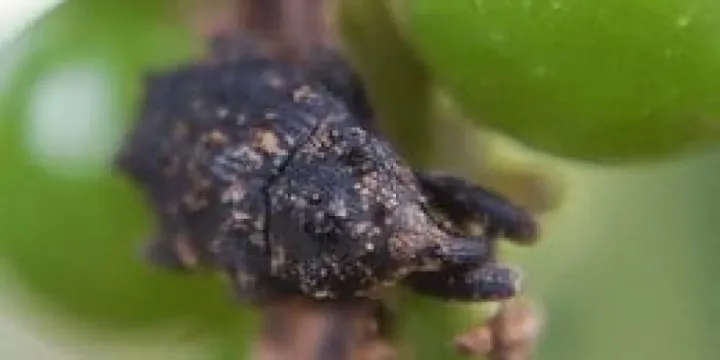
The adult insect is small, typically ranging from 5 to 7 millimeters in length, with a dark, almost black exoskeleton that provides effective camouflage.
The defining feature of this weevil is its elongated rostrum (snout), which is used by females to bore holes in the plant tissue for oviposition.
Larvae are legless, fleshy, and yellowish-white, dwelling exclusively within the internal tissues of the pepper vine, making them extremely difficult to detect.
Pupation occurs within the stems of the host plant in specialized chambers created by the mature larvae before they transform into adults.
What it damages
The primary host of this pest is the black pepper plant (Piper nigrum), which is highly susceptible to tissue damage caused by the larvae.
Larval feeding destroys the internal vascular tissues of stems and fruit stalks, effectively cutting off the supply of water and nutrients.
This disruption of vascular transport leads to the wilting and subsequent necrosis of branches, which can eventually kill the entire vine.
The destruction of fruit stalks leads to significant yield losses, as berries fail to develop properly and fall prematurely from the plant.
Severe infestations weaken the plant's overall architecture, making it more susceptible to secondary infections by pathogens and environmental stress.
When it appears
The life cycle of the Black pepper weevil is continuous in tropical environments, meaning generations overlap throughout the year.
Adult weevils are most active during warm, humid periods, seeking out young stems to feed on and subsequently lay their eggs.
The rate of reproduction is heavily influenced by ambient temperature, with higher temperatures often accelerating the developmental stages.
Farmers typically observe higher populations during the active growth phases of the pepper crop, as tender vegetation is preferred for oviposition.
As adult weevils emerge from the stems, they become mobile, facilitating the spread of the infestation to adjacent healthy vines within the plantation.
Signs of infestation
One of the earliest signs of an infestation is the appearance of small, circular exit holes on the surface of the stems where adults have emerged.
Unexplained wilting of individual branches or specific sections of the pepper vine is a strong indicator of internal larval activity.
Massive abscission of flowers and unripe peppercorns is often observed, as the weevils interfere with the nutritional flow to the fruit.
Closer examination of damaged stems often reveals internal galleries and frass, confirming the presence of a developing larval population.
- Branch wilting and dieback
- Premature fruit and flower drop
- Presence of emergence holes
- Reduced plant vigor
Control measures
The most effective strategy involves stringent sanitation, including the pruning and immediate destruction of all infested plant materials.
Regular monitoring of the plantation using pheromone or sticky traps is essential to detect adult weevils before they establish a large breeding population.
Systemic insecticides are recommended for chemical control, as they can penetrate the plant tissue to reach larvae hiding inside the stems.
Biological control efforts, such as introducing parasitic wasps that target weevil larvae, can offer a sustainable long-term reduction in pest numbers.
Maintaining proper spacing and ensuring adequate aeration within the plantation helps manage the microclimate, reducing the humidity levels favored by the weevils.
Taxonomy
- Latin name
- Lophobaris piperis
- Order
- Coleoptera (beetles)
- Family
- Curculionidae
- EPPO code
- LOPBPI
Discussion
No discussions yet — be the first.