
Lonchoptera
Lonchoptera
Description
How to identify
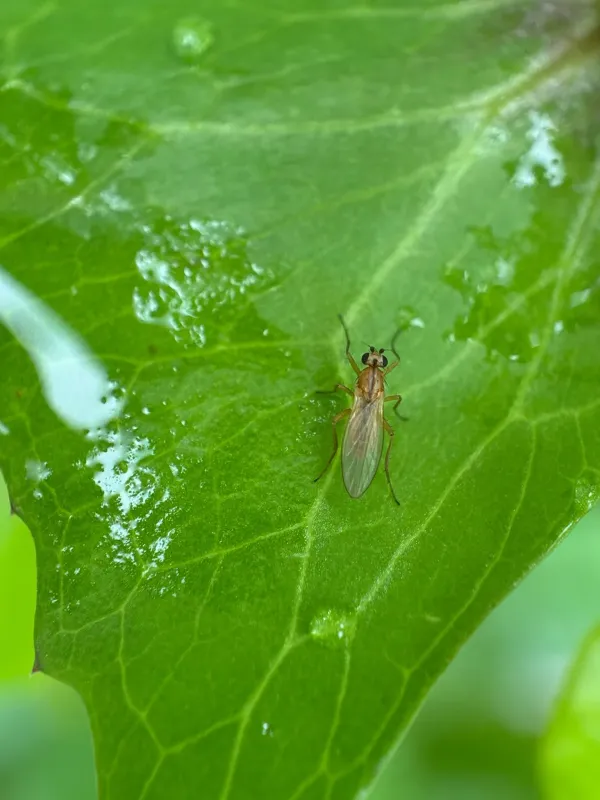
Lonchoptera, commonly known as spear-winged flies, belongs to the family Lonchopteridae. These are small, inconspicuous flies that derive their name from the pointed shape of their wings.
Adults typically measure between 2 and 5 millimeters in length. Their coloration ranges from yellowish to brown or black, allowing them to blend effectively into the soil surface and leaf litter where they reside.
The larvae are the most significant stage from an agronomic perspective. They possess a flattened, legless body that tapers at both ends, often resembling small slugs or flattened worms in appearance.
Because of their small size and cryptic habits, larvae are rarely observed by farmers during routine field inspections. They are primarily found in moist environments, specifically within the upper soil layers and decaying organic matter.
Morphological identification of the larvae requires close inspection of the mouthparts and the structure of the body segments, often necessitating a hand lens or stereomicroscope for accurate classification by field scouts.
What it damages
Lonchoptera larvae primarily act as saprophages, feeding on decaying organic material. However, under conditions of high soil moisture, they become opportunistic pests by feeding on the roots and stems of living plants.
Cereal crops and various grasses are particularly susceptible to damage. The larvae gnaw at the root systems and the base of the shoots, which severely impairs the plant's ability to uptake water and essential nutrients.
In greenhouses, these pests can cause significant damage to seedlings of vegetables. The larvae may hollow out roots, causing the plants to wilt and fail to establish, which often leads to total crop loss in localized areas.
The damage caused by these larvae often facilitates the entry of secondary pathogens, such as soil-borne fungi and bacteria. This frequently results in root rot symptoms, which may mask the primary cause of the plant's decline.
Field impact is most noticeable during periods of high precipitation. Waterlogged soils provide an ideal habitat for the larvae to move closer to the surface and attack the developing root structures of agricultural crops.
When it appears
The lifecycle of Lonchoptera is heavily influenced by environmental temperature and soil moisture levels. In favorable climates, these insects can complete multiple generations within a single growing season.
Hibernation typically occurs in the larval stage or as puparia within the soil or beneath dense vegetation debris. They emerge and regain activity as soon as the soil temperatures rise in the spring.
Population density peaks during wet, cool seasons. Prolonged rainy weather is a critical indicator for agronomists to increase field monitoring, as it creates the optimal moisture levels for larval survival and development.
During hot, dry summers, the larvae migrate deeper into the soil profile to avoid desiccation. This behavioral adaptation allows the population to persist even in less-than-ideal conditions, ready to emerge when moisture returns.
Agronomists should prioritize field checks during the early stages of crop development, as the youngest plants are the most vulnerable to damage. Early detection is crucial to preventing localized infestations from expanding.
Signs of infestation
The most common sign of infestation is stunted growth of plants that otherwise appear healthy above ground. This is usually accompanied by yellowing of the lower leaves, often mistaken for nutrient deficiencies.
When infected plants are pulled from the soil, visible damage to the root system is evident. The roots often show shallow furrows, darkened lesions, or complete necrosis, which are hallmarks of larval feeding.
Field observations may show distinct patches of weakened or wilting plants. These patches often align with areas of poor drainage or low-lying sections of the field where soil moisture remains consistently high.
Searching in the rhizosphere of affected plants, especially after irrigation or rain, often reveals the presence of the larvae. They are typically found clinging to the root crown in small clusters within the moist soil.
The presence of mold or decay at the base of the plant, combined with root tissue loss, is a strong indicator of Lonchoptera activity. If left untreated, the damage can lead to widespread plant mortality across the plot.
Control measures
Effective management of Lonchoptera centers on sound agronomic practices. The primary objective is to alter the microenvironment to make it less suitable for larval development and survival.
Improved field drainage is the most effective preventative measure. By managing water levels and ensuring that soil does not remain saturated for extended periods, the habitat for the larvae is effectively eliminated.
Cultural practices such as deep tillage help destroy overwintering sites for the larvae and puparia. Proper incorporation of crop residues is also essential to reduce the organic matter that serves as their primary food source.
When chemical intervention is required, soil-applied insecticides or systemic seed treatments can provide necessary protection during the vulnerable seedling establishment phase.
- Ensure proper field drainage and irrigation management
- Practice crop rotation to disrupt pest lifecycles
- Remove crop debris and weeds that harbor larvae
- Use systemic insecticides if population thresholds are exceeded
Taxonomy
- Latin name
- Lonchoptera
- Order
- Diptera (flies)
- Family
- Lonchopteridae
- EPPO code
- LNCPSP
Discussion
No discussions yet — be the first.