
Vanilla berry moth
Lobesia vanillana
Description
How to identify
The vanilla berry moth (Lobesia vanillana) belongs to the Tortricidae family within the order Lepidoptera. It is a specialized pest that poses a significant threat to vanilla orchids in various tropical regions.
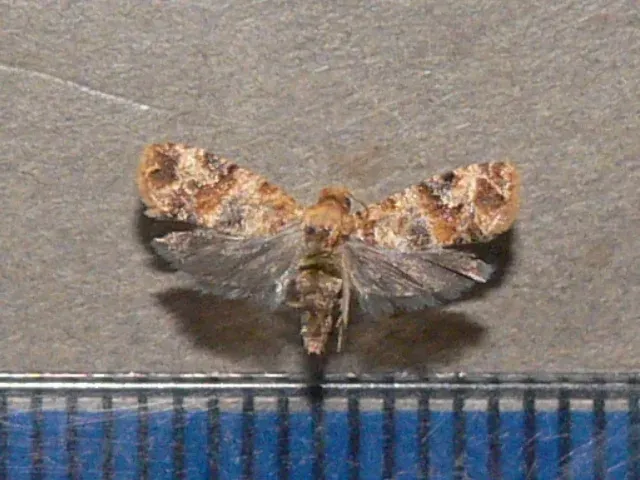
The adult moth is small, typically measuring 12–15 mm in wingspan. Its forewings exhibit a mottled pattern of brown and grey tones, which serves as camouflage against the orchid stems and leaves.
Larvae, or caterpillars, are the primary damaging stage. They exhibit a light greenish or brownish coloration, allowing them to blend in with the floral tissues of the vanilla plant.
The lifecycle consists of egg, larva, pupa, and adult stages. In tropical climates, these moths often exhibit overlapping generations, leading to constant pest pressure throughout the growing season.
Adults are nocturnal, making them difficult to observe during daylight hours, while the cryptic behavior of the larvae further complicates early pest identification.
What it damages
The primary host for Lobesia vanillana is Vanilla planifolia. The larvae target the most valuable parts of the plant: the floral buds, open flowers, and developing green seed pods.
By feeding on the reproductive organs, the larvae prevent successful pollination. When pods are already formed, the larvae bore into them, causing physical destruction and deformation of the bean.
Feeding sites often serve as entry points for secondary pathogens, including various fungal infections that can lead to rot and total loss of the affected pod.
Larvae typically use silk webbing to bind floral parts together, creating a protective enclosure that shields them from contact insecticides and environmental stressors.
In high-infestation scenarios, the cumulative damage significantly reduces the yield and quality of the vanilla harvest, creating serious economic challenges for farmers.
Control measures
Effective management requires an integrated pest management (IPM) approach. Due to the sensitivity of vanilla crops, preventive and biological measures are preferred over chemical options.
Monitoring using pheromone traps is the most reliable method for detecting initial population increases, allowing for precise timing of interventions.
Manual removal of infested buds and pods during regular maintenance cycles can significantly decrease the local larval population before they spread to healthy parts of the crop.
Biological control, specifically the release of specific parasitoid wasps, has shown promise in reducing larval density without damaging the quality of the vanilla beans.
- Regular inspection of inflorescences during the budding stage.
- Application of selective microbial biopesticides.
- Removal and incineration of crop debris to break the lifecycle.
- Maintaining healthy plant nutrition to improve resistance to infestations.
Taxonomy
- Latin name
- Lobesia vanillana
- Order
- Lepidoptera (butterflies)
- Family
- Tortricidae
- EPPO code
- CLYSVA
Discussion
No discussions yet — be the first.