
Lixus paraplectius
Lixus paraplectius
Description
How to identify
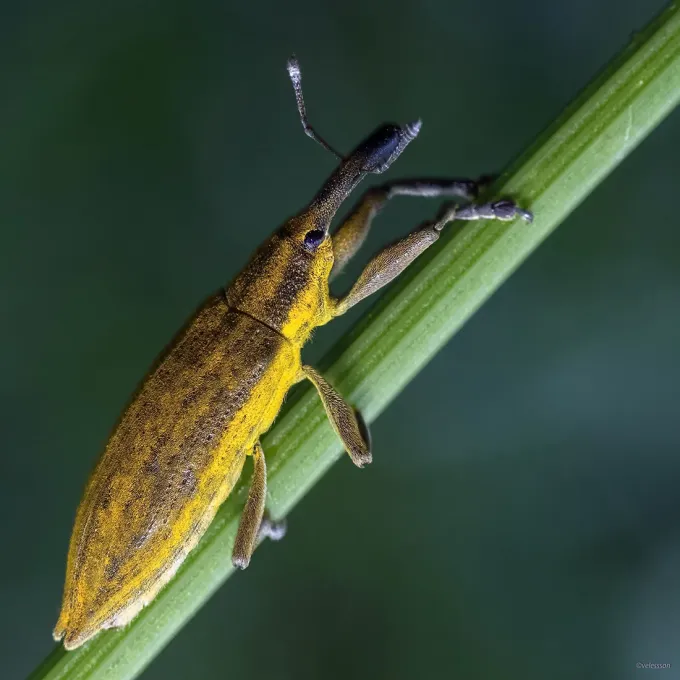
The weevil Lixus paraplectius is a member of the Coleoptera order and the Curculionidae family. These insects are known for their elongated bodies, with adults typically measuring between 15 to 20 mm in length.
The coloration of the adult beetle is generally greyish-yellow or brown, often covered with a fine, powdery substance that allows the insect to camouflage effectively against plant stems.
A long, thin rostrum (snout) is a key feature of this species, which is common among members of the Curculionidae family, aiding in feeding and egg-laying.
The larvae are typically whitish, legless, and curved, specifically adapted for living and feeding within the internal tissues of host plants.
This species is naturally associated with riparian habitats, commonly found near rivers, lakes, and wetlands where their preferred host plants are abundant.
What it damages
The primary food sources for Lixus paraplectius are plants within the Apiaceae family, including Cicuta virosa, hemlock, and various wild celery species.
In agricultural settings, this weevil can become a nuisance to specific vegetable crops or medicinal plants grown in proximity to damp, wild areas.
Adult beetles cause damage by feeding on foliage and soft green shoots, which can hinder the plant's ability to photosynthesize effectively during its growth phase.
The most significant damage is caused by the larvae, which bore through the stems, disrupting the vascular system and preventing the flow of nutrients and water.
Resulting structural damage often leads to stem deformation, stunted growth, and in severe cases, the collapse of the plant due to internal tunneling.
When it appears
Adults emerge from their overwintering sites in the spring as soon as temperatures are sufficiently warm to support active feeding and movement.
The mating and egg-laying period typically occurs between late spring and early summer, aligning with the active growth period of their host plants.
Larval development takes place throughout the summer months, with larvae tunneling deeply into the stems and growing as they consume plant tissue.
Pupation generally occurs at the end of summer or in early autumn within the plant stem, where the newly emerged adult may remain until temperatures drop.
Overwintering is carried out by adult beetles, which seek shelter under organic debris, in the soil, or within dried, hollowed-out plant stems to survive the winter.
Signs of infestation
An early indicator of infestation is the presence of small, irregular holes on the leaves and leaf stalks, created by adult feeding activity.
Careful inspection of plant stems often reveals small entry holes surrounded by slight discoloration or darkening, indicating where eggs have been deposited.
Stunted development, drooping, or sudden wilting of top shoots are classic signs that larvae are active within the plant's stem.
The presence of fine, brown "boring dust" (frass) near the base of the stem or at entry points is a clear sign of internal feeding.
- Curved or bent stems.
- Wilting of top shoots.
- Small entry punctures in the stem.
- Presence of sawdust-like frass at the base of the plant.
Control measures
The most effective management strategy is cultural control, which involves the removal of wild Apiaceae weeds from the perimeter of agricultural fields to eliminate habitats.
Regular maintenance and post-harvest destruction of plant debris are crucial to ensure that the overwintering population is minimized before the next season.
Biological control agents, such as specific entomopathogenic fungi, can be deployed to manage larval populations without the need for harsh chemicals.
Chemical control should be approached with caution due to the insect's typical proximity to water sources, prioritizing selective contact insecticides if necessary.
Consistent monitoring of crops for the first signs of adult activity is essential for implementing targeted pest management actions early in the cycle.
Taxonomy
- Latin name
- Lixus paraplectius
- Order
- Coleoptera (beetles)
- Family
- Curculionidae
- EPPO code
- LIXUPA
Discussion
No discussions yet — be the first.