
Cabbage stem weevil
Lixus myagri
Description
How to identify
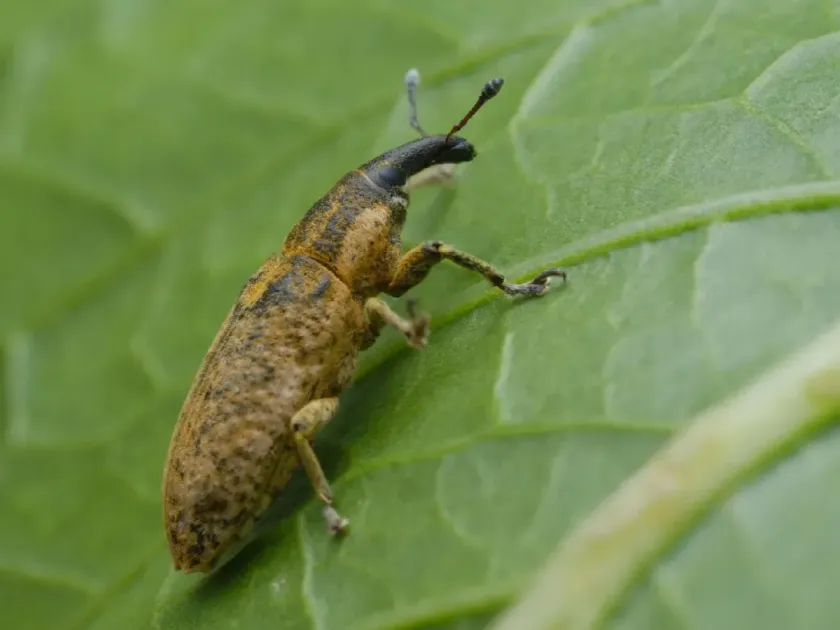
The cabbage stem weevil (Lixus myagri) is a significant pest belonging to the order Coleoptera and the family Curculionidae. The adult insect features an elongated body, typically measuring between 12 and 15 mm, covered in a grayish or brownish dust-like coating.
A distinctive morphological trait of this species is its long, slender, and slightly curved rostrum (snout). Its body is highly sclerotized and robust, which provides protection against environmental stress and some physical contacts.
The larvae are legless and creamy-white in color, characterized by a well-developed brown head capsule. This structure is specifically adapted for boring into plant tissues and consuming the pith of the host stem.
The biological cycle consists of four stages: egg, larva, pupa, and adult. Hibernation occurs primarily in the adult stage within soil or under debris, with activity resuming during the warm spring weather.
Females reproduce by laying eggs directly inside the stem or leaf petioles of host plants. The larvae hatch within a week and immediately begin their destructive feeding process.
What it damages
This pest primarily targets plants within the Brassicaceae family, posing a significant threat to winter and spring rapeseed, mustard, radishes, and various types of cabbages.
The larvae cause the most severe damage by consuming the internal pith of the stem. This destruction of the vascular tissue inhibits the transport of water and nutrients, causing the plant to weaken significantly.
Adult weevils also contribute to crop stress by feeding on leaves and petioles, creating small feeding scars that can act as entry points for secondary infections or diseases.
Affected stems often show signs of deformity, such as bending or structural failure, which can lead to complete plant collapse before harvest, especially under heavy wind or rain.
The overall impact of a heavy infestation is a substantial reduction in yield quantity and quality, including lower seed weight and decreased oil content in oilseed crops.
Signs of infestation
Initial signs of an infestation include small, dark punctures on the leaf petioles or stems, which are the sites where the female weevils have deposited their eggs.
Visible swelling or gall-like growths on the stems are common indicators of larval activity. The plant reacts to the internal tunneling of the larva by forming these characteristic deformities.
Plants infested with the cabbage stem weevil often display symptoms of stunting and chlorosis. During periods of water stress, these plants tend to wilt much faster than non-infested neighbors.
Careful inspection of the stem interior typically reveals tunnels filled with larval frass. These galleries often house the larvae themselves or the pupation chambers made of plant fibers.
As the season progresses, a common sign is uneven ripening and lodging of the crop. Harvesting becomes difficult due to the fragility of the stems, leading to mechanical losses.
Control measures
Effective crop rotation is the most critical cultural practice. It is recommended to separate cruciferous crops in both time and space by at least 3 years to break the pest's cycle.
Good agricultural hygiene, including the removal of cruciferous weeds like wild mustard or shepherd's purse, is essential, as these weeds serve as alternative hosts throughout the season.
Chemical control should be timed strategically to target the adults before they start laying eggs. Systemic insecticides are generally the most effective choice for protecting the internal stem tissues.
Integrated pest management (IPM) involves using yellow sticky traps for monitoring adult activity. This data helps agronomists determine the optimal timing for field treatment.
Post-harvest management is equally important. Deep plowing and incorporation of crop residues into the soil help kill larvae and pupae that remain inside the stems, significantly lowering the pest population for the following year.
Taxonomy
- Latin name
- Lixus myagri
- Order
- Coleoptera (beetles)
- Family
- Curculionidae
- EPPO code
- LIXUMY
Discussion
No discussions yet — be the first.