
Masters weevil
Lixus mastersi
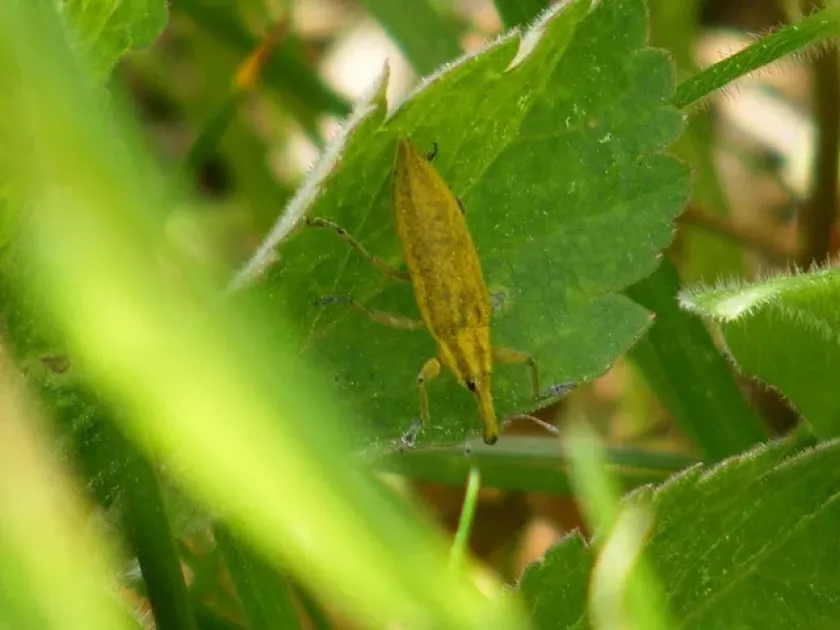
Description
How to identify
The Masters weevil (Lixus mastersi) is a member of the Curculionidae family within the order Coleoptera. It is recognized by its elongated body and a characteristic long snout, which is typical for weevils.
The adults are usually grey or brownish in color, which serves as excellent camouflage on stems. Their bodies are covered with fine hairs that provide protection against harsh environmental conditions.
The larvae are legless, white to creamy in color, and have a distinctive C-shaped posture. They spend their entire developmental period hidden inside the plant tissues.
The species is well-adapted to steppe and grassland ecosystems. Identification is usually performed by entomologists by examining the mouthparts and the wing patterns of the adult beetle.
As a highly specialized pest, it prefers specific host plants, which helps farmers identify vulnerable areas before the infestation spreads significantly throughout the field.
What it damages
Masters weevil primarily affects wild and cultivated species of the Asteraceae family. The primary damage is caused by the larvae, which feed on the internal tissues of the stems.
In agricultural settings, the pest may move to crops if they are planted near natural habitats. This feeding behavior stunts the growth of the infested plants.
The internal damage interrupts the transport of water and essential nutrients from the roots to the rest of the plant, causing the plant to weaken significantly.
Infested plants become highly susceptible to secondary infections and opportunistic pathogens, which further compounds the damage caused by the larvae.
Structural damage to the stems reduces their mechanical strength, leading to plant lodging under the influence of wind or rain, which makes harvesting difficult and inefficient.
When it appears
Adult weevils emerge in the spring once the soil temperature is sufficient to support activity after their winter dormancy in protected areas.
After a period of feeding on young plant shoots, the adults mate and females begin laying eggs inside the tissues of suitable host plants.
The larval stage occurs throughout the summer months. During this period, the insects are actively feeding and growing within the plant stems, often going unnoticed.
Pupation occurs inside the stem towards the end of the summer season. The new generation of adults typically emerges just before the onset of cooler autumn temperatures.
The species overwinters as adults. They seek shelter in plant debris, under leaf litter, or in the top layer of the soil to survive the cold winter months.
Signs of infestation
One of the earliest signs is the appearance of small puncture marks on the stems where eggs have been deposited, which may darken as the plant reacts to the injury.
Slow growth and stunted development are common indicators of an infestation, as the larvae are consuming the resources intended for the plant's growth.
Bulges or deformations on the stem are often present where larval development is concentrated. These areas usually contain internal tunnels filled with larval waste.
Wilting of the upper parts of the plant during hot, sunny weather is a clear symptom that the plant's vascular system has been compromised by the pest.
If you split the stem of a suspicious-looking plant, you will likely find larval tunnels and damaged, shredded internal pith, which confirms the presence of the weevil.
Control measures
The most effective strategy involves cultural practices, specifically the removal and destruction of host weeds that serve as a breeding ground for the weevil.
Deep plowing of the fields after the harvest helps expose larvae and pupae to natural enemies and weather, significantly reducing the overwintering population.
Implementing a proper crop rotation plan is essential to disrupt the pest's lifecycle, as the weevil relies on specific host plants to survive and reproduce.
When infestation levels exceed the economic threshold, systemic insecticides may be used, provided they are authorized for use on the specific crop being grown.
Timing is critical for chemical control; treatments must be applied while the adults are active and before the eggs are laid deep inside the stems, where they remain protected.
Taxonomy
- Latin name
- Lixus mastersi
- Order
- Coleoptera (beetles)
- Family
- Curculionidae
- EPPO code
- LIXUMS
Discussion
No discussions yet — be the first.