
Iris weevil
Lixus iridis
Description
How to identify
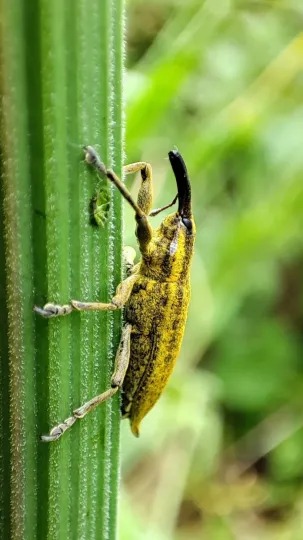
The Iris weevil (Lixus iridis) is a beetle belonging to the Curculionidae family within the order Coleoptera. Adult beetles are elongated, typically ranging from 10 to 15 millimeters in length.
The body is covered with a fine yellowish or greyish dust, which serves as a natural camouflage, helping the beetle blend in with the stems and leaves of its host plant.
Adults possess a slender, curved rostrum (snout) characteristic of the Lixus genus, which is used for both feeding and preparing sites for oviposition.
The larvae are legless, white to cream-colored grubs with a darker head capsule. They develop exclusively inside the stems of the host plants.
The life cycle includes a complete metamorphosis: egg, larva, pupa, and adult, with the adults being the overwintering stage of the insect.
What it damages
Lixus iridis primarily targets plants of the genus Iris, causing damage to both wild species and ornamental garden varieties.
Adult beetles feed on the foliage and flower stalks, creating small, visible pits or irregular marks on the surface of the plant tissues.
The most significant damage is caused by the larvae, which bore into the stems and consume internal tissues, disrupting nutrient and water transport.
Heavily infested plants show signs of stunted growth, bent flower stalks, and premature wilting, significantly reducing the decorative appeal of the planting.
In cases of severe infestation, the internal damage can lead to the structural collapse of the flower stalk or the death of the entire plant shoot.
When it appears
Adult weevils emerge from their overwintering sites in the spring when temperatures consistently reach favorable levels for their activity.
The mating and egg-laying period typically occurs in late spring and early summer, coinciding with the rapid growth phase of iris flower stalks.
Larvae develop inside the plant stem throughout the summer months, creating tunnels as they feed, which weakens the stalk from the inside out.
Pupation generally takes place within the stem or at the base of the plant toward the end of the summer season.
New adults emerge by late summer or early autumn to seek shelter for the winter months, often hiding in soil debris or dense plant cover.
Signs of infestation
Visible signs of an infestation include puncture marks and shallow feeding cavities on the leaves and stems caused by adult beetles.
Small exit or entry holes on the stem, sometimes accompanied by frass (a sawdust-like substance), indicate the presence of internal larvae.
Yellowing or drooping of the flower stalk tips, even when soil moisture is adequate, is a classic symptom of larval boring activity inside the stem.
Deformation of the flower stalk, such as twisting or bending, is a common indicator that the structural integrity of the plant has been compromised.
Physical sighting of the beetles on the plant, often observed clinging to stems or hiding at the base of the iris, confirms the pest's presence.
Control measures
The most effective cultural control method is the thorough cleanup and destruction of all infested iris debris at the end of the season to remove overwintering sites.
Promoting plant vigor through proper fertilization and spacing helps the irises resist stress and tolerate minor feeding pressure from the beetles.
Application of contact or systemic insecticides during the peak activity period of the adult beetles can prevent them from laying eggs on the stems.
Hand-picking the beetles in the early morning, when they are less active, is a viable management strategy for small-scale gardens or residential beds.
Monitoring the plants during the early vegetative stage allows for early intervention, preventing the larvae from reaching the deeper parts of the plant stems.
Taxonomy
- Latin name
- Lixus iridis
- Order
- Coleoptera (beetles)
- Family
- Curculionidae
- EPPO code
- LIXUIR
Discussion
No discussions yet — be the first.