
Beet stem borer
Lixus impressiventris
Description
How to identify
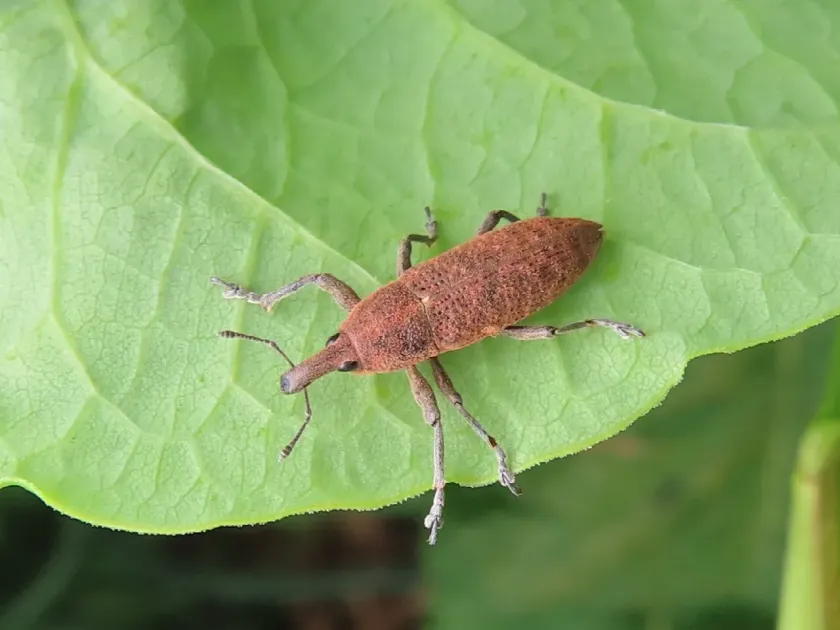
The beet stem borer (Lixus impressiventris) is a beetle belonging to the Curculionidae family. Adult beetles are elongated, typically measuring 12–16 mm in length, and are covered with fine greyish or brownish scales that provide camouflage.
The defining feature of this species is its long, slender snout, which is slightly curved downward. This anatomical adaptation is essential for the beetle's feeding habits and for creating cavities in plant tissues during egg-laying.
The larvae are legless, C-shaped grubs with a yellowish-white body and a distinct brown head capsule. They can grow up to 20 mm in length and reside entirely within the plant tissues, where they are protected from environmental fluctuations and predators.
The eggs are small, oval, and pale yellow, deposited singly into slits made by the female in the leaf stalks or stems of host plants. This strategic placement ensures that larvae have immediate access to nutrients upon hatching.
This species typically completes one generation per year. Adults overwinter in the soil or beneath debris and emerge in spring, with activity levels closely tied to the rising temperatures and the phenological development of host plants.
What it damages
The beet stem borer primarily targets members of the Amaranthaceae family, with sugar beet, table beet, and fodder beet being the most economically significant hosts. Both adult beetles and larvae contribute to the damage.
Adults feed on the leaves, creating irregular holes or notched margins. While leaf loss can be significant, the larval feeding stage is far more destructive, as larvae burrow into the petioles and stems of the plants.
As the larvae mine through the plant tissues, they disrupt the vascular bundles, effectively hindering the transport of water and nutrients. This interference leads to wilting and reduced sugar accumulation in the root crop.
In cases of severe infestation, the photosynthetic efficiency of the plant is significantly impaired, leading to stunted growth, yellowing leaves, and premature death of the foliage. This directly translates into lower yields and poor root quality.
Weeds such as common lambsquarters serve as alternative hosts, allowing the pest population to persist and build up in the field environment. Managing these weeds is essential to minimizing the impact on the main crop.
When it appears
Adults begin to emerge from their overwintering sites in April or May. This timing is particularly dangerous as it coincides with the seedling or early vegetative stage of the beet crop, when plants are highly susceptible to stress.
Adult feeding activity remains high throughout late spring and early summer, during which time mating and oviposition occur. The intensity and duration of these processes are dictated by prevailing weather conditions and temperature.
Larval hatching usually occurs in June, followed by a month-long developmental period inside the host plant. Because the larvae remain internal feeders, they are rarely seen unless the plant tissue is carefully inspected or dissected.
Pupation takes place inside the larval tunnels within the plant. By late summer, the new generation of adults emerges, feeds for a brief period, and eventually searches for suitable soil areas or debris to enter hibernation for the winter.
During the day, adults are generally less active and seek shelter in leaf axils or soil crevices to avoid the midday heat. Their peak activity is typically observed during the cooler periods of the morning and evening.
Signs of infestation
One of the earliest signs of infestation is the presence of distinctive leaf damage, characterized by notched or chewed margins on the beet leaves. This indicates that adult beetles are actively feeding on the crop.
A tell-tale sign of larval presence is the darkening and slight distortion of the leaf petioles. In many cases, affected leaves may seem to wilt even when soil moisture is adequate, indicating a blockage in the plant's vascular system.
Small punctures or slits on the stem or leaf stalks are indicative of egg-laying sites. These areas may sometimes show small necrotic spots as the plant reacts to the physical damage caused by the female beetle.
When an infested petiole is cut open, internal tunneling and the presence of larval excrement (frass) can be observed. This is the most reliable diagnostic method to confirm the presence of the beet stem borer.
Fields with high infestations often show patches of stunted, yellowing plants. The foliage may appear uneven, and the overall plant density may decrease if the larval damage leads to total leaf collapse or plant death.
Control measures
Effective management requires a multi-faceted approach, starting with sound agronomic practices. Crop rotation is paramount, ensuring that host crops are not planted in the same fields in consecutive years.
Weed control is a critical component, as removing wild hosts like common lambsquarters around the field edges significantly reduces the overwintering potential and breeding grounds for the borer.
Deep plowing in the autumn helps disrupt the overwintering cycle by exposing the beetles or larvae in the soil to freezing temperatures and natural predators, thereby lowering the initial population for the next season.
- Application of systemic insecticides during the peak of adult activity, based on monitoring and economic thresholds.
- Targeting field edges with border sprays, as this is where adult migration into the field typically begins.
- Balanced fertilization to boost plant vigor and promote rapid recovery from physical damage caused by larval feeding.
Regular field scouting using visual inspections or light traps is necessary to determine the timing of insecticide applications, ensuring that chemical interventions are carried out before larvae bore into the plants.
Taxonomy
- Latin name
- Lixus impressiventris
- Order
- Coleoptera (beetles)
- Family
- Curculionidae
- EPPO code
- LIXUIM
Discussion
No discussions yet — be the first.