
Lixus elongatus
Lixus elongatus
Description
How to identify
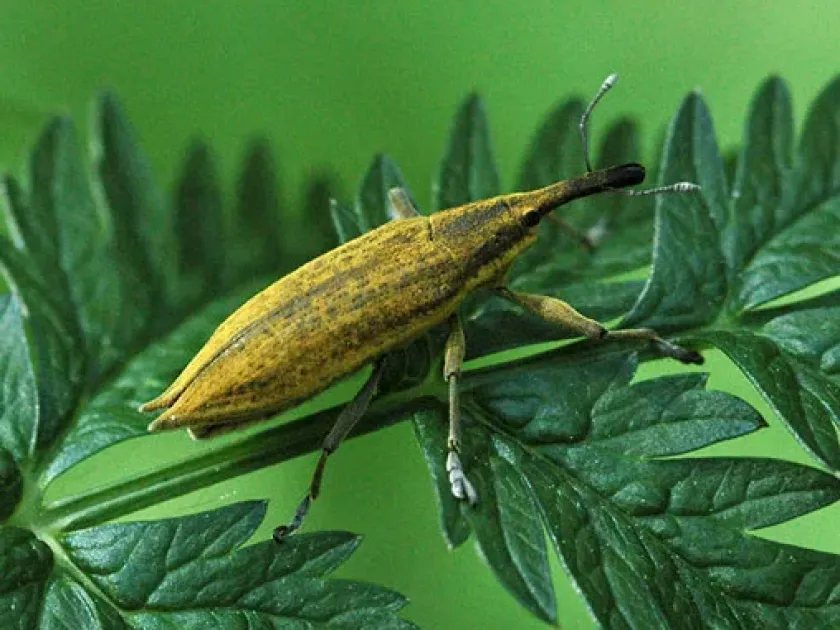
Lixus elongatus is a beetle belonging to the Curculionidae family. It is characterized by an elongated body, typically measuring between 10 and 15 millimeters in length, covered with fine scales that give it a grey or brownish appearance.
The adult beetle features a long, slender, and straight rostrum, which is a diagnostic trait for the genus Lixus. This structure allows the insect to reach deep into plant tissues for feeding and oviposition.
The larvae are legless, creamy-white in color, and possess a well-developed chitinous head capsule. They lead an endophytous lifestyle, meaning they develop entirely within the host plant's stem or petiole.
The lifecycle includes complete metamorphosis: egg, larva, pupa, and adult. The species typically overwinters as an adult, finding shelter in the soil or under plant debris to survive cold temperatures.
Emergence begins in early spring when temperatures reach favorable levels. Adults move to host plants to feed, mate, and deposit eggs, initiating the cycle for the new growing season.
##damage##This pest primary targets plants within the Brassicaceae family, encompassing both cultivated crops and various wild weed species that serve as alternate hosts for the beetle populations.
Key crops at risk include oilseed rape, mustard, cabbage, and radish. When infestations are high, the damage can significantly reduce both the yield and the quality of the harvested produce.
Larval feeding causes the most severe damage as they tunnel through the internal tissues of the stem. This disrupts the plant's vascular system, hindering the transport of water and nutrients.
Adult beetles feed externally on the leaves and stems. While this type of damage is generally less detrimental than that caused by larvae, it weakens young plants and can leave them susceptible to other stressors.
Severe infestations often result in stunted plant growth, premature yellowing, and even stem breakage, which makes the crop difficult to harvest and prone to secondary infections.
##signs##The presence of Lixus elongatus is indicated by small, irregular holes on the leaves and petioles caused by adult feeding. These symptoms are often the first visible signs during regular field scouting.
Internal damage manifests as gall-like swellings or structural deformities on the stems where larvae have been tunneling. These deformities are indicative of heavy internal larval colonization.
Plants affected by larval activity may appear wilted or show signs of nutrient deficiency, despite adequate soil moisture and fertilization, due to the destruction of internal transport tissues.
Exit holes found on the stems are a definitive sign that the larval development is complete and the new generation of adult beetles has emerged into the field.
In cases of high infestation, the structural integrity of the crop is compromised, leading to widespread lodging in the field, which is a major late-season sign of pest activity.
##control##Integrated Pest Management (IPM) is essential for controlling Lixus elongatus. The primary strategy involves the removal of cruciferous weeds from field margins to eliminate breeding grounds.
Crop rotation plays a critical role in management; by avoiding the planting of cruciferous crops in the same field for several years, farmers can break the life cycle of the pest.
Deep autumn plowing of crop residues is an effective mechanical method to destroy overwintering larvae and pupae, significantly reducing the pest population for the following year.
Chemical control should be implemented based on economic thresholds and careful field monitoring. Insecticides are most effective when applied during the period of adult peak activity.
Field scouting using traps and regular visual inspections helps to accurately time interventions, ensuring the best possible balance between effective control and environmental safety.
Taxonomy
- Latin name
- Lixus elongatus
- Order
- Coleoptera (beetles)
- Family
- Curculionidae
- EPPO code
- LIXUEL
Discussion
No discussions yet — be the first.