
Beet stem weevil
Lixus divaricatus
Description
How to identify
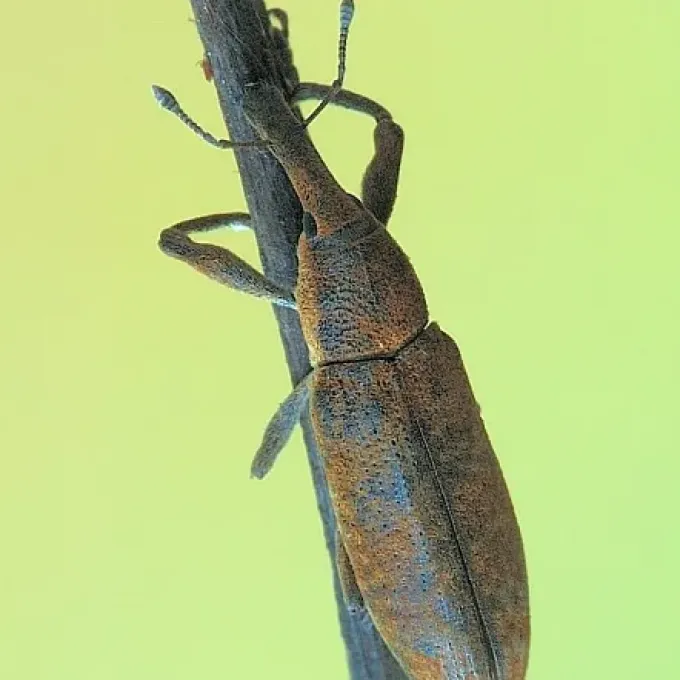
The beet stem weevil (Lixus divaricatus) is a beetle belonging to the order Coleoptera and the Curculionidae family. The adult insect is characterized by a slender body measuring approximately 12–15 mm in length, covered in a grayish or brownish dust-like coating.
The weevil possesses a distinctive elongated snout (rostrum) used for feeding and preparing sites for oviposition. The larvae are legless, ivory-colored, and adapted for internal boring into plant stems, making them difficult to detect without careful inspection.
What it damages
This pest primarily attacks members of the Amaranthaceae family, with sugar beet, table beet, and fodder beet being the most frequent hosts. Wild weeds in the same family also serve as alternative food sources for the insect.
Adults consume leaves and petioles, while the larvae are the most destructive stage. They bore into the stalks and the upper part of the root, disrupting the plant's vascular system, which stunts growth and significantly reduces the sugar content of the root.
When it appears
The lifecycle of Lixus divaricatus is synchronized with the growing season of beet crops. Adults overwinter in the soil or plant debris and emerge in the spring when temperatures begin to rise consistently.
Once active, the weevils mate, and females deposit eggs into the leaf petioles. The larvae hatch and tunnel into the stems, where they undergo development, feeding on the internal pith throughout the summer months before reaching the pupation stage.
Signs of infestation
Initial signs of an infestation include irregular feeding holes along the margins of the leaves. As larvae tunnel into the plant, the foliage may show signs of yellowing, wilting, or stunted development compared to healthy plants.
Internal damage is confirmed by finding tunnels filled with frass within the stems. In severe cases, the affected area of the stem becomes brittle and may break under mechanical stress or high winds, leading to plant mortality.
Control measures
Integrated pest management includes strict crop rotation to move away from infested fields, preventing the population from establishing itself. Weed control is essential to eliminate reservoirs of host plants like Chenopodium.
Chemical control is applied during the peak flight of adults, typically using systemic insecticides. Farmers should utilize monitoring traps to ensure that applications coincide with the most vulnerable stages of the pest's lifecycle to maximize efficiency.
Taxonomy
- Latin name
- Lixus divaricatus
- Order
- Coleoptera (beetles)
- Family
- Curculionidae
- EPPO code
- LIXUDI
Discussion
No discussions yet — be the first.