
Sharp-winged weevil
Lixus acutipennis
Description
How to identify
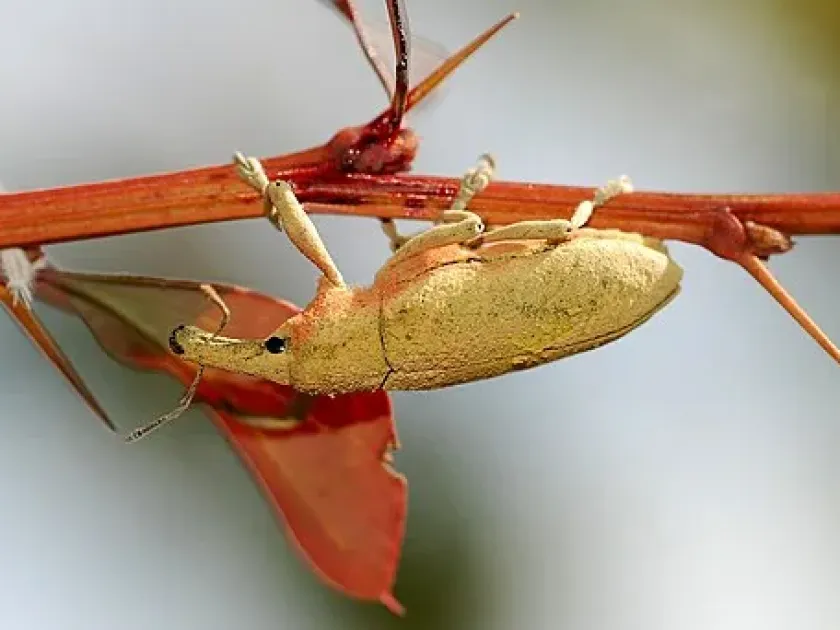
The sharp-winged weevil (Lixus acutipennis) is a member of the Coleoptera order and the Curculionidae family. The adult beetle features an elongated body typical for the Lixus genus, covered with a grey or yellowish-grey dusting.
The defining morphological characteristic of this species is the sharp, pointed protrusions at the tips of the elytra, which allows for reliable identification compared to other weevil species found on similar crops.
The snout (rostrum) is of medium length and slightly curved. Due to its secretive lifestyle, especially during the larval stage, the insect is rarely seen on the surface until significant internal plant damage has already occurred.
Adult beetles are highly mobile and capable of quick flight, which makes field monitoring challenging as they often hide when disturbed.
The development cycle follows complete metamorphosis, consisting of egg, larva, pupa, and adult stages. Adults typically overwinter in plant debris or the upper soil layer.
What it damages
The primary host crops for this pest include members of the Chenopodiaceae family, most notably sugar beet and fodder beet, as well as various wild weed species.
Larvae cause the most significant damage as they bore into the leaf petioles and the crown of the plant, creating extensive internal galleries and tunnels.
This internal tunneling disrupts the plant's vascular system, impeding the flow of water and nutrients, which results in stunted growth and weakened plant vigor.
Entry points created by the larvae often facilitate secondary infections, such as fungal or bacterial rots, which can lead to the rapid deterioration and decay of the affected plant tissues.
High infestation levels lead to reduced root yield and lower sugar content, and in dry conditions, severely damaged plants may suffer from premature wilting and death.
When it appears
Overwintered adults emerge in the spring, typically when soil and air temperatures become consistently warm, usually starting from late April through May.
Peak adult activity, including mating and oviposition, occurs during the late spring and early summer when the young beet plants are in their active vegetative growth phase.
The larvae develop inside the plant tissue throughout the summer months, remaining protected from external environmental factors and some contact-based pesticides.
Pupation takes place toward the end of summer inside the tunnels created by the larvae. The new generation of adults emerges in the autumn before seeking hibernation sites.
The life cycle concludes as adults enter a state of diapause to survive the winter, waiting for the return of favorable temperatures in the following season.
Signs of infestation
The first visible signs of infestation are small puncture marks and holes on the petioles, created by adults during feeding and egg-laying activities.
Wilting and yellowing leaves within the central rosette are strong indicators that larvae are actively damaging the internal vascular tissues of the petiole.
Deformation or swelling at the base of the plant or the crown area serves as a physical sign that larvae have bored into the primary stem tissues.
The presence of brownish, frass-like excrement near the base of the leaf petioles is a characteristic indicator of active larval tunneling within the plant.
Overall, fields with infestations show uneven growth, with individual plants appearing stunted or showing signs of nutrient stress compared to healthy neighboring plants.
Control measures
Effective management requires an integrated approach that focuses on disrupting the pest's life cycle before it can cause widespread economic damage.
Strict adherence to crop rotation, ensuring spatial isolation from fields with established populations of Chenopodiaceae weeds, is the most critical cultural practice.
Deep autumn plowing helps eliminate a significant portion of overwintering adults by disrupting their soil habitat and destroying the crop residues where they shelter.
- Removal of weed hosts from field margins and within the crop to reduce alternative food sources.
- Monitoring adult populations using yellow sticky traps to determine the timing for potential interventions.
- Applying systemic insecticides during the peak adult emergence window, following economic threshold guidelines.
Chemical control measures should be used judiciously as part of an Integrated Pest Management (IPM) program, strictly following local safety regulations and pesticide label instructions.
Taxonomy
- Latin name
- Lixus acutipennis
- Order
- Coleoptera (beetles)
- Family
- Curculionidae
- EPPO code
- LIXUAC
Discussion
No discussions yet — be the first.