
Algerian weevil
Lixomorphus algirus
Description
How to identify
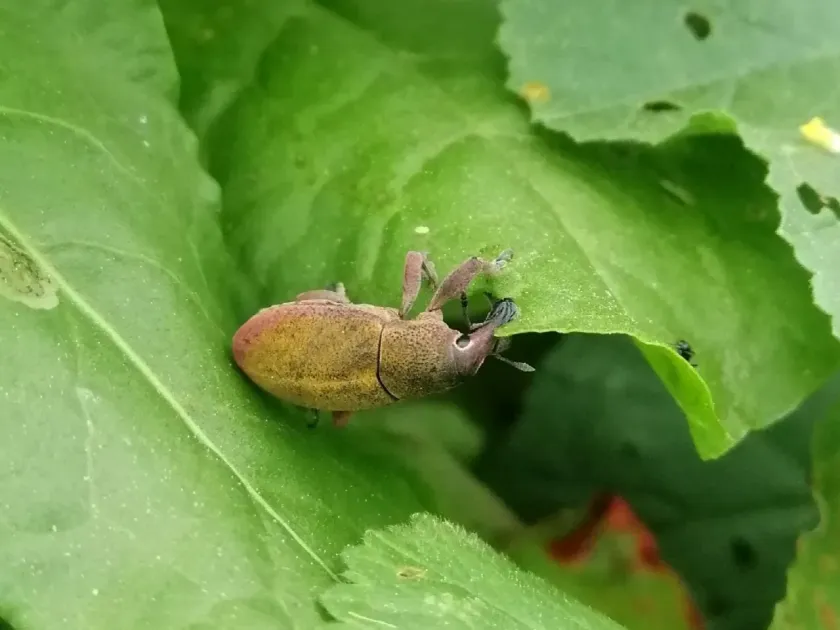
The Algerian weevil (Lixomorphus algirus) is a member of the Curculionidae family within the order Coleoptera. Adult beetles are typically 10–15 mm long and possess the elongated body shape characteristic of the Lixinae subfamily.
Their coloration is generally greyish-brown, providing excellent camouflage against soil or plant debris. The elytra surface is covered with dense scales, which create a distinct pattern unique to this species.
The rostrum is robust and well-developed, adapted for boring into plant stems and leaves. The antennae are elbowed and clubbed, serving as a critical morphological feature for accurate identification in the field.
Larvae are C-shaped, legless, and white or yellowish, featuring a distinct, hardened dark head capsule. They lead an endophytic lifestyle, residing and feeding deep within the host plant tissues.
Due to physical similarities with other Lixus species, formal identification often requires expert entomological examination of structural characteristics to ensure precise species classification.
What it damages
The primary hosts of Lixomorphus algirus are plants within the Amaranthaceae family, particularly sugar, table, and fodder beets, making this pest a significant concern in crop production.
Adult weevils consume foliage, leaving irregular holes that reduce the plant's photosynthetic capacity. This damage is particularly critical during the early stages of plant development, hindering overall growth.
Larval damage is far more severe, as they tunnel through leaf petioles and stems. This behavior disrupts nutrient and water transport, causing premature wilting and often resulting in the death of the plant.
Secondary infections, including various fungal and bacterial rots, often infiltrate the larval tunnels, further exacerbating the damage and significantly reducing the quality and yield of the roots.
High infestation levels can lead to substantial yield losses across large areas of a field, particularly under stress conditions where plants are unable to compensate for the tissue damage.
When it appears
Adult weevils emerge from overwintering sites in the spring as soon as ambient and soil temperatures reach thresholds favorable for their metabolic activity and development.
Mating and oviposition typically occur in late spring and early summer, coinciding with the rapid growth phase of host plants, which provides the necessary nutritional resources for larval development.
The life cycle of a single generation lasts several months, with new adult beetles emerging in mid-to-late summer to feed before entering a period of diapause for the upcoming winter.
Winter survival is achieved by adult beetles seeking refuge in the upper soil layers or beneath dense plant debris in fields, hedgerows, or peripheral areas, which offer protection from extreme temperatures.
Field monitoring should commence as soon as beet seedlings appear, utilizing visual inspections or sweep netting in the early morning to track population shifts and potential activity.
Signs of infestation
The presence of Lixomorphus algirus is initially identified by irregular, jagged feeding patterns along the edges of leaves caused by adult weevils.
Close inspection of stems and petioles reveals small entry holes, sometimes accompanied by sap exudation, which indicates larval activity inside the plant tissues.
Plants affected by larval tunneling often exhibit stunted growth, yellowing foliage, and a general lack of vigor, symptoms that can easily be mistaken for soil-borne diseases or drought stress.
Deformation or swelling of the stem or root crown is a common visual sign, representing the internal structural damage caused by the developing larvae feeding on vascular tissue.
Carefully slicing open suspected stems often reveals the presence of white, C-shaped larvae, providing definitive evidence of infestation and the immediate need for protective measures.
Control measures
Agricultural management strategies should prioritize crop rotation, avoiding the cultivation of host plants on the same field for consecutive years, supplemented by deep autumn plowing to disturb overwintering sites.
Weed control is essential, as various Amaranthaceae weeds (such as common lambsquarters) act as alternate hosts and reservoirs for the pest when primary crops are not present.
Chemical control involving systemic or contact insecticides may be necessary during the peak period of adult emergence, adhering strictly to local regulations regarding application rates and frequency.
Biological control options, such as using entomopathogenic fungi, can be employed to manage pest populations in an environmentally friendly manner, significantly reducing the reliance on synthetic chemicals.
Consistent monitoring using pheromone or sticky traps helps determine the exact timing for intervention, ensuring that control measures are applied only when the economic threshold of the pest is met.
Taxonomy
- Latin name
- Lixomorphus algirus
- Order
- Coleoptera (beetles)
- Family
- Curculionidae
- EPPO code
- LIXMAL
Discussion
No discussions yet — be the first.