
Lixomorphus
Lixomorphus
Description
How to identify
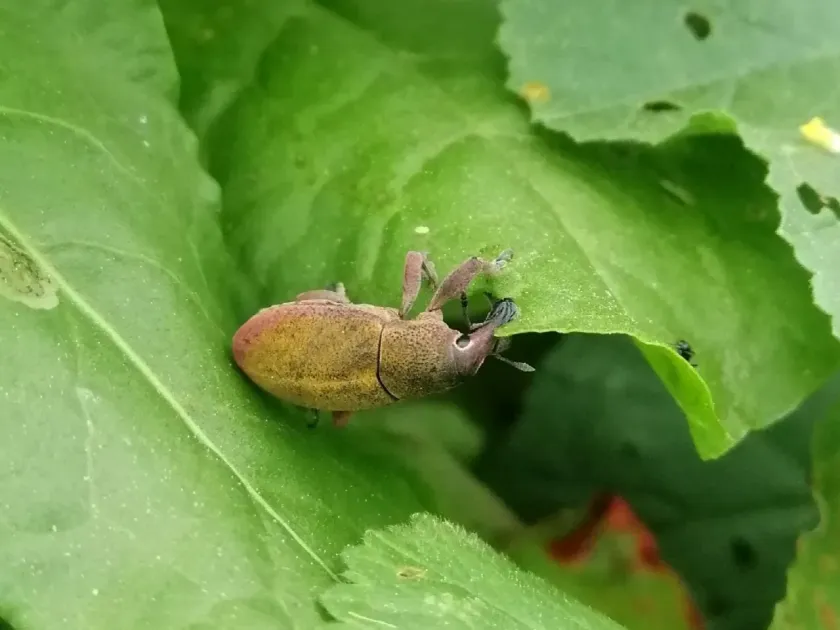
Lixomorphus is a genus of weevils belonging to the Curculionidae family. These insects are distinguished by a typical elongated snout or rostrum used for feeding and laying eggs.
Adult beetles usually display a dull or camouflaged coloration, often mottled, which allows them to blend in effectively with soil or dry plant debris.
The body is generally robust and oval-shaped, covered in small, dense scales that provide protection against environmental stress and predators.
Larvae are legless, grub-like, and typically ivory-colored with a brown head capsule, specialized for boring into the stems or roots of host plants.
Identification at the species level usually requires examining the structure of the rostrum and the arrangement of scales on the elytra under magnification.
What it damages
The damage caused by Lixomorphus involves both adults consuming leaf tissue and larvae destroying the internal architecture of stems.
Adults create small holes in the foliage, reducing the photosynthetic area, while larval feeding inside stems interrupts the vascular system of the plant.
This feeding behavior causes significant stress to the crop, often leading to stunted growth, wilting, or even complete plant collapse in severe cases.
These pests prefer specific plant families, often targeting Asteraceae, which can include both crops and invasive weeds that serve as reservoirs.
Economic losses are cumulative, as repeated damage throughout the season prevents the plant from developing sufficient biomass for a high yield.
When it appears
The life cycle of Lixomorphus is closely tied to the seasonality of its host plants and local meteorological conditions.
Adults typically overwinter in the soil or protected niches near the base of plants, emerging as temperatures rise in the spring.
The primary reproductive window occurs during the active growing season when host plants provide fresh tissues for the developing larvae.
After completing their development inside the plant tissue, the larvae pupate, and the new generation of adults emerges shortly thereafter.
Multiple generations can occur per season in warm climates, leading to overlapping life stages and prolonged pressure on crops.
Signs of infestation
Early warning signs include characteristic feeding holes on leaves, which usually appear as small, irregular, or circular marks.
Plants showing sudden yellowing, drooping, or lack of vitality despite adequate watering are often signs of larval activity within the stem.
Inspecting the base of the plant often reveals fine dust or frass, indicating that the larvae have been actively boring into the stem.
Visual observation of the adult weevils is most effective during early morning or late evening when they are more active on the leaves.
If a stem is split open, the internal tunneling caused by larvae and the larvae themselves confirm an active infestation.
Control measures
Effective management requires an integrated approach that focuses on both cultural practices and chemical intervention when necessary.
Crop rotation remains the most critical cultural practice, as it breaks the life cycle of the pest by removing the preferred host plant for the following season.
Deep tilling in the autumn or early spring helps destroy overwintering stages by bringing larvae and adults to the surface, exposing them to environmental extremes.
Regular monitoring using traps or field inspection allows for precise timing of insecticide applications, targeting adults before they can lay eggs.
- Elimination of wild host plants and weeds near the fields.
- Usage of systemic insecticides to reach internal larvae.
- Field sanitation to remove infested plant residues after harvest.
Taxonomy
- Latin name
- Lixomorphus
- Order
- Coleoptera (beetles)
- Family
- Curculionidae
- EPPO code
- LIXMSP
Discussion
No discussions yet — be the first.