
Lithobius
Lithobius
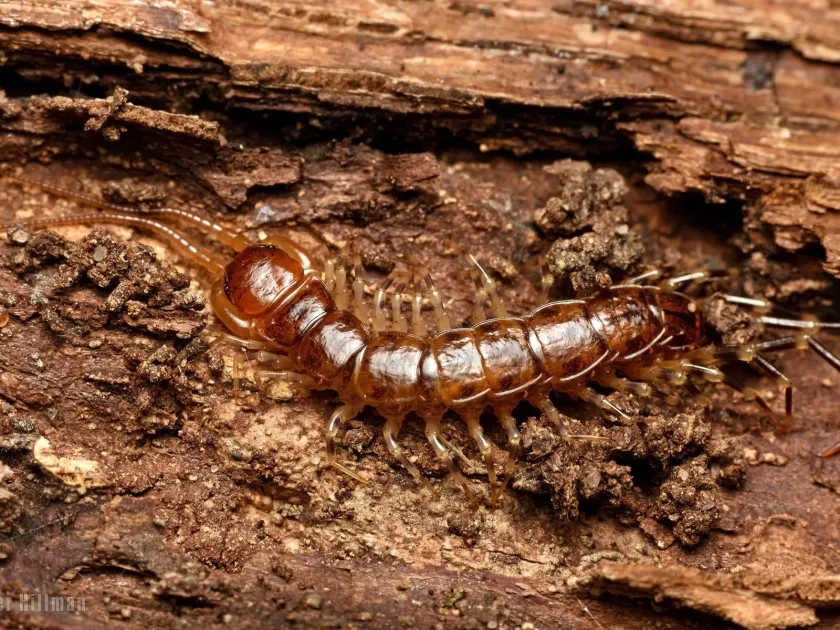
Description
How to identify
Lithobius is a genus of centipedes belonging to the family Lithobiidae within the class Chilopoda. These are generally predatory organisms, though in controlled environments like greenhouses, they may occasionally feed on young, succulent plant tissues when their primary insect prey is scarce.
Adult specimens are characterized by a flattened, elongated body typically measuring 10 to 30 mm in length. The body is divided into 15 segments, each bearing a single pair of legs, which allows them to move very rapidly across the soil surface.
The coloration of Lithobius species ranges from yellowish-brown to reddish-brown. Their morphology is adapted for life in tight spaces, allowing them to navigate easily through leaf litter, soil cracks, and beneath decaying organic matter.
The life cycle involves hemimetabolous development. Females deposit eggs individually in the soil. Young centipedes hatch with fewer segments and legs than adults, gradually developing additional segments and legs during successive molting stages.
These centipedes are nocturnal creatures that thrive in moist, cool, and dark environments. They avoid light and are most active in soil with high organic content and consistent humidity levels, making damp greenhouses prime habitats.
What it damages
Lithobius centipedes primarily target vulnerable early-stage plants, including germinating seeds, tender sprouts, and freshly transplanted seedlings of various vegetable and ornamental crops like tomatoes and peppers.
They cause damage by gnawing on the roots, hypocotyls, and the base of the stems. By creating small wounds on the plant surface, they facilitate the entry of secondary pathogens, such as soil-borne fungi and bacteria.
The severity of the damage depends on the population density of the centipedes. In cases of high infestation, they can cause significant stand loss by consuming germinating seeds before they emerge or by severing the roots of young seedlings.
In greenhouse settings, these pests are particularly problematic because the constant irrigation and high soil moisture provide an ideal environment for their survival and reproduction throughout the season.
Once a plant has been damaged, the resulting wounds often lead to rot, causing the plant to wilt, lose vigor, and eventually die. This makes early detection essential for protecting vulnerable crop stands.
Control measures
Cultural control is the most effective approach for managing Lithobius populations. Improving drainage and avoiding over-irrigation of the soil help create a less hospitable environment for these moisture-loving arthropods.
Regular cultivation and loosening of the topsoil effectively disrupt the centipedes' habitats and speed up the drying of the soil surface, which is lethal to nymphs and limits the movement of adults.
Trapping can be an effective non-chemical strategy. Placing moist boards, wet cardboard, or pieces of plywood in the garden overnight allows you to collect the centipedes that gather underneath them for manual removal the next morning.
Sanitation is crucial; removing old plant debris, mulch, and piles of weeds from the greenhouse or garden bed eliminates the hiding spots that Lithobius relies on for daytime protection.
If chemical intervention is deemed necessary, soil insecticides labeled for ground-dwelling pests can be applied, though they should be used judiciously to avoid disrupting the balance of beneficial soil organisms.
Taxonomy
- Latin name
- Lithobius
- Family
- Lithobiidae
- EPPO code
- LITOSP
Discussion
No discussions yet — be the first.