
Listronotus elongatus
Listronotus elongatus
Description
How to identify
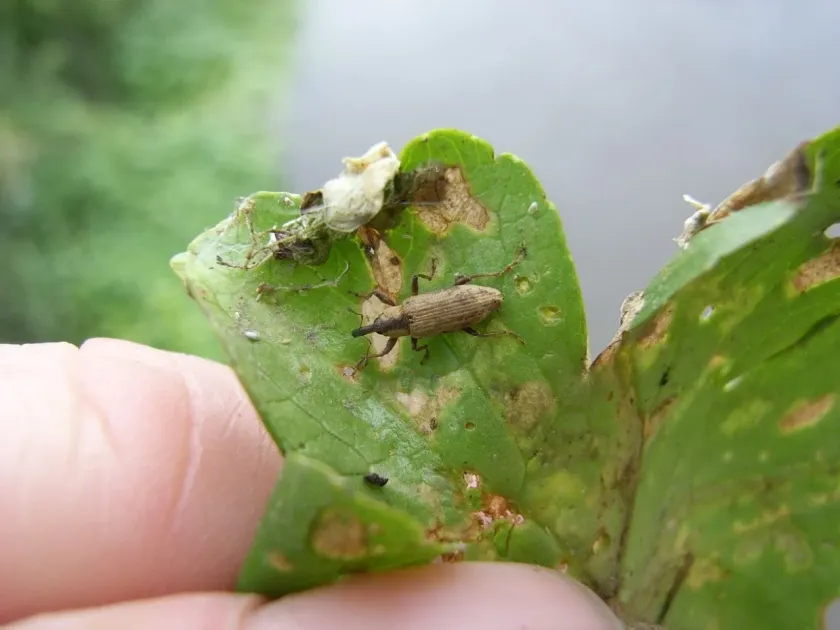
Listronotus elongatus is a species of weevil belonging to the family Curculionidae within the order Coleoptera. These insects are known for their elongated bodies and specific rostrum structure.
Adult insects are typically brown or dark brown, allowing them to blend in with the soil and plant debris, which serves as their primary habitat during the day.
The larvae are apodous (legless), typically C-shaped, and creamy white or yellowish with a distinct dark head capsule. They are primarily found inside plant tissues or within the topsoil layer.
The life cycle of this weevil is closely dependent on soil moisture, as high humidity is essential for the survival and development of the eggs and larvae.
Identification is usually based on morphological characteristics under a microscope, as the species shares visual traits with other members of the Curculionidae family.
What it damages
This pest mainly attacks vegetable crops, especially those in the Apiaceae family. It causes significant damage to both the root systems and the stems of young plants.
Larvae feed by burrowing into the roots or stems, which disrupts nutrient transport and weakens the plant, often leading to stunted growth or total decay.
Adults consume the leaves of the host plants, leaving visible notched or irregular feeding marks, although this damage is generally secondary in terms of overall crop loss.
The primary economic damage results from the infestation of roots, which causes deformation, loss of quality, and renders the produce unsuitable for storage and market sale.
Infested plants become highly susceptible to secondary bacterial and fungal infections, which often lead to rotting and the death of the crop.
Signs of infestation
Early signs of infestation include the appearance of notched holes on the foliage, which are caused by adult weevils feeding on the plant tissue.
Wilted or yellowing leaves during dry periods are a strong indicator of root damage, as the plant cannot maintain proper hydration due to larval burrowing.
Examining the roots and stem bases often reveals tunnels or cavities filled with frass, indicating active feeding by the larvae.
In cases of severe infestation, patches of plants within the field show significantly delayed development, becoming smaller and weaker than the surrounding crops.
Secondary symptoms include the presence of slimy or moldy decay spots on the roots, which develop as a direct consequence of the larval entry points.
Control measures
Crop rotation is a fundamental management strategy, as it helps break the life cycle of the pest by removing the host plants from infested fields for at least one or two seasons.
Proper field hygiene, including the removal and destruction of crop residues post-harvest, significantly reduces the overwintering population of the weevils.
Deep autumn plowing of the soil exposes larvae and pupae to extreme weather conditions, which contributes to the reduction of the overwintering pest population.
Chemical control involving systemic or contact insecticides should only be applied when monitoring indicates that pest numbers exceed the economic threshold.
- Regular field scouting and use of pheromone traps for detection.
- Maintaining optimal moisture levels to ensure vigorous plant health.
- Encouraging natural predators and parasitoids in the ecosystem.
Taxonomy
- Latin name
- Listronotus elongatus
- Order
- Coleoptera (beetles)
- Family
- Curculionidae
- EPPO code
- LISREL
Discussion
No discussions yet — be the first.