
Listronotus appendiculatus weevil
Listronotus appendiculatus
Description
How to identify
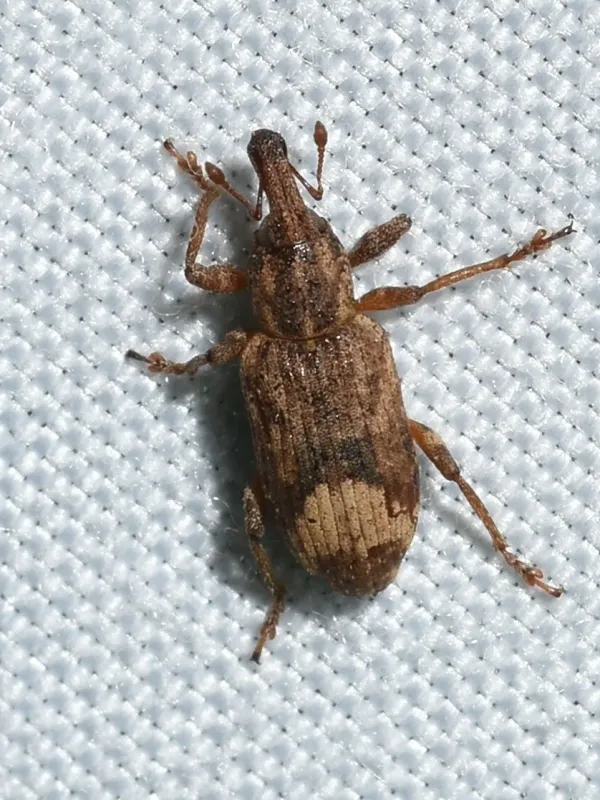
The beetle Listronotus appendiculatus belongs to the Curculionidae family of the Coleoptera order. Adult insects feature a characteristic elongated snout and a body color ranging from dark brown to grayish-brown, which provides excellent camouflage among plant debris.
The larvae of this species are legless, possessing fleshy whitish or cream-colored bodies with dark head capsules. They are endophagous, meaning they develop within plant tissues, making detection difficult during the early stages of infestation.
What it damages
Larvae are the primary cause of damage, as they bore galleries into the stems and roots of host plants. The pest typically targets plants in wetland environments or moist soils, including various agricultural and forage crops.
Adult weevils consume foliage, leaving characteristic notches along the edges of leaves. However, the most significant economic impact is caused by larval boring, which disrupts nutrient flow and compromises the structural integrity of the plant.
When it appears
The life cycle of the insect is strictly dependent on soil temperature and moisture levels. Overwintered adults emerge at the beginning of the growing season when soil temperatures rise above 10-12 degrees Celsius.
Oviposition occurs in the spring, followed by larval development throughout the summer months. Pupation typically takes place either in the soil or at the base of the damaged stems towards the end of the summer season.
Signs of infestation
The first indicator of an infestation is the localized wilting of shoots or entire plants despite adequate soil moisture. Inspection of the stem base often reveals entry holes and frass deposits left by the feeding larvae.
Severe root and stem damage leads to stunted growth, leaf chlorosis, and potential plant death. In cases of high infestation, lodging of the crop may occur due to the internal destruction of the plant's structural tissues.
Control measures
Crop protection relies on an integrated approach, emphasizing crop rotation and the destruction of post-harvest residues. Controlling weeds that serve as alternative hosts is also critical for effective long-term management.
- Application of systemic insecticides during the peak activity of adults.
- Deep autumn plowing to disturb and destroy overwintering stages in the soil.
- Monitoring adult populations using traps to time intervention.
- Utilization of biological control agents, such as entomopathogenic fungi.
Taxonomy
- Latin name
- Listronotus appendiculatus
- Order
- Coleoptera (beetles)
- Family
- Curculionidae
- EPPO code
- LISRAP
Discussion
No discussions yet — be the first.