
Vegetable weevil
Listroderes subcinctus
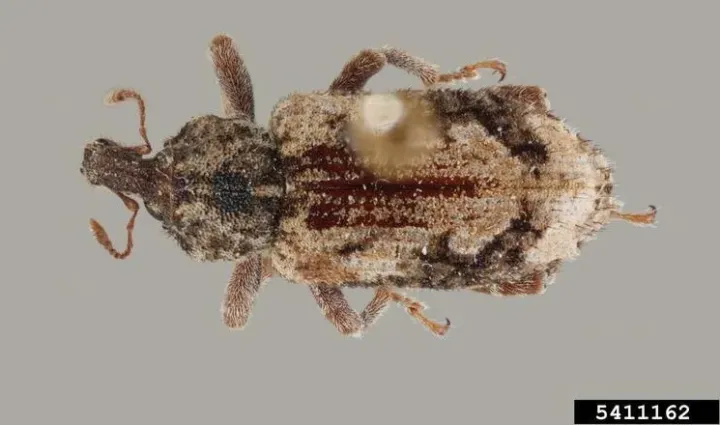
Description
How to identify
The vegetable weevil (Listroderes subcinctus) is a beetle belonging to the order Coleoptera and the extensive family Curculionidae, commonly known as true weevils.
Adult beetles are characterized by their elongated snout, which is typical for the family and is used for feeding on plant tissues and piercing surfaces.
The body color usually ranges from gray-brown to nearly black, providing excellent camouflage against soil particles and decaying organic matter during the day.
The larvae are legless, fleshy, and typically creamy white with a distinct dark head capsule, well-adapted to living in the soil or within plant stalks.
The life cycle involves complete metamorphosis, progressing through egg, larval, pupal, and adult stages, with each phase exhibiting unique survival strategies.
What it damages
This pest primarily attacks a wide range of vegetable crops, with a strong preference for members of the Solanaceae family, including potatoes, tomatoes, and eggplants.
Additionally, the weevil frequently targets cruciferous plants and various leafy greens, making it a significant threat to diverse agricultural landscapes.
Larvae cause primary damage to the root system and the base of the stem, often resulting in stunted growth and the entry of secondary pathogens into the plant.
Adult beetles primarily feed on leaf blades, creating irregular holes and notches, which significantly reduces the photosynthetic capacity of the affected plants.
In cases of high infestation, the pest can devastate entire fields, leading to total biomass loss and a severe reduction in the marketability of the produce.
When it appears
The adult weevils become active in early spring, emerging from their overwintering sites as soon as stable, favorable temperatures are recorded.
The peak period of damage occurs during the active vegetative growth of crops, when larvae feed on subterranean parts, weakening young seedlings and sprouts.
The pest may undergo multiple generations within a single season, complicating management efforts due to the continuous presence of all life stages in the field.
By late summer or early autumn, adult weevils seek protected overwintering sites in the topsoil, under leaf litter, or in soil crevices.
Warm and moist weather conditions act as a catalyst for outbreaks, as they favor egg deposition and the successful development of larvae within the soil environment.
Signs of infestation
The first indicator of an infestation is the presence of characteristic irregular holes and tattered leaf margins caused by nocturnal feeding by adult weevils.
Wilting of plants without visible signs of root disease or water stress is a common symptom of larval damage, as they consume root tissue at the crown.
Careful inspection of the soil around the base of damaged plants during morning or evening hours often reveals the presence of larvae.
The presence of frass (insect excrement) on the foliage and the beetles themselves on the underside of leaves confirms an active infestation.
In severe cases, plants show significant morphological deformities and are notably smaller than healthy plants in the same field.
Control measures
Effective control relies on cultural practices, such as deep autumn tillage, which disrupts the life cycle by exposing overwintering stages to predators and weather.
Crop rotation is essential for breaking the pest's cycle and preventing the build-up of local populations over successive growing seasons.
- Sourcing healthy, pest-free planting stock for new crops.
- Rigorous weed management to eliminate alternative host plants near fields.
- Application of biological pesticides containing entomopathogenic fungi during early larval emergence.
- Use of systemic insecticides only when infestation levels exceed established economic thresholds.
Chemical control programs must be timed carefully with the insect's life cycle and strictly adhere to pre-harvest intervals to ensure food safety and regulatory compliance.
Taxonomy
- Latin name
- Listroderes subcinctus
- Order
- Coleoptera (beetles)
- Family
- Curculionidae
- EPPO code
- LISTSU
Discussion
No discussions yet — be the first.