
Vegetable weevil
Listroderes
Description
How to identify
The vegetable weevil, scientifically classified as Listroderes costirostris, belongs to the Curculionidae family within the order Coleoptera.
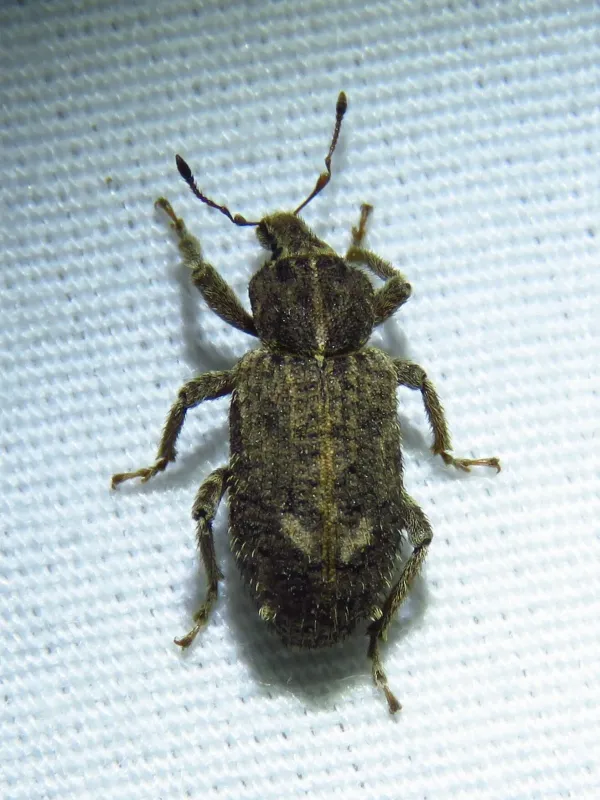
Adult beetles typically measure between 8 and 10 mm in length and feature the long, snout-like rostrum characteristic of the weevil group.
The body color is generally a mottled blend of brown and gray, providing excellent camouflage against soil and organic debris in the field.
The larvae are legless, C-shaped grubs with creamy-white bodies and distinctively dark-colored, hardened head capsules for burrowing.
These insects are primarily nocturnal, hiding in the soil or under vegetation during the heat of the day to avoid desiccation and predation.
What it damages
As a significant polyphagous pest, the vegetable weevil attacks a wide variety of cultivated crops, including various Solanaceae and Brassicaceae members.
Primary hosts include tomatoes, potatoes, carrots, cabbage, and onions, where both adults and larvae cause substantial physiological damage.
Adult beetles feed primarily on foliage, creating jagged edges and irregular holes along the leaf margins, which can severely defoliate young plants.
The larval stage is particularly destructive to root crops, as they tunnel deeply into the tubers or taproots, causing structural damage.
Infested produce often suffers from secondary infections and rot, rendering the harvest unmarketable and susceptible to further storage decay.
When it appears
The life cycle of the vegetable weevil is highly influenced by temperature and moisture, thriving most effectively in cool, temperate climates.
Overwintering typically occurs as adults or late-instar larvae buried in the soil or protected under thick layers of crop residues.
Emergence and activity levels spike during the early spring as temperatures rise, coinciding with the seedling stage of many vegetable crops.
The pest often completes multiple generations per year, depending on environmental conditions, with peaks in population occurring during mild autumns.
During the peak of summer heat, the weevils often enter a period of reduced activity or aestivation, waiting for more favorable weather conditions.
Signs of infestation
Visible defoliation patterns, specifically ragged or serrated leaf margins, are usually the first indicator of a weevil presence in the field.
During harvest, identifying irregular cavities and tunnels inside carrots, potatoes, or radishes is a definitive sign of larval feeding activity.
Plants may show stunted growth, yellowing foliage, or sudden wilting, often as a result of root damage caused by larvae tunneling into the base.
In the early morning or late evening, scouting the soil surface around the base of host plants may reveal the presence of adult beetles.
- Jagged, serrated damage along the leaf margins.
- Deep tunnels and cavities found in harvested root vegetables.
- General lack of vigor and stunted growth in infested vegetable patches.
Control measures
Effective management begins with strict crop rotation practices, which help disrupt the life cycle of the weevil within the garden soil.
Deep cultivation and soil turning in the autumn help expose overwintering stages to cold temperatures and natural predators, reducing population density.
Strict weed control, especially of plants related to the vegetable host crops, eliminates critical alternative food sources during the off-season.
When populations exceed threshold levels, registered insecticides can be applied to target the adult stage before they lay their eggs.
Biological control options, including the application of beneficial nematodes or fungal pathogens, are effective tools for managing larvae in the soil.
Taxonomy
- Latin name
- Listroderes
- Order
- Coleoptera (beetles)
- Family
- Curculionidae
- EPPO code
- LISTSP
Discussion
No discussions yet — be the first.