
Liophloeus
Liophloeus
Description
How to identify
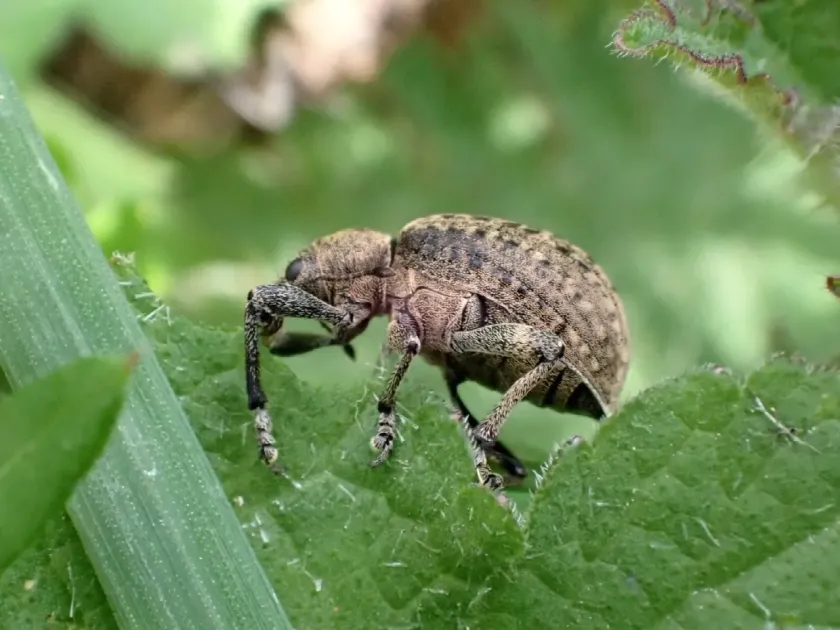
Liophloeus is a genus of snout beetles (Curculionidae) within the Coleoptera order. These beetles are easily identified by their elongated snout, which is a characteristic feature of the family.
The adult body is typically covered in fine scales, often appearing grey or brown, which provides excellent camouflage against bark, soil, or foliage surfaces.
The larvae are legless and possess a fleshy, curved white body with a well-developed, brownish head capsule adapted for living and feeding within the soil environment.
Liophloeus beetles exhibit a strong defensive reflex; when disturbed, they freeze and drop to the ground, mimicking death to evade potential predators or detection.
There are several species within this genus, with Liophloeus tessulatus being one of the most commonly documented pests in horticultural and agricultural settings.
What it damages
Adult beetles primarily cause damage by feeding on the leaves of various trees, shrubs, and ornamental plants, often leaving characteristic notches on the leaf edges.
The most significant harm is caused by the larvae, which live underground and feed on the root systems of berry crops, vegetables, and young fruit tree seedlings.
Root damage leads to reduced nutrient and water uptake, resulting in plant wilting, stunted growth, and increased susceptibility to secondary stressors like drought or diseases.
In cases of high infestation, Liophloeus populations can severely compromise the productivity of vineyards and orchards by weakening the root stability of plants.
Perennial crops are particularly vulnerable, as the persistent presence of larvae in the soil can cause cumulative damage over several growing seasons.
When it appears
The life cycle of Liophloeus begins in the spring, as adult beetles emerge from the soil after overwintering to seek food and mating partners.
Mating and oviposition typically occur between late spring and early summer, as soil temperatures become conducive to the successful development of the eggs.
Larvae develop throughout the summer months, eventually migrating to deeper soil layers as temperatures drop in autumn to survive the winter period.
The duration of the life cycle can range from one to two years depending on local climatic conditions, especially the depth of soil freezing during winter.
The emergence of the new adult generation often coincides with the bud break phase of host plants, providing a ready food supply for the emerging insects.
Signs of infestation
The most common sign of adult presence is the "notched leaf" damage, where leaf margins show irregular, crescent-shaped missing pieces caused by feeding.
Plants affected by larval root feeding exhibit signs of decline, including chlorosis (yellowing leaves), loss of turgor pressure, and visible signs of struggle during dry weather.
Digging into the soil near the root zone of affected plants often reveals the white, C-shaped larvae or visible feeding scars on the main roots.
Since adults are often nocturnal, they can be detected during night inspections of foliage using a flashlight to spot them actively feeding.
Finding groups of beetles sheltered under mulch or leaf litter at the base of trees is a strong indicator of an established local population.
Control measures
Mechanical control, such as regular soil cultivation and deep hoeing around the root zone, helps disrupt the larval habitat and reduces the population size.
Biological control using entomopathogenic nematodes or fungi is a highly effective way to manage soil-dwelling larvae without relying on broad-spectrum pesticides.
Chemical control should target the adult stage through foliar applications during the emergence period, typically before the plant's flowering stage to protect pollinators.
- Maintain clean cultivation by removing weeds that may serve as alternative hosts.
- Apply sticky bands to tree trunks to physically prevent beetles from climbing.
- Use light traps to monitor and catch adult beetles during peak activity hours.
Enhancing plant vigor through proper fertilization and irrigation helps crops recover from minor root damage and improves their overall resistance to pest pressure.
Taxonomy
- Latin name
- Liophloeus
- Order
- Coleoptera (beetles)
- Family
- Curculionidae
- EPPO code
- LIOPSP
Discussion
No discussions yet — be the first.