
Atlantic horseshoe crab
Limulus polyphemus
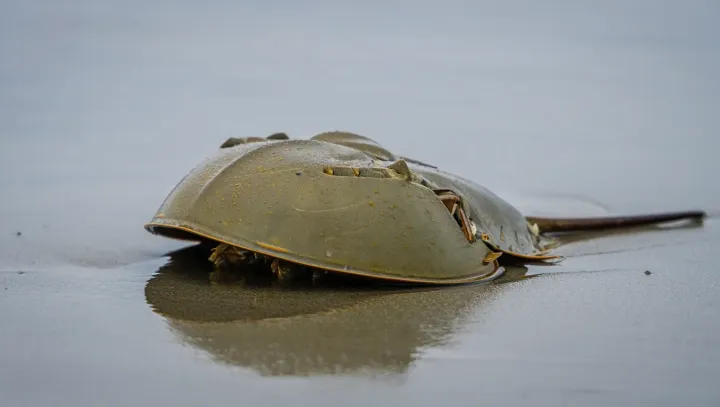
Description
How to identify
The Atlantic horseshoe crab (Limulus polyphemus) belongs to the family Limulidae and the order Xiphosura. It is an exclusively marine arthropod found in coastal waters.
Despite its intimidating appearance, it is a harmless creature that lives on the ocean floor, feeding on worms, clams, and other small marine invertebrates.
The biological structure of the horseshoe crab is adapted for aquatic respiration and life in saltwater environments, making terrestrial life impossible for them.
It possesses no chewing or piercing-sucking mouthparts capable of damaging agricultural foliage, stems, or roots.
It is crucial to clarify that the horseshoe crab is not a plant pest. It is an important ecological component of the Atlantic coastal ecosystem.
What it damages
The Atlantic horseshoe crab does not feed on any agricultural crops. There is zero evidence of any crop damage caused by this species globally.
Since they are unable to live in soil or on land plants, they cannot cause any mechanical damage to vegetation during the growing season.
There is no economic loss associated with this species in the agricultural sector, and it should never be included in pest monitoring lists.
Their interaction with agricultural land is non-existent, and they are purely sea-dwelling organisms that pose no risk to food security.
Agricultural professionals should focus their efforts on true pests, avoiding any confusion with marine species that accidentally wash ashore.
Control measures
There are no control measures required for the Atlantic horseshoe crab, as it does not constitute a threat to agricultural productivity.
The use of pesticides against horseshoe crabs is strictly prohibited and scientifically unjustified, as it would cause severe damage to the local environment.
The species is protected in many regions due to its significant contribution to medicine, particularly in the production of Limulus Amebocyte Lysate.
If you encounter one on a beach, ensure it is safely returned to the water, as these animals play a vital role in the food web.
A responsible agronomic approach involves maintaining ecological integrity rather than attempting to control harmless, non-agricultural species.
Taxonomy
- Latin name
- Limulus polyphemus
- Family
- Limulidae
- EPPO code
- LIMUPO
Discussion
No discussions yet — be the first.