
Horseshoe crab
Limulus
Description
How to identify
The horseshoe crab (genus Limulus) is a marine arthropod belonging to the order Xiphosura and the family Limulidae.
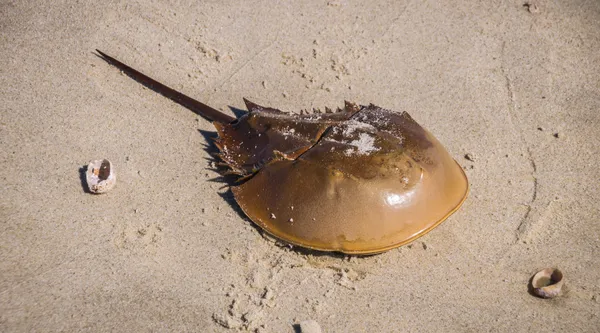
It is characterized by a hard, dome-shaped exoskeleton that provides significant protection against predators in its marine habitat.
The creature is easily identified by its long, rigid, spike-like telson, which is used for steering and flipping over.
Despite the name "crab," it is more closely related to spiders and scorpions than to true crustaceans.
Horseshoe crabs possess multiple sets of eyes, including both compound eyes and simple ocelli on their dorsal shell.
What it damages
Horseshoe crabs are strictly marine organisms and do not inhabit terrestrial environments such as farms or gardens.
They consume small invertebrates, such as worms and clams, and have no interest in feeding on agricultural crops.
There is no evidence that horseshoe crabs have any negative impact on food security or crop production.
They lack the physiological adaptations necessary to survive or navigate in soil or freshwater environments.
Consequently, they are not considered pests in any agricultural or horticultural context.
When it appears
Their activity peaks during the spring and summer months when water temperatures rise to optimal levels.
Adults migrate from deeper waters to intertidal zones to spawn and deposit eggs during high tides.
The larvae develop in the ocean, undergoing several molting stages before reaching adulthood after many years.
Seasonal migration patterns are highly dependent on lunar cycles and tidal fluctuations along the coast.
Winter dormancy occurs in deeper waters where temperatures remain more stable for the survival of the population.
Signs of infestation
On coastal sandy areas, one might observe trail marks left by the animal's telson during its movement along the shoreline.
The presence of empty, discarded exoskeletons on beaches indicates natural molting processes as the animal grows.
Stranded individuals may appear after high-energy storm events, which disrupt their normal nesting habits.
There are no botanical signs of damage, such as leaf lesions or root destruction, associated with these animals.
Monitoring for this species is unnecessary for farmers as they have zero impact on plant health.
Control measures
There is no need for protective measures, pesticides, or biological controls against horseshoe crabs.
If a horseshoe crab is found on a beach, it is recommended to gently return it to the water to ensure its survival.
In many regions, horseshoe crabs are legally protected due to their status as an ancient and ecologically vital species.
Conservation efforts aim to preserve their populations, which are crucial for the health of coastal ecosystems.
Farmers should focus their resources on genuine agricultural pests that affect crop yields and plant viability.
Taxonomy
- Latin name
- Limulus
- Family
- Limulidae
- EPPO code
- LIMUSP
Discussion
No discussions yet — be the first.