
Limnoria tripunctata
Limnoria tripunctata
Description
How to identify
Limnoria tripunctata is a species of marine isopod crustacean commonly known as a gribble. These tiny organisms measure approximately 3 to 4 mm in length and have a flattened, segmented body.
Their anatomy is highly specialized for boring into submerged wood. The tail section (pleotelson) displays three distinct small tubercles, which is a key diagnostic feature for species identification.
They are primarily found in temperate and tropical marine environments, thriving in brackish and salty waters where they can access wooden substrates.
The biology of the species relies on a symbiotic relationship with fungi; the gribbles consume wood but depend on fungi to provide necessary nutritional supplements.
Reproduction is direct, with females brooding their young in a specialized pouch. Juveniles emerge fully formed and begin excavating their own tunnels immediately.
What it damages
Limnoria tripunctata poses a severe threat to maritime infrastructure, including wooden piers, docks, and aquaculture cages, which are essential for shell-fish and fish farming.
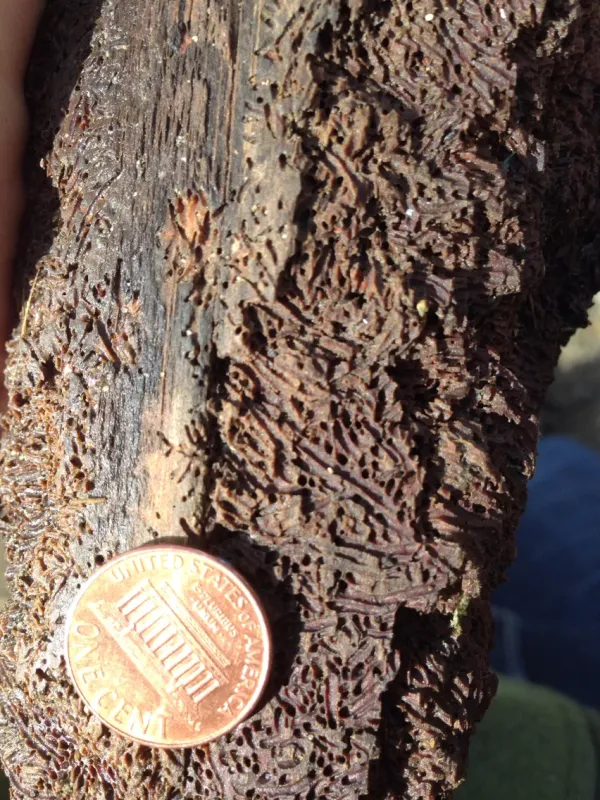
The pest excavates intricate networks of tunnels just beneath the surface of the wood. This constant boring removes wood fiber and compromises structural integrity.
Over time, tidal action and currents wash away the honeycombed surface layers, exposing deeper wood and allowing the colony to penetrate further.
This biological degradation leads to the failure of timber piles, which can cause significant financial losses for aquaculture operators and harbor authorities.
Harder timber varieties may offer limited resistance, but even treated wood can be eventually colonized if protective barriers are breached or degraded.
Signs of infestation
The earliest sign of infestation is the presence of small, evenly spaced entry holes on the surface of the timber, typically between 1 and 2 mm in diameter.
As the colony grows, the surface of the wood starts to look like a sponge or lace as the tunnels become interconnected and the outer layer is eroded by water movement.
Structural weakening is a critical late-stage sign, where piles become significantly thinner, sometimes losing half their original diameter or more.
When inspecting submerged wooden structures, one may notice the absence of shipworm tubes, as limnoria activity differs from the deep-boring nature of Teredo worms.
The soft, spongy texture of the outer layer of wood is a reliable indicator that an active population of Limnoria tripunctata is currently present.
Control measures
The most effective method for controlling this pest is the pressure treatment of wood with high-quality chemical preservatives containing copper compounds.
Physical barriers, such as plastic wraps or high-density polyethylene jackets, prevent the gribbles from physically touching and boring into the timber.
Regular underwater inspections by certified divers or ROVs are crucial for identifying infestations before they compromise the stability of a structure.
In aquaculture, many operators are shifting towards the use of synthetic materials or treated metals, which are completely resistant to wood-boring crustaceans.
Preventative maintenance schedules should include checking the integrity of protective coatings on all submerged wooden components to ensure long-term durability.
Taxonomy
- Latin name
- Limnoria tripunctata
- Family
- Limnoriidae
- EPPO code
- LIMRTR
Discussion
No discussions yet — be the first.