
Sea slater
Ligia oceanica
Description
How to identify
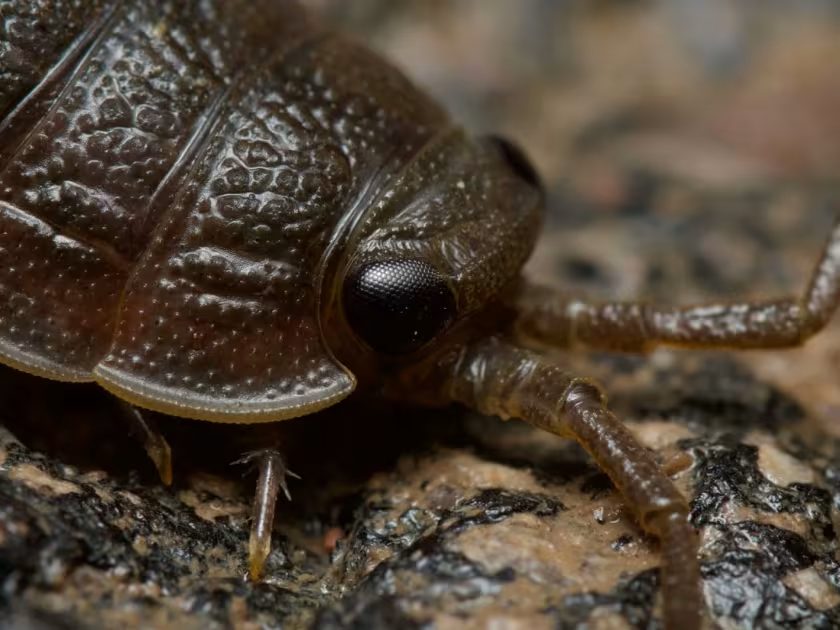
The sea slater (Ligia oceanica) is a large isopod crustacean commonly found in coastal environments and occasionally in humid greenhouse structures.
Adult specimens typically reach up to 30 mm in length, featuring an oval, flattened body shape and a color palette ranging from olive-brown to slate gray.
They possess seven pairs of legs and prominent, long antennae that serve as essential sensory organs in their damp, dark habitats.
Unlike terrestrial woodlice, they require a high degree of humidity to survive and are known for their rapid movement when disturbed.
Their life cycle involves a brood pouch where the female carries the eggs and young, ensuring high survival rates for the offspring in favorable conditions.
What it damages
In agricultural settings, particularly in greenhouses, these crustaceans transition from feeding on decaying matter to targeting healthy plant tissues.
They primarily attack seedlings and young plants, consuming the stem bases, roots, and the underside of leaves during the nighttime hours.
Feeding damage is characterized by irregular holes and jagged leaf margins, which can lead to severe physiological stress in young crops.
Apart from direct tissue loss, sea slaters are mechanical vectors for various soil-borne pathogens, including fungi that cause root and stem rot.
High populations can lead to significant economic loss in hydroponic or greenhouse systems that maintain constant high moisture levels.
Signs of infestation
The most reliable sign of an infestation is the visual observation of adults hiding under pots, damp wooden boards, or organic mulch during the day.
Feeding evidence manifests as perforated leaves and damaged stem bases, often occurring simultaneously with the presence of fine granular frass.
Small, shallow trails or furrows in the surface soil layer indicate the movement patterns of the slaters across the greenhouse benches.
Sudden wilting of young seedlings, coupled with visible surface damage near the soil line, strongly suggests a woodlouse or sea slater infestation.
Nocturnal inspection using a flashlight will quickly reveal the pests as they actively browse on plants and debris.
Control measures
The primary strategy for controlling Ligia oceanica is environmental management, specifically targeting the reduction of excess humidity.
Eliminating potential harborages, such as rotting wood, leaf piles, and excessive damp organic debris, is crucial for population suppression.
- Improve drainage systems to prevent water accumulation near plant roots.
- Deploy board traps which attract pests for easy manual collection and disposal.
- Apply desiccant powders like diatomaceous earth around the perimeter of the planting area.
Maintaining a dry surface layer of soil significantly inhibits the movement and reproduction of these crustaceans.
In severe infestations, professional pest control applications labeled for greenhouse use may be required to protect the crop integrity.
Taxonomy
- Latin name
- Ligia oceanica
- Family
- Ligiidae
- EPPO code
- LIGIOC
Discussion
No discussions yet — be the first.