
Ligia
Ligia
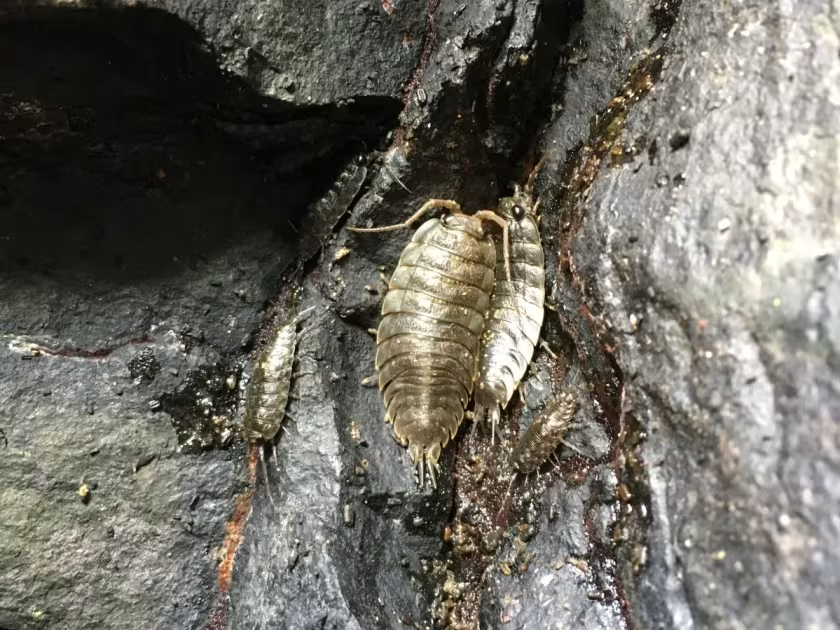
Description
How to identify
Ligia is a genus of crustaceans within the order Isopoda, commonly known as sea slaters or wharf roaches, belonging to the family Ligiidae. Despite their semi-aquatic origins, they are frequently found in moist terrestrial environments.
These organisms possess a segmented, greyish-brown exoskeleton that is elongated and flattened. They are equipped with prominent antennae and several pairs of legs designed for rapid movement across various surfaces.
Although they are crustaceans, they have adapted to land, yet they remain highly dependent on high levels of humidity to prevent desiccation and to maintain their respiratory functions.
Adults typically measure between 2 and 3 centimeters in length. They are primarily nocturnal, preferring to spend daylight hours hidden in damp crevices, under stones, or beneath piles of decaying organic matter.
Their reproduction does not involve a larval stage with metamorphosis. Instead, the female carries eggs in a brood pouch, and the hatchlings emerge as miniature versions of the adults, immediately capable of movement.
What it damages
Ligia primarily becomes a pest in controlled environments like greenhouses, nurseries, and orangeries where the humidity levels are kept constantly high for plant cultivation.
While their diet consists mostly of decomposing vegetation, they will readily feed on live tissues of seedlings and young vegetables when organic decay is insufficient.
The most significant damage is observed in young transplants, where Ligia gnaws on tender stems and roots, causing the plants to wilt rapidly and often leading to total plant failure.
Fruits and vegetables in direct contact with the soil are also prone to damage, as Ligia creates deep gouges on the skin, which then attracts other pests and promotes rot.
Their presence can be particularly devastating in hydroponic systems or areas with thick, wet mulch, where the constant moisture provides an ideal environment for population growth.
When it appears
In greenhouses, Ligia can be active year-round provided that the climate remains humid and moist, creating an environment that supports their biological requirements.
In outdoor settings, their seasonal activity typically peaks during the spring and summer months when soil temperatures rise and rainfall increases.
During the autumn and winter, they seek shelter in deeper soil layers, under garden debris, or in protected structures to survive lower temperatures and fluctuations in humidity.
Their activity levels are directly correlated with moisture availability; periods of intense drought often force them into dormancy or migration to more stable, humid microhabitats.
Agricultural management should focus on monitoring during the transition into spring, as this is when emerging populations can quickly decimate young, newly planted crops.
Signs of infestation
A primary indicator of a Ligia infestation is the appearance of irregular gnaw marks on the base of stems or leaves that touch the soil or mulch layer.
Direct observation during nighttime hours using a flashlight is often the most reliable way to confirm their presence, as they are secretive and nocturnal by nature.
Small, granular dark droppings found near the base of damaged plants are a clear sign of their feeding activity and indicate a local cluster of the pest.
The presence of Ligia can also be confirmed by lifting stones, boards, or moist organic waste, where they tend to aggregate during the daylight hours.
Sudden, unexplained wilting of young crops without visible signs of fungal disease on the upper foliage often points to root or stem damage caused by these crustaceans.
Control measures
The most effective long-term strategy is moisture management: ensure greenhouses are well-ventilated and avoid over-irrigating to reduce the suitability of the habitat.
Maintain high standards of garden hygiene by removing plant debris, weeds, and damp organic waste that serves as both food and shelter for the population.
Mechanical trapping using damp cardboard or wooden boards placed on the soil can be used to attract and physically remove or dispose of the pests during the day.
Biological control methods, such as the use of entomopathogenic nematodes, can provide a sustainable way to suppress populations without the need for harsh chemicals.
- Improve ventilation in greenhouses.
- Remove weeds and old mulch from planting areas.
- Use physical barriers to keep fruits off the ground.
- Conduct night inspections to monitor population density.
Taxonomy
- Latin name
- Ligia
- Family
- Ligiidae
- EPPO code
- LIGISP
Discussion
No discussions yet — be the first.