
Nettle-tree butterfly
Libythea
Description
How to identify
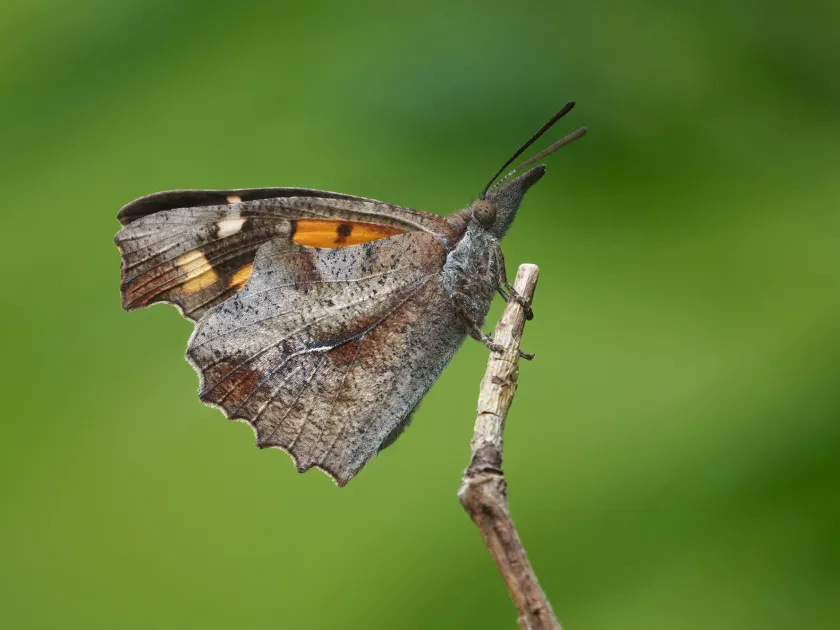
The Nettle-tree butterfly (genus Libythea) belongs to the Nymphalidae family. It is easily identified by its exceptionally long labial palps, which form a snout-like protrusion.
Adult butterflies exhibit excellent camouflage, with brown wings featuring orange markings, perfectly resembling a dead leaf when they remain motionless.
The wingspan typically ranges between 40 and 50 mm, allowing them to blend into the woody environment where their host plants grow.
The larvae (caterpillars) are green with longitudinal pale stripes, providing them with effective protection against predators while feeding on foliage.
The pupa is green with dark speckles, often hanging from twigs or leaves, making it nearly invisible to the untrained eye in the garden setting.
What it damages
The larvae feed almost exclusively on the leaves of the hackberry or nettle tree (genus Celtis), which is their primary host plant.
During outbreaks, caterpillars can strip entire branches of foliage, leading to severe aesthetic damage and physiological stress for the trees.
Defoliation forces the tree to use up energy reserves to produce new leaves, which weakens the plant and stunts its overall growth rate.
Young saplings in nurseries are particularly vulnerable and can suffer from growth cessation if the infestation remains untreated for an extended period.
While adult butterflies do not feed on leaves, their presence is a clear indicator that eggs have been laid, suggesting imminent caterpillar damage.
When it appears
The species overwinters as an adult, seeking shelter in tree hollows, bark crevices, or protected areas under thick leaf litter.
Adults emerge in early spring, typically around March or April, to begin mating and laying eggs as the host tree starts its growth cycle.
The lifecycle consists of several stages, with larvae appearing in late spring and again during the summer months depending on local temperatures.
The entire developmental cycle from egg to adult is relatively fast, often completing within 30 to 45 days under optimal weather conditions.
Peak activity for the butterfly occurs during the warmer months, making late spring to mid-summer the critical period for monitoring and control.
Signs of infestation
The earliest sign of an infestation is the appearance of irregularly shaped holes in the leaves of the host hackberry tree.
In cases of heavy infestation, caterpillars are easily visible on the undersides of leaves or along the stems during the day.
Presence of frass (caterpillar excrement) on leaves beneath the feeding site is a definitive indicator of an active population of larvae.
Tree appearance may change to a "lacy" texture as the larvae consume the soft tissue of the leaf blade, leaving only the primary veins behind.
Mass congregations of adult butterflies in late summer may indicate a successful breeding season and potential risks for the following year.
Control measures
Biological control using Bacillus thuringiensis sprays is highly effective and safe for the surrounding environment and beneficial insects.
For severe outbreaks, contact-stomach insecticides applied to the foliage during the early larval stages can significantly reduce the population.
Maintaining tree vitality through proper irrigation and balanced fertilization helps the plants withstand moderate damage without long-term health decline.
Physical removal of caterpillars from small trees or saplings is a practical and environmentally friendly solution for hobby gardeners.
Monitoring the population using pheromone traps or visual inspections allows for timely intervention, minimizing the need for heavy chemical usage.
Taxonomy
- Latin name
- Libythea
- Order
- Lepidoptera (butterflies)
- Family
- Libytheidae
- EPPO code
- LIBYSP
Discussion
No discussions yet — be the first.