
Leucosolenia botryoides
Leucosolenia botryoides
Description
How to identify
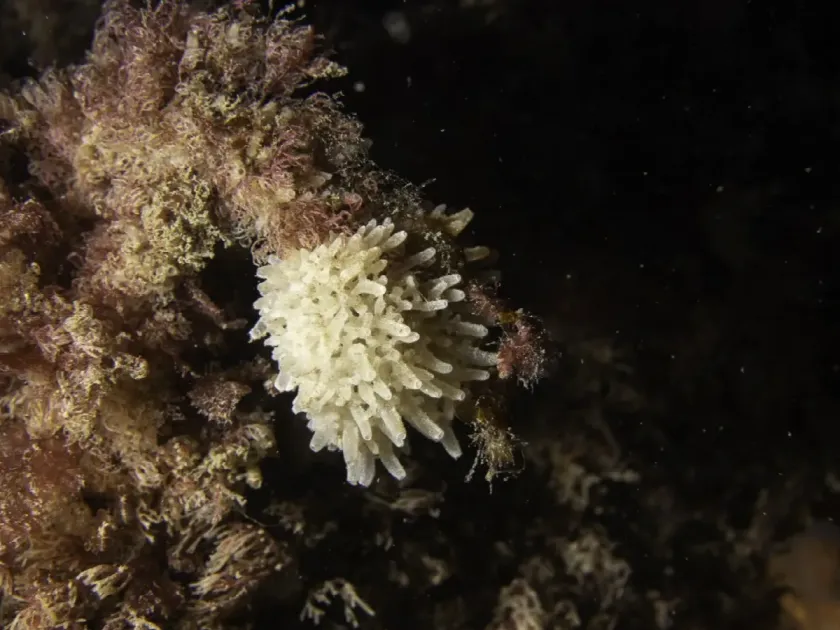
Leucosolenia botryoides is a species of calcareous sponge belonging to the phylum Porifera, class Calcarea, and the family Leucosoleniidae.
The organism forms small, delicate, branching colonies that often look like clusters of white or pale yellow tubes.
These sponges are among the simplest multicellular animals, lacking organs and tissues, and they rely on water filtration for nutrition.
They are exclusively marine organisms found attached to rocky substrates or seaweed in the coastal zones of the ocean.
Because of their marine nature, they are physically unable to inhabit terrestrial ecosystems such as farms, gardens, or greenhouses.
What it damages
Leucosolenia botryoides does not cause any damage to terrestrial plants or agricultural crops, as it is strictly a marine species.
The organism feeds by filtering microscopic organic matter from saltwater and cannot consume or infect the tissues of land plants.
Reports of this sponge being a "pest" are completely unfounded and likely arise from the misidentification of white fungal growth or mealybug infestations.
There are no known instances of this sponge affecting plant health, photosynthesis, or the yield of any agricultural product.
The species is of no economic or agricultural significance and does not require any pest management protocols in farming.
When it appears
The sponge exhibits growth throughout the year in marine environments where water temperature and salinity levels remain within the optimal range.
Reproduction involves the release of flagellated larvae that drift with ocean currents until they settle on a suitable hard surface.
Colony growth is typically more pronounced during seasons with abundant nutrients in the water, though the sponge is not tied to agricultural seasons.
Environmental fluctuations in the ocean, such as changes in tide levels or water temperature, are the primary drivers of its life cycle.
Agricultural monitoring programs do not include this species as it lacks any role in terrestrial plant life cycles.
Signs of infestation
The presence of this sponge is indicated by white, tubular, branching growths on underwater rocks or man-made coastal structures.
The colonies are fragile and break easily when handled, as they are supported by a skeleton of microscopic calcium carbonate spicules.
If you observe white, sponge-like patches on your greenhouse or outdoor plants, these are not Leucosolenia botryoides.
Common plant issues that may visually mimic sponge growth include powdery mildew, mealybug waxy secretions, or spider mite webbing.
Laboratory diagnosis is recommended for any unidentified white growth on plants to ensure proper treatment of true pathogens.
Control measures
Since Leucosolenia botryoides is not a plant pest, no control measures are required for agricultural or horticultural purposes.
If white patches appear on your plants, you should treat them for the actual pest or disease, such as fungi or aphids, using appropriate chemical or biological agents.
Good greenhouse sanitation and airflow management are effective ways to prevent the development of white-colored fungal pathogens.
Mechanical removal is the only "control" method applicable, but it is limited to the marine aquarium hobby or specific aquatic engineering contexts.
Always verify the identity of a suspected pest before applying any chemicals, as the confusion between marine organisms and plant pathogens is common among novice growers.
Taxonomy
- Latin name
- Leucosolenia botryoides
- Family
- Leucosoleniidae
- EPPO code
- LSOLBO
Discussion
No discussions yet — be the first.