
Lepyrus
Lepyrus
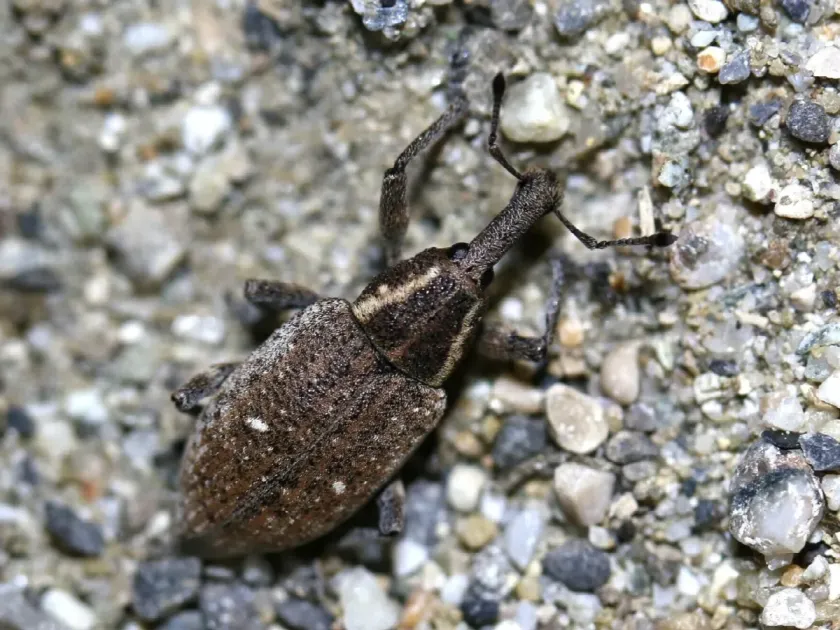
Description
How to identify
Lepyrus is a genus of snout beetles (weevils) belonging to the Curculionidae family. These insects are characterized by their elongated bodies and dense, scale-like coverings that provide excellent camouflage against the bark of trees and shrubs.
The snout, or rostrum, of these beetles is well-developed, enabling them to bore into plant tissues to feed. They possess geniculate (elbowed) antennae that are typically attached to the midpoint of the rostrum, a common structural trait within the family.
The larvae of Lepyrus are C-shaped, legless, and typically creamy white in color. They are cryptic feeders, living mostly underneath the bark or within the woody tissue, where they cause significant damage by consuming the cambium layer.
Adult beetles are largely nocturnal, preferring to remain hidden in bark crevices or under plant debris during daylight hours. This behavior often makes them difficult to spot during routine field inspections, necessitating nocturnal monitoring.
Their life cycle includes complete metamorphosis: egg, larva, pupa, and adult. The females typically deposit their eggs into specially excavated niches in the bark or the soil near the host plant, ensuring the larvae have immediate access to nutrients upon hatching.
What it damages
The primary host plants for Lepyrus include various species of willow (Salix) and birch (Betula). In some instances, they may migrate to fruit trees if their primary hosts are unavailable or if their populations reach high density.
Adults cause damage by feeding on buds and the young bark of shoots, which can stunt the growth of the plant and lead to severe crown deformation. This is particularly harmful in nurseries, where young saplings can be rendered unfit for sale.
The larval stage is the most destructive, as they feed on the cambium, which is essential for nutrient transport. If a population is high enough, larvae can effectively girdle a young tree, causing the upper sections to wither and die.
Plants infested by these weevils often suffer from reduced vitality, making them susceptible to secondary fungal infections or pathogens that exploit the compromised bark. This weakens the tree's overall defense mechanisms against environmental stressors.
In forestry and ornamental gardening, the impact of Lepyrus is often overlooked until significant physical damage becomes visible. By the time branches start dying, the underlying structural damage to the tree's vascular system is usually extensive.
When it appears
Adult activity typically peaks in the spring, coinciding with bud burst. This period of increased metabolic activity is when adults feed heavily after emerging from winter dormancy, making it the most critical time for monitoring.
Throughout the summer, larvae continue to develop under the bark, deepening their feeding channels. Pupation generally occurs toward late summer, leading to the emergence of a new generation of adults before the onset of autumn.
As temperatures drop, the adults seek overwintering sites in the leaf litter, soil, or deep within the bark of mature trees. They remain relatively dormant until the following spring, when the cycle begins anew.
The duration of the life cycle is highly dependent on local climatic conditions. Warmer regions may see faster larval development, whereas cooler climates often force a slower development pace, sometimes extending the cycle over a longer period.
Meteorological variables, such as unseasonably warm springs or prolonged droughts, can significantly alter the phenology of Lepyrus. Agronomists must adjust their control strategies based on the observed development phases in the current season.
Signs of infestation
The first signs of an infestation are irregular notches on the edges of leaves and shoots. These "feeding marks" are the most reliable indicators of adult beetle presence within the immediate area.
Sticky sap exudation on the trunk is a common signal that larvae are actively feeding beneath the bark. This is a defensive reaction of the tree that unfortunately confirms the destruction of the cambium layer.
The gradual yellowing and wilting of foliage on specific branches suggest vascular system damage. This indicates that the larval activity has restricted the movement of water and nutrients, posing a major risk to the branch's survival.
Small mounds of frass (excrement) or wood dust found at the base of the trunk or in bark crevices indicate active tunneling by larvae. These signs are particularly noticeable after rainfall when they become distinct against the bark color.
If the bark is partially removed in suspected areas, one can often find winding galleries created by the larvae. The presence of these tunnels is definitive proof of an infestation, confirming that immediate protective measures are required.
Control measures
Good agricultural practices are the first line of defense. Pruning and removing weak or dead branches help eliminate potential egg-laying sites and reduce the beetle population within the planting area.
Chemical control involving systemic insecticides is effective during the peak emergence of adults. Treatments should be applied during evening hours to coincide with the nocturnal activity of the beetles, maximizing efficacy.
Maintaining biodiversity in the surrounding area encourages the presence of natural predators, such as birds and predatory insects, which can keep Lepyrus populations in check naturally without the need for intensive chemical applications.
In professional nurseries, mechanical barriers can be used to prevent beetles from crawling up the trunks of young saplings. This is a cost-effective method for protecting high-value trees during their most vulnerable growth stages.
- Regular nocturnal monitoring for adult beetles.
- Sanitary removal of infested or dead wood.
- Targeted use of insecticides during adult activity windows.
- Nutrient management to promote rapid wound healing in trees.
Taxonomy
- Latin name
- Lepyrus
- Order
- Coleoptera (beetles)
- Family
- Curculionidae
- EPPO code
- LPYRSP
Discussion
No discussions yet — be the first.