
Leptoxyleborus
Leptoxyleborus
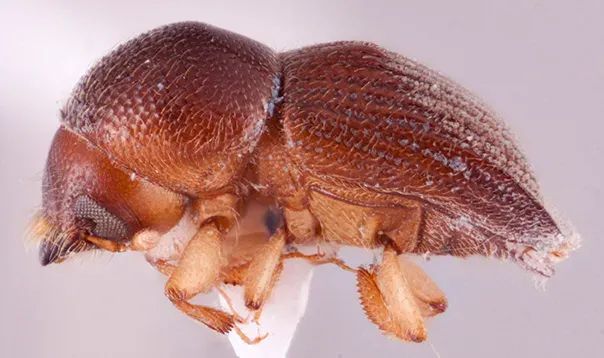
Description
How to identify
Leptoxyleborus is a genus of beetles belonging to the Curculionidae family, specifically the Scolytinae subfamily. These insects are classified as ambrosia beetles, known for their symbiotic relationship with fungi.
Adult beetles are tiny, typically cylindrical in shape, and possess a dark brown to black coloration. Their small size makes them difficult to spot on tree bark without close inspection.
The life cycle of these beetles is distinct because they do not feed on wood directly. Instead, they cultivate specific fungi in their tunnels, which serve as the primary food source for their larvae.
Females bore into the wood to create galleries where they introduce fungal spores. The growth of this fungus is essential for the survival and development of the beetle's offspring within the tree.
While most species of Leptoxyleborus are native to tropical regions, human-mediated movement and climate change have increased the risk of these pests spreading into new environments globally.
What it damages
Leptoxyleborus primarily targets weakened, stressed, or dying trees. However, high-density populations can occasionally attack healthy trees, causing significant damage to wood structure and health.
These pests affect a wide range of tree species, including both coniferous and deciduous trees, making them a significant concern for orchards, forests, and commercial timber plantations.
The primary damage occurs when beetles create tunnels that disrupt the tree's vascular system. This blockage prevents the flow of water and nutrients, leading to branch dieback or total tree death.
The fungal pathogens introduced by the beetles can cause secondary infections, such as wood decay and discoloration, which further weaken the host tree and reduce its lifespan.
Infestation results in both physiological damage to the living tree and severe economic losses by degrading the quality of the timber, making it unsuitable for commercial usage.
Signs of infestation
Small, round entry holes on the bark, similar to pinpricks, are often the first sign that the tree has been colonized by Leptoxyleborus beetles.
The presence of frass, which is a fine, sawdust-like powder ejected by the beetles during tunneling, can often be seen gathering around the entry holes or at the base of the trunk.
Yellowing, wilting, or premature leaf drop in the canopy suggests that the internal transport tissues of the tree have been compromised by the beetle colony's activities.
Close examination of the bark might reveal dark staining around the tunnels caused by the fungal mycelium growing inside the tree's vascular tissues.
In some cases, the tree may produce sap or resin in response to the attack, creating wet spots or streaks on the bark as it attempts to repel the intruding beetles.
Control measures
Sanitation is the most effective approach; infested branches or trees should be promptly removed and destroyed to prevent the beetles from spreading to neighboring healthy plants.
Systemic insecticides may be used as a preventative measure or to treat early-stage infestations, as these chemicals can be absorbed by the tree and reach the pests inside the wood.
Maintaining tree vigor through proper irrigation, fertilization, and careful pruning reduces the likelihood of successful infestation, as healthy trees are better at resisting attacks.
Implementing pheromone-based monitoring traps can help arborists and farmers determine the peak flight periods of the beetles, allowing for more precise timing of chemical applications.
Avoiding unnecessary mechanical injury to the bark during routine garden maintenance is critical, as any open wound serves as an attractive entry point for the beetles.
Taxonomy
- Latin name
- Leptoxyleborus
- Order
- Coleoptera (beetles)
- Family
- Curculionidae
- EPPO code
- LETXSP
Discussion
No discussions yet — be the first.