
Australian weevil
Leptopius robustus
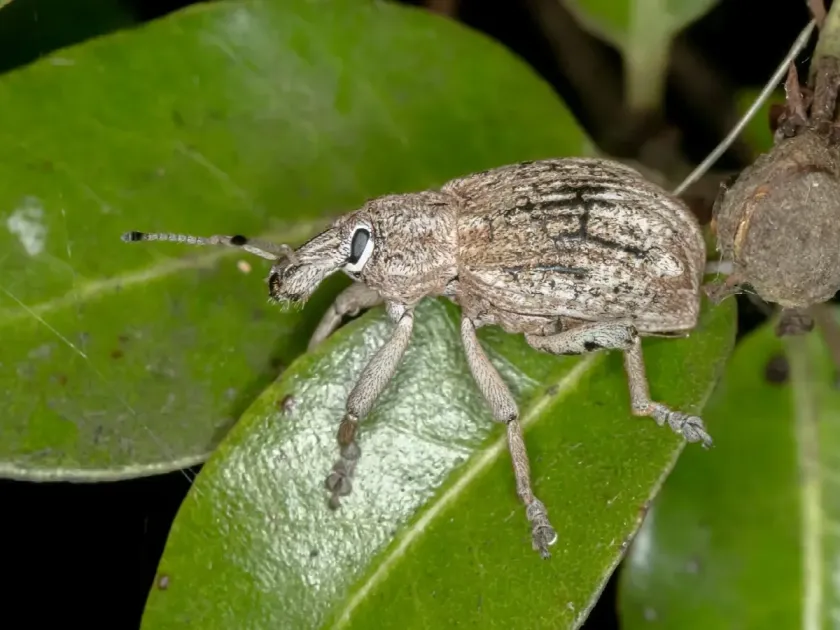
Description
How to identify
The Australian weevil (Leptopius robustus) is a member of the Coleoptera order and the Curculionidae family. It is a large, robust beetle species recognized for its significant physical presence and adaptation to the Australian environment.
Adult beetles typically possess a dark, greyish-brown body that serves as an effective camouflage against tree bark and soil debris. The elytra (wing covers) exhibit a distinct, coarse texture, which is a key diagnostic feature for species identification.
The insect is characterized by a powerful snout, known as a rostrum, which it uses to feed on various plant tissues. This structural adaptation allows the beetle to consume hard tissues, making it a persistent and damaging herbivore.
Larvae are typical of the weevil family, exhibiting a legless, fleshy, white, or cream-colored body. They possess a well-developed head capsule with strong mandibles adapted for burrowing and consuming roots or woody substrates.
The life cycle is closely synchronized with seasonal patterns, with adults predominantly active during the night. The developmental stages, especially the larval stage, are completed in sheltered environments to avoid predation and environmental extremes.
What it damages
Leptopius robustus primarily targets various Eucalyptus species and other native woody plants. However, in artificial landscapes or agricultural settings, it can also affect diverse ornamental trees and shrubs.
Larval damage is particularly severe as they feed on the root systems of host plants. By girdling or consuming lateral and main roots, they interrupt the vascular system, preventing the transport of water and nutrients, which often leads to the death of young trees.
Adult weevils cause foliage damage by creating irregular, semi-circular notches along the edges of leaves. Severe defoliation reduces the plant's photosynthetic capacity, causing overall physiological stress and potential stunt in growth.
In addition to direct feeding damage, the wounds created by the weevils serve as entry points for secondary pathogens, such as root rot fungi and wood-decay bacteria. This interaction often accelerates the decline of infested host plants.
In forest nurseries and orchards, this pest is considered highly destructive because young trees have limited reserves to withstand significant root loss. Economic damage is substantial due to the high mortality rate of nursery stock.
Signs of infestation
The most recognizable sign of infestation is the characteristic notched foliage. Unlike the cleaner edges left by some caterpillars, Leptopius robustus creates rough, jagged notches, which are a classic indicator of weevil activity.
Signs of root damage often manifest as unexpected yellowing, wilting, or general chlorosis of the canopy, even when soil moisture is adequate. Such symptoms indicate that the root system is no longer functioning correctly.
Careful inspection of the soil around the base of the plant may reveal larvae or the tunnel tracks they create. If a sapling feels unstable or appears to lean in the ground without external cause, root destruction is likely occurring.
Adult weevils can be detected at night using a flashlight. Their behavior includes a "drop-and-hide" reflex, where they fall from the branches to the ground when they perceive vibrations or light, a tactic that helps them evade detection.
Exudation of sap or gum on the trunks or limbs of infested trees is another subtle indicator of colonization. This is the tree's natural defense mechanism, attempting to seal the physical damage inflicted by the adult beetles.
Control measures
Integrated Pest Management (IPM) is essential for controlling the Australian weevil. Strategies must address both the adult population in the canopy and the larval stages residing within the soil matrix.
Cultural practices, such as maintaining soil health and providing adequate irrigation, help plants recover from pest pressure. Regular soil cultivation within the drip line can disrupt larval development and expose them to natural predators.
Biological control using entomopathogenic nematodes or specialized fungal sprays (e.g., Beauveria bassiana) has proven effective against soil-borne larvae. This approach is environmentally friendly and minimizes the need for harsh synthetic chemicals.
In cases of heavy infestation, systematic insecticides may be required. These should be applied carefully to target the adults or to create a protective barrier in the soil that prevents larval establishment in the root zone.
Physical removal of adult beetles via night collection or the application of sticky barriers on trunks can provide short-term relief. Removing and destroying heavily infested trees is often necessary to prevent the pest from spreading throughout a planting site.
Taxonomy
- Latin name
- Leptopius robustus
- Order
- Coleoptera (beetles)
- Family
- Curculionidae
- EPPO code
- LPTIRO
Discussion
No discussions yet — be the first.