
Barbary striped grass mouse
Lemniscomys barbarus
Description
How to identify
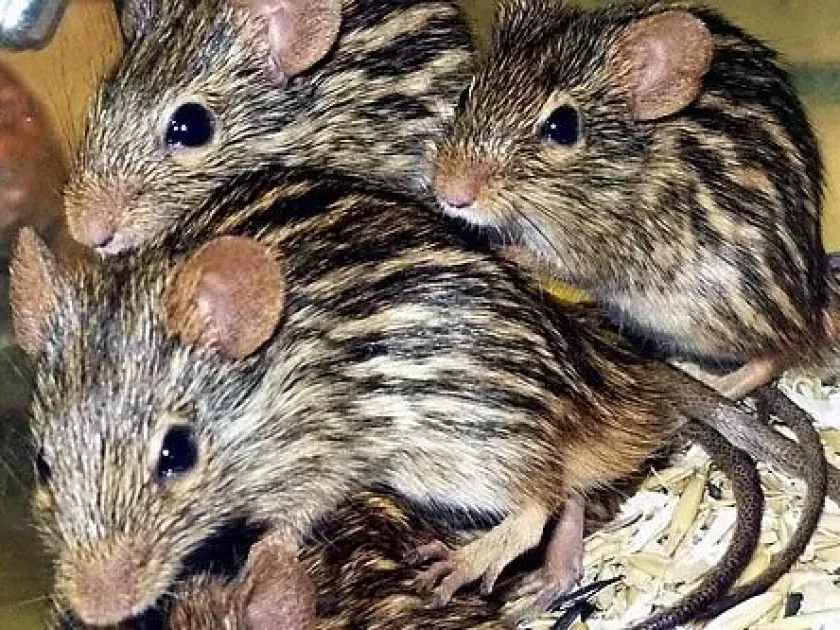
The Barbary striped grass mouse (Lemniscomys barbarus) belongs to the order Rodentia and the family Muridae. It is easily recognized by the distinct dark stripe running along the center of its back, flanked by lighter lines.
This rodent is well-adapted to grasslands and agricultural ecosystems. It has a relatively long tail, prominent ears, and large eyes that facilitate movement through dense vegetation.
Unlike many other mouse species, this animal is primarily diurnal or crepuscular. Its striped pattern provides excellent camouflage in dry grass and among crop stalks, making it difficult to spot.
They construct shallow burrows or utilize natural cavities in the ground. Their high reproductive rate allows populations to recover quickly under favorable climate and food conditions.
These mice are highly mobile and can quickly colonize new areas, especially when fields provide dense cover and abundant food sources during the growing season.
What it damages
The primary damage is inflicted on cereal crops such as wheat, barley, and maize. These rodents attack plants from the seeding stage through to the ripening of the ears.
By consuming seeds and germinating sprouts, they cause significant thinning of crops, often necessitating reseeding. Furthermore, they gnaw on young stems, weakening the plant structure.
As crops mature, the mice climb the stalks to reach the grains. This behavior leads to direct yield losses and reduces the quality of the harvested produce due to contamination.
Beyond cereals, they may damage vegetable crops and melons by gnawing on roots, tubers, and fruits. Their versatile diet makes them a threat to a variety of agricultural outputs.
Feeding sites often become entry points for secondary pathogens and fungal infections, which further degrade the overall health and yield of the agricultural crop.
Signs of infestation
Clear signs of infestation include damaged stalks, gnawed grain heads, and visible trails carved through the crop cover. These paths are often connected to nearby burrow entrances.
Burrows located along field borders or irrigation ditches are reliable indicators of population presence. Fresh soil mounds and nearby piles of grain husks confirm active use.
Droppings found in feeding areas or near storage zones provide further evidence of activity. Such deposits are often concentrated in areas where the mice seek shelter.
Patchy or missing sections in the field following germination are frequently the result of rodents digging up seeds or destroying early seedlings.
Increased activity of birds of prey or other predators over the fields during the day often correlates with high rodent density in that specific area.
Control measures
Deep plowing after harvest is an effective agrotechnical measure that destroys rodent nests and burrows, preventing them from surviving in the field.
Maintaining clean field margins by removing weeds and dry vegetation eliminates the cover and nesting sites that these rodents require to thrive near crops.
Where population levels exceed economic thresholds, the use of registered rodenticides is necessary. Baits should be placed in burrows to ensure efficacy and safety.
Regular field scouting is essential for identifying early signs of damage. Monitoring allows for localized management, preventing the need for broad-scale chemical application.
Biological control can be supported by encouraging the presence of raptors (such as owls and kestrels) by installing perches, which assists in keeping rodent numbers in check.
Taxonomy
- Latin name
- Lemniscomys barbarus
- Order
- Rodents
- Family
- Muridae
- EPPO code
- ARVIBA
Discussion
No discussions yet — be the first.