
Striped grass mouse
Lemniscomys
Description
How to identify
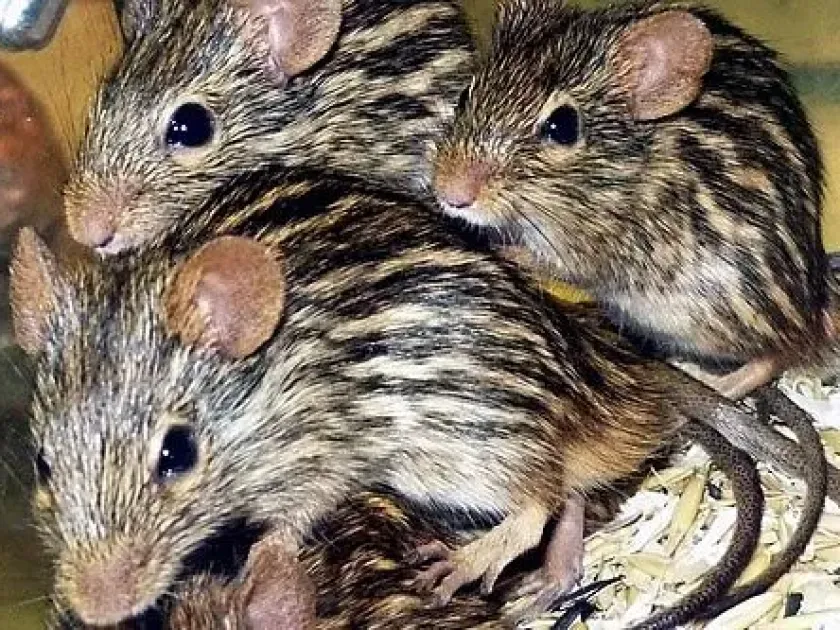
The striped grass mouse (Lemniscomys) is a small rodent belonging to the Muridae family. Its most distinctive physical characteristic is a single dark longitudinal stripe running down the center of its back, which provides a stark contrast to its grayish-brown fur.
Adult mice generally measure between 9 and 16 centimeters in body length, typically accompanied by a tail of equal or greater length. Unlike many nocturnal mice species, these rodents possess relatively large eyes and ears, making them well-adapted to daytime activity.
They inhabit grassy ecosystems, savannas, and agricultural landscapes, where they build sophisticated burrows or grass nests. These nests are often concealed beneath thick vegetation, providing the mice with vital protection from natural predators.
The reproduction rate of this species is notably high, with females capable of producing several litters per season under favorable conditions. This rapid population growth can quickly turn them into a significant threat to local agriculture.
Unlike common house mice, striped grass mice are primarily field-dwelling animals. Their diurnal behavior and preference for open vegetation make them a persistent challenge for farmers who need to monitor fields during daylight hours.
What it damages
This rodent is a serious pest to various agricultural crops, particularly cereals such as wheat, maize, millet, and sorghum. They cause significant harm by consuming seeds during the sowing phase and eating developing grain during the milk and dough stages.
Beyond simple seed consumption, these mice damage stems and roots, which often leads to the lodging of crops. Such damage not only reduces yield but also complicates mechanical harvesting, increasing total losses for the farmer.
During mass outbreaks, striped grass mice can destroy large patches of a field, causing extreme thinning of the crop stand. This often necessitates expensive replanting and contributes to overall agricultural instability.
The mice are generalists, meaning they may also damage root crops and vegetables. Their ability to switch food sources depending on availability makes them a difficult target for integrated pest management strategies.
- Destruction of seeds after planting.
- Consumption of developing grain in the ear.
- Stem cutting causing crop lodging.
- Significant yield reduction in cereals.
Signs of infestation
A primary indicator of a Lemniscomys infestation is the presence of well-defined pathways or "mouse runs" through grass and crops. These paths connect their burrow entrances to high-density foraging zones.
Farmers can identify their presence by locating chewed grain husks and remains near burrow entrances. Often, the mice store excess grain within their nests, creating small caches that serve as indicators of active populations.
Daytime activity is the most reliable sign. Since these mice are diurnal, seeing them moving between crop rows is a clear signal that the population density is high and warrants immediate control measures.
Visible damage appears as isolated patches or "bald spots" in the field where the crop has been completely stripped or cut at the base. In many cases, the plants show signs of being gnawed at ground level.
Burrows are typically hidden under dense vegetation or piles of field debris. The entrance holes are generally small, surrounded by loose soil piles, which helps differentiate them from other species' dwelling patterns.
Control measures
Effective control starts with good agricultural practices. Removing weeds from field edges, maintaining clean margins, and eliminating volunteer crops significantly reduces the availability of hiding spots and alternative food sources.
Deep autumn plowing is a highly effective mechanical method. By destroying burrow systems and nests during the colder months, farmers can significantly reduce the number of surviving individuals before the next planting season.
When populations reach an economic threshold, the use of approved rodenticides is necessary. These should be placed inside burrows or specialized bait stations to ensure effectiveness and prevent accidental exposure to non-target species.
Promoting natural predation is a sustainable long-term strategy. Encouraging owls and other birds of prey by installing perches in open fields can significantly help keep striped grass mouse populations under control naturally.
Protecting stored crops requires rigid infrastructure. Using rodent-proof containers, concrete flooring, and sealing entry points in warehouses prevents these rodents from accessing harvested grain and spreading infestations.
Taxonomy
- Latin name
- Lemniscomys
- Order
- Rodents
- Family
- Muridae
- EPPO code
- LEMNSP
Discussion
No discussions yet — be the first.