
Norwegian lemming
Lemmus lemmus
Description
How to identify
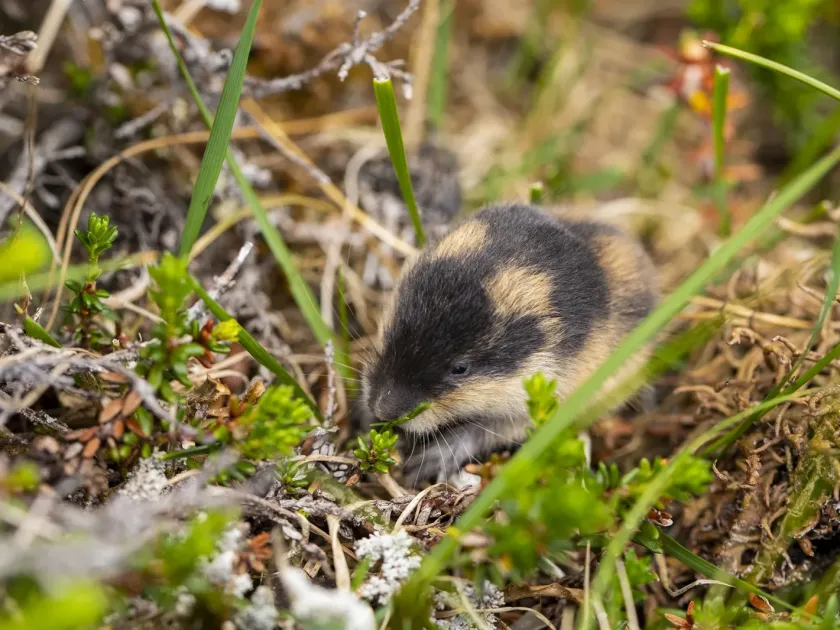
The Norwegian lemming (Lemmus lemmus) is a small rodent belonging to the Cricetidae family. It is characterized by its stocky build, short tail, and distinctive black, yellow, and brown patterned fur.
Adult individuals typically measure 10–15 cm in length and possess powerful claws, which allow them to burrow efficiently through frozen ground and dense snow layers.
Native to tundra and mountainous regions, this species is known for its dramatic population booms, which trigger mass migrations in search of new food sources.
The biological cycle of the lemming is defined by rapid reproductive rates, allowing populations to multiply exponentially within a single growing season.
Unlike many other rodents, lemmings remain active throughout the winter, establishing complex networks of subnivean tunnels and nests to survive cold conditions.
What it damages
While their primary diet consists of mosses and lichens, Norwegian lemmings pose a significant threat to agriculture when they migrate into cultivated lands.
These rodents cause extensive damage to cereal crops, vegetables, and young shrubs by consuming foliage, stems, and even the root systems of various plants.
In forest plantations and orchards, lemmings are known to strip the bark from young trees, which often leads to the death of the sapling due to blocked sap flow.
During peak years, large colonies can devastate pastureland and hay meadows, leaving the soil bare and hindering the recovery of grasses for the next season.
- Cereal grains
- Root vegetables
- Pasture grasses
- Young fruit and forest trees
When it appears
Lemmings are active year-round, but their economic impact fluctuates according to the cyclical population spikes that typically occur every three to five years.
The greatest agricultural damage is observed in early spring, immediately after the snow melts, revealing the destruction caused by their feeding during the winter.
Throughout the summer, the population grows steadily as they feed on lush vegetation, preparing for potential mass movements in the autumn months.
Winter remains a critical period for damage, as the rodents remain active under the snow, feeding on winter crops that are vulnerable due to dormant protection.
Monitoring the density of the lemming population is essential for farmers, as rapid escalation can lead to catastrophic crop losses if left unmanaged.
Signs of infestation
One of the most obvious signs of a lemming infestation is the presence of numerous tunnel openings in the soil and well-trodden paths through the vegetation.
Finding small, pellet-like droppings and chewed plant debris near the entrance of burrows strongly indicates that a colony is currently active in the area.
For orchards and timber, tooth marks on the base of trunks and stripped bark are clear evidence that these rodents have been active during the colder months.
Patches of barren land appearing in fields after the snow melts are a classic indicator of intensive lemming activity and local feeding pressure.
Increased sightings of local predators, such as birds of prey, can also serve as a biological indicator that a significant population of rodents is present.
Control measures
The most effective strategy to manage lemmings involves installing physical barriers, such as fine-mesh fencing, to prevent them from entering vulnerable fields.
Deep autumn plowing is a recommended agricultural practice, as it destroys the underground burrow systems and disrupts the rodents' nesting sites before winter.
The use of rodenticides should be considered a last resort and must be implemented with strict adherence to environmental regulations to protect non-target species.
Biological control methods, such as encouraging the presence of raptors (owls, hawks) and other natural predators, can help keep the population in check.
Maintaining clean fields by removing harvest residues and weeds minimizes available shelter and food, making the area less attractive to colonizing lemmings.
Taxonomy
- Latin name
- Lemmus lemmus
- Order
- Rodents
- Family
- Muridae
- EPPO code
- LEMMLE
Discussion
No discussions yet — be the first.