
Lemming
Lemmus
Description
How to identify
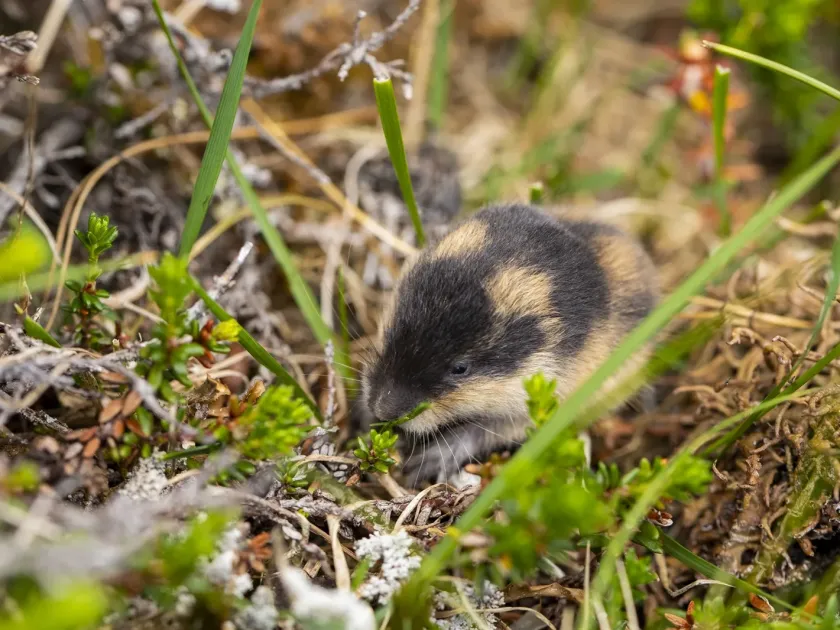
Lemmings (genus Lemmus) belong to the rodent order and the Cricetidae family. They are small, stout-bodied mammals with short limbs and a very short, often hidden tail.
They resemble voles but have thicker, shaggier fur that often conceals their ears. Their coat color ranges from brownish-gray to reddish, which provides excellent camouflage in northern environments.
Adult lemmings can grow up to 15 centimeters in length. Their dentition is highly adapted for gnawing and grinding tough plant fibers, which makes them prolific herbivores.
They are famous for their explosive population growth, which occurs periodically when environmental conditions are ideal, leading to sudden mass outbreaks.
Lemmings primarily live on the ground, creating intricate networks of tunnels under snow or dense vegetation, allowing them to remain undetected until they have caused significant damage.
What it damages
Lemmings are significant agricultural pests that consume large quantities of fodder crops, grains, and vegetables, particularly in northern climatic zones.
During peak population years, they can strip entire fields of vegetation, consuming stems, leaves, and crowns, which frequently leads to the total loss of the crop.
Winter crops are at high risk, as lemmings remain active throughout the winter months, feeding on plants protected under the snow cover without being seen by farmers.
These rodents also frequently damage the bark of young trees and shrubs by gnawing around the base, which can girdle the plant and cause it to die in the spring.
Beyond feeding, their burrowing activities physically disrupt the soil structure and damage root systems, further weakening plant health and reducing overall yields.
When it appears
Lemming activity peaks during the winter, when a stable snowpack creates a safe sub-nivean environment that protects them from predators and allows for continuous breeding.
Spring is the time when the extent of the damage becomes visible, as the melting snow reveals the stripped fields and the destruction caused to over-wintering crops.
During the summer, they shift their diet to fresh, succulent vegetation, which coincides with the rapid growth phase of various agricultural crops.
Autumn marks a period of intensified feeding as lemmings build fat reserves to prepare for the harsh winter, often leading to increased movement across fields.
The frequency and intensity of their appearance are cyclical, often following a 3-to-5-year pattern determined by weather conditions and available food resources.
Signs of infestation
The most prominent sign of a lemming infestation is the presence of distinct "runways" or trails in the grass or soil, especially noticeable immediately after the snow melts.
Large amounts of droppings near feeding sites and along travel routes indicate a high density of rodents actively using the area.
Damaged plants often appear as if they have been clipped off at the base, and close inspection will reveal clear marks from the rodents' sharp front teeth.
The appearance of multiple small burrow entrances, typically 3 to 5 centimeters in diameter, serves as a strong indicator of a permanent nesting colony.
Increased activity of birds of prey, such as owls or hawks, over a specific field often signals that lemmings have become abundant enough to attract predators.
Control measures
Deep plowing of the field is a primary mechanical control method, as it destroys tunnel networks and burrows, effectively forcing the rodents out of the area.
Rodenticides can be used as a targeted intervention during extreme outbreaks, provided that they are applied in strict accordance with environmental and safety regulations.
Maintaining clean fields by removing weeds and plant debris is an essential preventative measure, as it eliminates the cover lemmings require to thrive.
For smaller areas or valuable nursery stock, burying metal mesh fencing around the perimeter is highly effective in preventing rodent access.
Biological control can be supported by installing perches for predatory birds, which helps keep the local lemming population under natural pressure.
Taxonomy
- Latin name
- Lemmus
- Order
- Rodents
- Family
- Muridae
- EPPO code
- LEMMSP
Discussion
No discussions yet — be the first.