
Leguminivora pseudonectis
Leguminivora pseudonectis
Description
How to identify
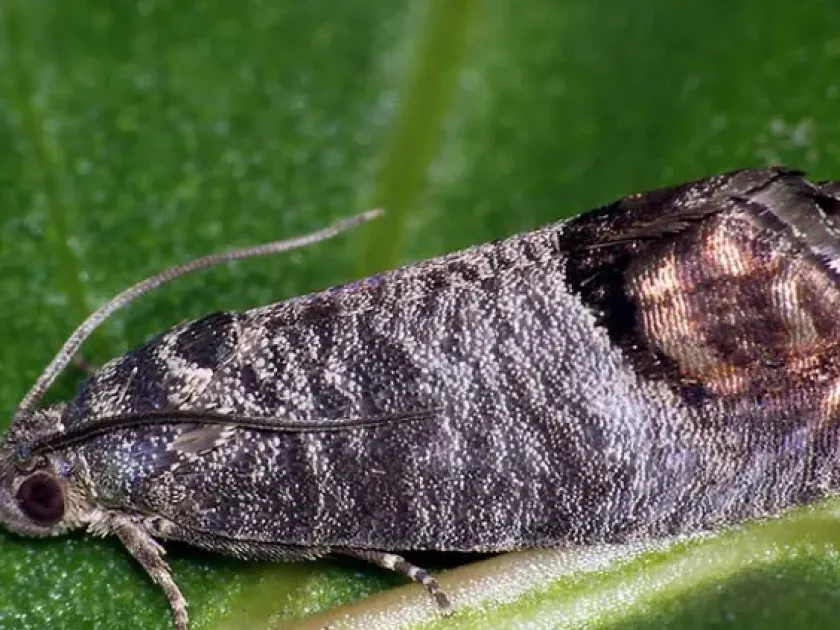
Leguminivora pseudonectis is a species of moth belonging to the order Lepidoptera and the family Tortricidae. The adult moth has a wingspan of approximately 12–15 mm.
The forewings are greyish-brown with a subtle metallic sheen and dark, thin streaks along the leading edge, providing camouflage against the plant canopy.
The larvae are typically 10–12 mm long, characterized by a pinkish or whitish body and a dark head capsule, which is a key diagnostic feature for field identification.
Pupation occurs within a tough, silken cocoon often located in the topsoil or under crop debris, allowing the insect to survive unfavorable environmental conditions.
Pheromone traps are essential for agricultural professionals to identify the presence and density of the moth population during the early stages of crop development.
What it damages
This pest is a specialist that primarily targets members of the Fabaceae family, causing significant economic damage to crops such as soybeans, peas, and various beans.
Larvae bore directly into the developing pods, feeding on the seeds, which results in weight loss, deformation, and a sharp decline in the overall quality of the harvest.
The feeding activity creates entry points for secondary pathogens, leading to pod rot and the potential for total loss of individual seed development within the pod.
Infested crops may show signs of premature yellowing and shriveling, as the damaged seeds fail to mature properly, affecting both the yield quantity and grain quality.
Under high pressure, this pest can cause substantial yield losses, sometimes exceeding 25-30% if no preventative or curative measures are implemented.
When it appears
The first generation of moths typically emerges during the budding and early flowering phases of the host legume crops, synchronizing with the availability of suitable pods.
Adult activity is highly temperature-dependent, with peak flight activity occurring during warm nights with temperatures consistently above 15°C.
The life cycle involves egg-laying on the surface of young pods, followed by a larval stage that typically lasts for two to three weeks inside the host plant tissue.
Depending on the climatic zone and seasonal heat, the pest may complete multiple generations, making it a persistent challenge throughout the entire growing season.
As temperatures drop, the larvae seek refuge in the soil, entering diapause to survive the winter months until the environmental conditions become favorable again.
Signs of infestation
The initial signs of infestation are small pin-prick entry holes on the surface of young pods, often accompanied by silk webbing or frass near the hole.
Upon opening a damaged pod, one will typically find the larva itself or evidence of internal feeding, including dark excrement mixed with consumed seed matter.
Premature leaf drop or yellowing of the pods can indicate a high density of larvae, as the plant's vascular integrity is compromised by the feeding activity.
During harvesting, mechanical damage to the seeds—such as broken or hollowed-out grains—is a clear indicator of a severe infestation that occurred earlier in the season.
Monitoring for webbed clusters of pods is another effective way to identify localized pest clusters before they spread across the entire field.
Control measures
Cultural control measures, such as deep plowing after harvest, are effective in destroying the overwintering pupae hidden in the soil profile.
Proper crop rotation and maintaining a significant distance from fields previously planted with legumes help to break the pest's cycle and reduce initial population pressure.
Chemical control must be timed precisely to coincide with the egg-laying period, as larvae are protected once they have successfully bored into the interior of the pods.
Biological control through the release of beneficial insects, such as Trichogramma wasps, is a viable strategy for reducing egg density without relying on synthetic chemicals.
Continuous monitoring using pheromone traps allows farmers to optimize the timing of insecticide applications, ensuring maximum efficacy and minimizing environmental impact.
Taxonomy
- Latin name
- Leguminivora pseudonectis
- Order
- Lepidoptera (butterflies)
- Family
- Tortricidae
- EPPO code
- LASPPS
Discussion
No discussions yet — be the first.