
Mesquite lecanodiaspid
Lecanodiaspis prosopidis
Description
How to identify
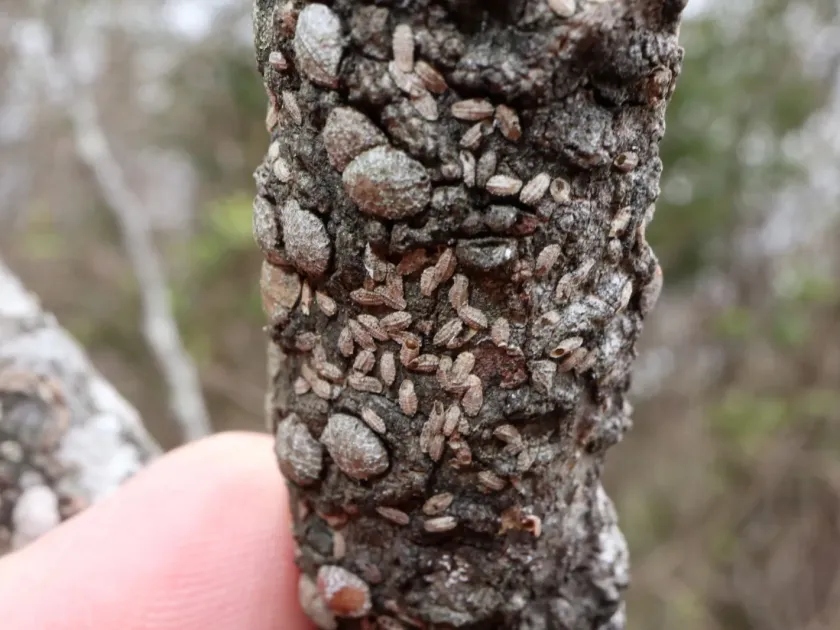
The mesquite lecanodiaspid (Lecanodiaspis prosopidis) is a species of scale insect belonging to the family Lecanodiaspididae, order Hemiptera. These insects are known for the protective, often wax-based test (shell) that females develop during their life cycle.
Adult females are sedentary and covered by a dense, hardened test, which serves as a protective barrier against environmental stressors and many chemical treatments. The color usually blends with the bark of the host tree, ranging from gray to brown.
The insect’s biology involves distinct stages: egg, crawlers (first-instar nymphs), nymphs, and adults. Only the crawler stage is mobile, allowing the pest to disperse to new parts of the tree or to nearby hosts via wind or contact.
Reproduction is typically sexual, though the fecundity of the population is highly dependent on environmental suitability and the health status of the host plant. The life cycle length can vary, potentially spanning one or more years depending on the local climate.
Precise identification of this species often requires microscopic examination of structural traits, such as the shape of the anal plates and the distribution of glandular pores, which are not easily discernible with the naked eye.
What it damages
The primary hosts of the mesquite lecanodiaspid are trees and shrubs within the genus Prosopis, though it can infest various woody plants in arid and semi-arid ecosystems. It most frequently colonizes trees already stressed by drought or poor nutrition.
These insects are phloem feeders, using their piercing-sucking mouthparts to extract sap from the bark of twigs and branches. This constant extraction depletes the plant's resources and disrupts vital physiological processes.
Mechanical damage from feeding can create entry points for secondary pathogens, including wood-decaying fungi and bacteria. This often results in localized bark necrosis and overall poor health of the tree's vascular system.
Heavy infestations lead to early leaf drop, reduced annual twig growth, and branch deformation. In severe cases, the cumulative stress can cause dieback of major scaffold branches or even mortality of the tree.
The economic impact of the pest is significant in landscapes and reforestation projects, as the aesthetic and structural integrity of affected trees can be permanently compromised by the scale colonies.
Signs of infestation
The first sign of an infestation is the appearance of small, rounded, or oval bumps on the bark that look like natural irregularities. Upon closer inspection, these are the waxy shells of the female scale insects.
Presence of honeydew, a sticky, sugary substance excreted by the scales while feeding, which often coats the branches and attracts ants. Ants may aggressively protect the scales, complicating natural biological control.
Development of sooty mold, a dark, powdery fungal growth that thrives on the honeydew deposits. The black residue is highly visible and serves as a reliable indicator of a significant scale insect population.
Yellowing, curling, or premature abscission of foliage that is not attributable to normal seasonal changes or drought. This suggests that the tree's vascular transport system has been impaired by the pest.
Dieback of branch tips and visible thinning of the canopy as the scale population restricts sap flow to the extremities, preventing the plant from maintaining its distal growth.
Control measures
Integrated pest management begins with cultural practices, including regular pruning and the removal of heavily infested wood, which helps to physically reduce the pest population density.
Biological control methods involve conserving local populations of natural enemies, such as lady beetles and parasitic wasps, which can significantly regulate scale numbers if not disrupted by chemical use.
Application of systemic insecticides that are translocated within the tree sap can be highly effective. Treatments are most impactful when timed to coincide with the emergence of vulnerable crawler stages.
Horticultural oils or dormant oils can be applied in early spring before bud break. These products work by forming a film over the scales, effectively suffocating the overwintering stages of the insect.
Ongoing monitoring of the canopy health during the growing season allows for early detection of hotspots, enabling targeted interventions before the scale insect spreads across the entire tree or to nearby plantings.
Taxonomy
- Latin name
- Lecanodiaspis prosopidis
- Order
- Hemiptera (bugs, aphids, leafhoppers)
- Family
- Lecanodiaspididae
- EPPO code
- LCADPR
Discussion
No discussions yet — be the first.