
Larinus ovalis
Larinus ovalis
Description
How to identify
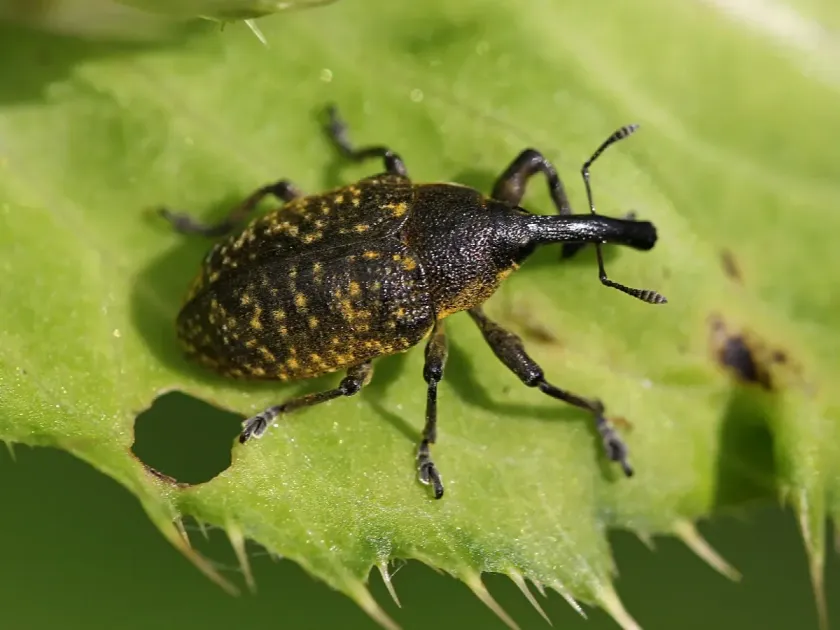
Larinus ovalis is a species of beetle belonging to the family Curculionidae (true weevils). Adult beetles typically have an oval-shaped body, measuring between 8 to 12 mm in length, which is characteristic of the genus Larinus.
The coloration of the adult is generally dark, ranging from black to dark brown. The body is covered with dense scales, which may give the beetle a grayish or yellowish appearance depending on environmental conditions.
The larvae are typical of the Curculionidae family, with a white or creamy, fleshy, and slightly curved body. They lack legs, as their primary habitat is the interior of flower heads, where movement is restricted to feeding tunnels.
Pupation occurs within the plant's flower head. The pupa is initially white and gradually darkens as the adult beetle matures. This process takes place inside a specialized pupal chamber constructed by the larva using plant debris and excrement.
Identification in the field is largely based on the host plants. These beetles are predominantly associated with Asteraceae plants, particularly thistles and related species, making them easy to spot during the flowering stage of the host.
What it damages
The primary damage is caused by the larvae, which live inside the flower heads (capitula) of host plants. By feeding on the developing seeds and floral tissues, the larvae can completely destroy the seed production of the infested plant.
Adult beetles also cause damage by feeding on young leaves, buds, and stems. In cases of high population density, this feeding can lead to significant defoliation, reducing the photosynthetic capacity of the plant.
The economic impact of Larinus ovalis is most severe in seed production fields. Infestation leads to a drastic reduction in seed yield and viability, rendering the crop unsuitable for harvest or sowing purposes.
Furthermore, larval feeding creates entry points for various secondary fungal pathogens. This results in the rot of the flower heads, especially under high humidity conditions, further exacerbating the loss of the yield.
While the aesthetic damage to wild plants is often ignored, in commercial cultivation of artichokes or medicinal plants of the Asteraceae family, the presence of these weevils necessitates active monitoring and management.
When it appears
Larinus ovalis follows an annual life cycle. Adult beetles overwinter in the soil or under plant debris, emerging in the spring when temperatures are favorable for both the insect and the growth of host plants.
The peak period for adult activity, including feeding and mating, occurs in late spring and early summer. During this time, females lay eggs directly into the developing buds or flower heads of the host species.
The larval stage coincides with the flowering and seed development period of the host plant. This synchronization ensures that the larvae have access to highly nutritious food sources necessary for their development.
Pupation is typically completed by the end of summer. The new generation of adults emerges after pupation, feeds for a short period, and then seeks overwintering sites in the soil or dense vegetation to survive the winter.
Winter survival is a crucial factor regulating the population size. Harsh, cold winters with little snow cover can cause high mortality among the overwintering adults, leading to a natural reduction in pest numbers the following year.
Signs of infestation
The earliest sign of an infestation is the presence of small, circular feeding holes in the leaves and buds, caused by the adult beetles feeding during the spring.
Upon closer inspection, signs of egg-laying can be observed on the flower heads, appearing as slight depressions or scars on the bracts. Internal inspection of the flower head often reveals the presence of larvae.
Stunted growth of flower heads, deformation, or premature wilting are clear indicators that larvae are actively feeding inside the reproductive parts of the plant.
The interior of a damaged flower head is often filled with a granular, sawdust-like mixture of larval excrement and partially consumed seeds, which is a definitive sign of an established infestation.
Empty, damaged seeds found after harvest, or prematurely opened flower heads with exit holes, confirm the successful completion of the larval development cycle and the emergence of adult weevils.
Control measures
Cultural control is the most effective management strategy. Deep autumn plowing of fields helps to destroy overwintering sites, significantly reducing the population of adult beetles that would otherwise emerge in the spring.
Managing the surrounding landscape is crucial; eliminating host weeds such as thistles around the crop area prevents the buildup of pest populations that could migrate to the commercial crop.
In high-value crops, chemical control should be timed to the bud-formation stage. Applying contact insecticides before the beetles begin laying eggs can protect the developing flower heads from larval damage.
- Rotate crops to break the life cycle.
- Implement mechanical removal of heavily infested plant material.
- Use yellow sticky traps for monitoring population density.
Taxonomy
- Latin name
- Larinus ovalis
- Order
- Coleoptera (beetles)
- Family
- Curculionidae
- EPPO code
- LARIOV
Discussion
No discussions yet — be the first.