
Thistle weevil
Larinus latissimus
Description
How to identify
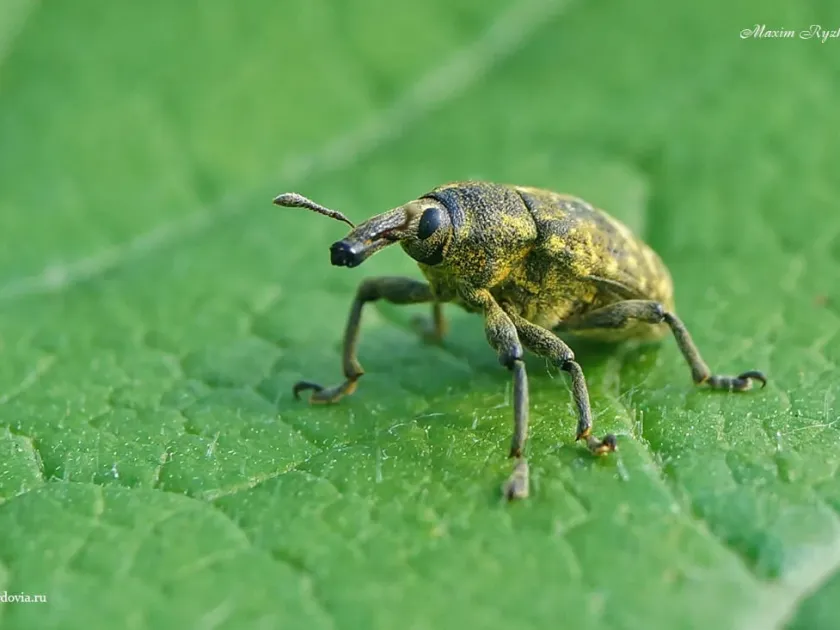
The thistle weevil (Larinus latissimus) is a beetle of the Curculionidae family. It is characterized by a robust, oval-shaped body that typically measures between 10 and 15 millimeters in length.
Its body is densely covered with fine hairs, which provide a grey or brownish camouflage. The snout, or rostrum, is strong and slightly curved, designed for feeding on plant tissues and reproductive organs.
The larvae of this species are legless and have a curved, fleshy, whitish body. They spend their entire developmental phase shielded within the flower heads of their host plants.
Pupation occurs within the same flower head where the larva fed. This internal development protects the insect from predators and many environmental stressors.
Identification in the field is most reliable when examining the flower heads of host plants like thistles during the blooming season, where adults can often be found feeding on pollen.
What it damages
The thistle weevil primarily targets Asteraceae plants, particularly thistles and related weeds. The larvae cause the most significant damage by consuming the receptacle and developing seeds.
Adult beetles feed on leaves and the floral parts of the plant, leaving behind small holes. While mostly a pest of weeds, they can occasionally affect nearby ornamental species if populations are high.
Destruction of the seeds within the flower head prevents the plant from reproducing naturally. This reduces the spread of the host plant but can be detrimental if the plants are intended for other uses.
Severely infested plants often show deformed or stunted flower heads that fail to open fully or wither prematurely due to the structural damage caused by the larvae.
The overall vigor of the host plant is reduced as the infestation diverts energy away from growth and toward attempting to cope with the damage inflicted by the insects.
When it appears
Adult weevils emerge from hibernation in late spring as temperatures rise, signaling the start of their active season and mating period.
The primary period of egg-laying coincides with the budding and flowering phase of host plants. Females deposit eggs directly into the flower heads to ensure food for the larvae.
Larval development takes place throughout the summer months. The entire cycle, from egg to adult beetle, is closely synchronized with the phenology of the host plant species.
New adults emerge towards the end of summer or early autumn. They engage in intensive feeding to build up reserves before entering winter diapause.
Overwintering occurs in sheltered locations, typically in the topsoil or under dense leaf litter, where they remain dormant until the following spring.
Signs of infestation
Obvious signs of infestation include withered, distorted, or prematurely brown flower heads that look stunted compared to healthy specimens.
Opening a flower head reveals chewed tissues, fecal pellets, and either the larvae or the chambers created by pupating beetles, which is a definitive diagnostic symptom.
On leaves, small, irregular "shot-holes" indicate adult feeding activity. Observing the beetles themselves during the day on the flowers is also a common sign of their presence.
A lack of seed production or the presence of empty seed husks within the flower head confirms that the weevils have been feeding on the plant's reproductive tissues.
- Chewed or distorted floral parts.
- Presence of larvae inside the flower head.
- Premature drying of flowers and lack of seeds.
Control measures
Mechanical control through the regular mowing of weeds before the seeds mature is highly effective in disrupting the life cycle of the thistle weevil.
Deep plowing in late autumn or early spring can expose hibernating adults to harsh conditions or physically crush them, significantly reducing the population for the next season.
Chemical control with insecticides is generally reserved for situations where the pest threatens ornamental or valuable crops, usually applied during the early adult activity phase.
Biological control methods, such as the use of natural predators or entomopathogenic fungi, can help manage populations in an environmentally friendly manner.
Field sanitation remains a key practice, as removing plant debris helps eliminate potential overwintering sites, making the area less attractive to the pest in the future.
Taxonomy
- Latin name
- Larinus latissimus
- Order
- Coleoptera (beetles)
- Family
- Curculionidae
- EPPO code
- LARILA
Discussion
No discussions yet — be the first.