
Larinus formosus
Larinus formosus
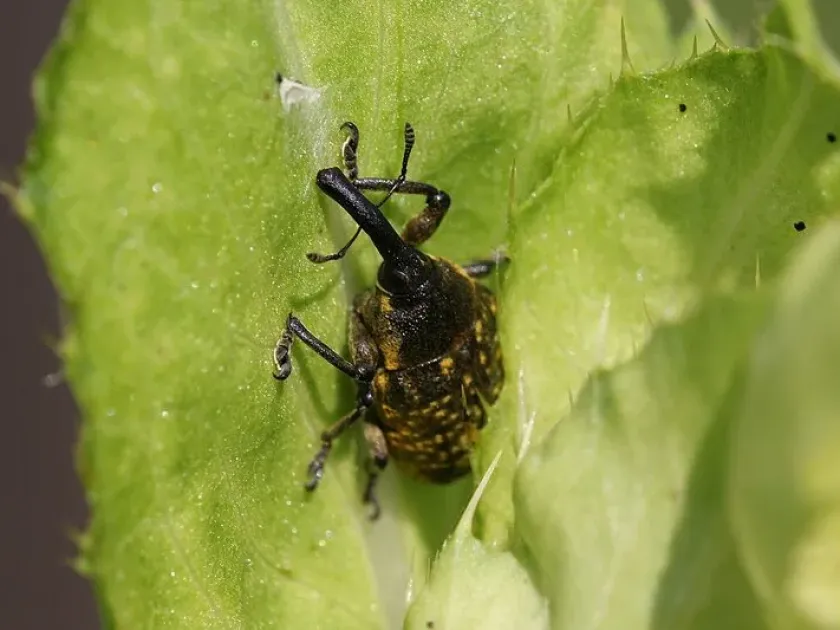
Description
How to identify
Larinus formosus belongs to the family Curculionidae (weevils), order Coleoptera. The adult insect is characterized by a distinct elongated rostrum, which it utilizes for feeding and oviposition.
The body of the beetle is covered with dense scales, typically exhibiting a gray to brown coloration with a mottled pattern. This serves as effective camouflage against the background of stems and foliage.
Larvae are legless, fleshy, and typically cream-colored with a well-developed head capsule. They occupy a cryptic niche, spending their development phase inside the internal tissues of their host plants.
The lifecycle involves complete metamorphosis through four stages: egg, larva, pupa, and adult. The insect typically completes one generation per year, with overwintering occurring in the soil or protected plant debris.
Taxonomic identification requires careful observation of the rostrum shape and the scale pattern on the pronotum, as this species shares morphological traits with other Larinus weevils.
What it damages
Larinus formosus primarily affects plants of the Asteraceae family. In agricultural contexts, it is a significant pest of sunflowers, attacking both wild varieties and commercial cultivars.
Adult beetles inflict damage by feeding on leaves and stems, creating holes that impair the epidermis. This disrupts the plant's physiological efficiency and reduces the total photosynthetic area.
The larvae are the most destructive stage, as they tunnel into the stem or flower heads. By feeding on the internal tissues, they compromise the vascular system, inhibiting the flow of nutrients and water.
Severe infestations often cause stem deformation, curling, and mechanical weakening. Such plants are highly susceptible to lodging, which significantly complicates harvesting operations.
Additionally, larval damage to the flower head results in poor seed filling and reduced yield, directly affecting the economic output of the field.
When it appears
Adult activity begins in late spring, triggered by rising temperatures. Insects emerge from their overwintering sites in the soil or plant debris to search for suitable host plants for feeding and mating.
The peak period of activity occurs in June and July, coinciding with the rapid vegetative growth and budding phases of the host crops, which provide optimal conditions for egg deposition.
Larval development proceeds throughout the summer months. During this stage, they remain concealed within the host plant, making them difficult to target with conventional control measures.
Pupation typically occurs towards the end of summer. Once transformed, the new generation of adults prepares to enter the overwintering phase, completing the annual lifecycle.
Understanding these seasonal patterns is essential for planning scouting operations and timing intervention strategies to catch the pest when it is most vulnerable on the plant surface.
Signs of infestation
The initial signs of infestation include small, circular feeding punctures on leaves and tender stems, which indicate the presence of adult beetles.
Observable wilting, chlorosis, or unexpected curvature of the stems serve as indicators that larvae are damaging the vascular system from within the plant.
Close inspection of the flower heads may reveal irregular tunnels or damaged receptacles, which often lead to premature browning of the floral parts.
- Feeding holes on foliage.
- Deformed or weakened stems.
- Frass buildup in larval galleries.
- Poor development of sunflower heads.
- Presence of beetles on the upper leaves during sunny days.
Field-wide signs include uneven crop height and patches of stunted growth, which often become more pronounced as the larval population develops.
Control measures
Effective management begins with strict crop rotation practices, which disrupt the pest's lifecycle and prevent the buildup of local populations over successive years.
Deep autumn plowing is a recommended cultural practice to destroy overwintering pupae and larvae located in the topsoil and buried crop residues.
Chemical control is effective only when timed with the adult activity phase, before egg-laying begins. Systemic or contact-stomach insecticides are generally applied during this window.
Regular scouting using sweep nets allows agronomists to determine the population density and trigger timely applications only when the economic threshold is exceeded.
Removing wild Asteraceae weeds from field margins and surrounding areas is crucial, as these plants serve as alternative hosts and reservoirs for the pest population.
Taxonomy
- Latin name
- Larinus formosus
- Order
- Coleoptera (beetles)
- Family
- Curculionidae
- EPPO code
- LARIFO
Discussion
No discussions yet — be the first.