
Larinus
Larinus
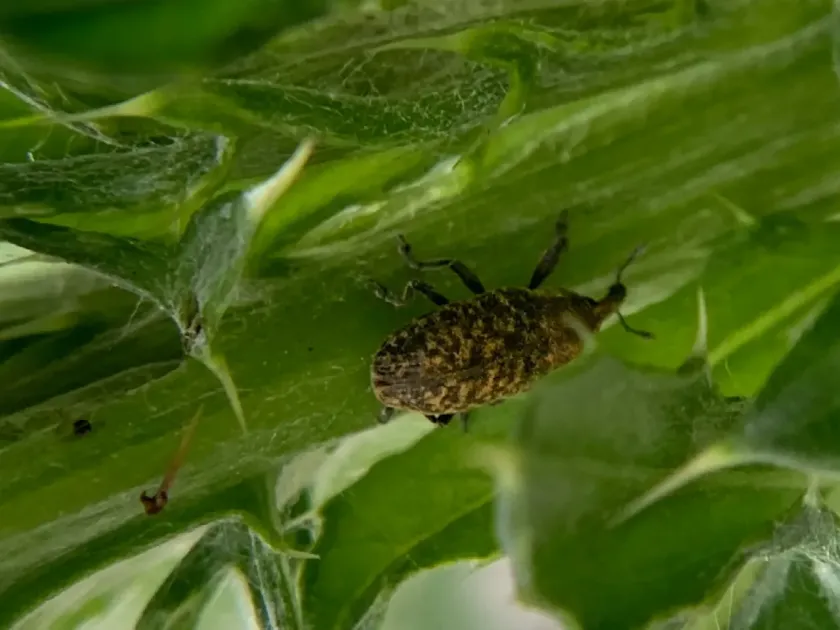
Description
How to identify
Larinus is a genus of weevils belonging to the Curculionidae family. These beetles are characterized by a robust, oval-shaped body, typically ranging from 5 to 15 mm in length. Their cuticle is often covered with dense hairs or scales, which provide both camouflage and physical protection against environmental stress.
The rostrum (snout) is strong and well-developed, allowing the adult beetle to penetrate plant tissues for feeding and egg-laying. The larvae are legless, C-shaped, and creamy-white, perfectly adapted to a life inside the flower heads of their host plants, where they feed on developing seeds.
The life cycle involves complete metamorphosis: egg, larva, pupa, and adult. Most species overwinter as adults in the soil or beneath plant debris, emerging in the spring once temperatures are favorable. This phenology is closely synchronized with the flowering time of their host plants.
Reproduction occurs during the budding and blooming stages. Females carefully select host plants, using their rostra to drill small holes in the buds to deposit eggs. This ensures that the newly hatched larvae have immediate access to highly nutritious plant tissues and developing seeds.
Field identification requires vigilance. Agronomists monitor host plants during the early flowering phase, looking for distinctive feeding scars on the buds. Because Larinus species are often host-specific, knowing the local flora is essential for early detection and mitigation.
What it damages
These weevils primarily target plants in the Asteraceae family, with sunflowers being a key economic host. Damage is caused by both adults, which feed on foliage and buds, and larvae, which consume the seed kernels and the receptacle, causing substantial yield loss.
When it appears
Adult activity typically begins in late spring, aligning with the rise in temperatures and the onset of the host plant's budding phase. The duration of the peak infestation season is highly dependent on local climatic conditions and the synchronization with host flowering.
Signs of infestation
Signs of infestation include visible punctures on the buds and flower heads. Internally, the destruction of the receptacle and the loss of seeds become apparent upon dissection. Secondary infections by pathogens often follow, further degrading the health and value of the crop.
Control measures
Effective management includes integrated pest control strategies. Cultural practices, such as removing weed hosts and deep plowing, reduce overwintering populations. Chemical control with appropriate insecticides is most effective when applied during the adult flight period, before egg-laying occurs.
Taxonomy
- Latin name
- Larinus
- Order
- Coleoptera (beetles)
- Family
- Curculionidae
- EPPO code
- LARISP
Discussion
No discussions yet — be the first.