

Description
How to identify
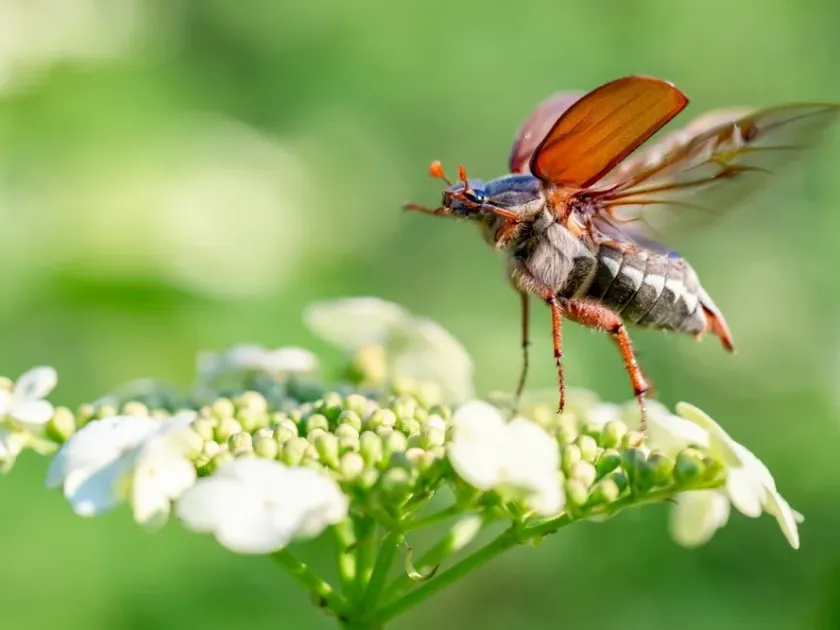
The May beetle, often referred to as the cockchafer, belongs to the family Scarabaeidae. It is a well-known pest whose larvae, commonly called white grubs, live underground.
Adult beetles are robust, measuring 25–30 mm in length, with a coloration ranging from chestnut brown to black, depending on the specific region and species.
The larvae are distinctively C-shaped, fleshy, white, with a brownish head and three pairs of legs. They possess strong mandibles capable of cutting through roots and organic material.
The lifecycle of the May beetle is relatively long, usually taking 3 to 5 years to complete depending on soil temperature and moisture conditions.
Adults emerge in spring, feed on foliage, and mate. Following this, females bury themselves in the soil to lay eggs, starting the cycle of the next generation.
What it damages
The larvae stage is responsible for significant economic damage, as they feed on the roots of a vast range of horticultural and field crops.
Young plants and nursery saplings are particularly vulnerable; a single grub can sever the primary root, causing the immediate collapse and death of the plant.
Field crops such as potatoes and root vegetables often suffer from deep gouges and excavations in the tubers, which severely reduce the marketable yield.
Adult beetles can cause defoliation by feeding on the leaves of fruit trees and ornamental shrubs, though this damage is usually less severe than that caused by larvae.
- Strawberries
- Potatoes and root crops
- Fruit tree saplings
- Turf and lawns
- Forest tree seedlings
When it appears
The emergence of adult beetles typically occurs in late spring, generally coinciding with the flowering of fruit trees and warming soil temperatures.
Adults are nocturnal; they spend the day hiding in the soil or in tree canopies, becoming active feeders and fliers once the sun sets.
Young larvae (first instar) feed mostly on decaying organic matter, while older instars move on to living roots as their energy requirements increase significantly.
Seasonal migration of larvae within the soil profile is common; they move deeper to avoid freezing temperatures in winter and return to the root zone in spring.
Damage is most intense during the warmer months when larval metabolic activity is at its peak and plants are actively developing their root systems.
Signs of infestation
A primary indicator of infestation is the sudden wilting or yellowing of plants that are otherwise receiving adequate water and nutrition.
Plants affected by root pruning are easily pulled from the soil, revealing a decimated root system with visible feeding signs from the grubs.
The presence of large, white, C-shaped grubs during tillage or garden bed preparation is a clear sign of a significant underlying population.
Root vegetables will show deep, irregular holes and tunnels, often accompanied by secondary rot or fungal infections entering through the feeding wounds.
Observing large flocks of birds, such as crows or starlings, digging in freshly turned soil often indicates they are feeding on larvae exposed by tillage.
Control measures
Cultural control involves thorough, deep cultivation of the soil, which helps to expose larvae to natural predators like birds and to harsh weather conditions.
Planting repellent crops such as mustard or lupine can discourage infestation as these plants produce compounds that larvae find unfavorable.
Biological control using entomopathogenic fungi or nematodes is a highly effective, eco-friendly method to reduce larval populations in the soil.
Chemical control includes the application of soil-applied granular insecticides during the planting of crops to ensure long-term root zone protection.
Light traps can be utilized during the peak flight of adult beetles to reduce their numbers, thereby minimizing the number of eggs laid in the area.
Content graph
Connections · May beetle
Most often together:
Marketplace
Products · 2

Community
Discussion
No discussions yet — be the first.