
Booklouse
Lachesilla pedicularia
Description
How to identify
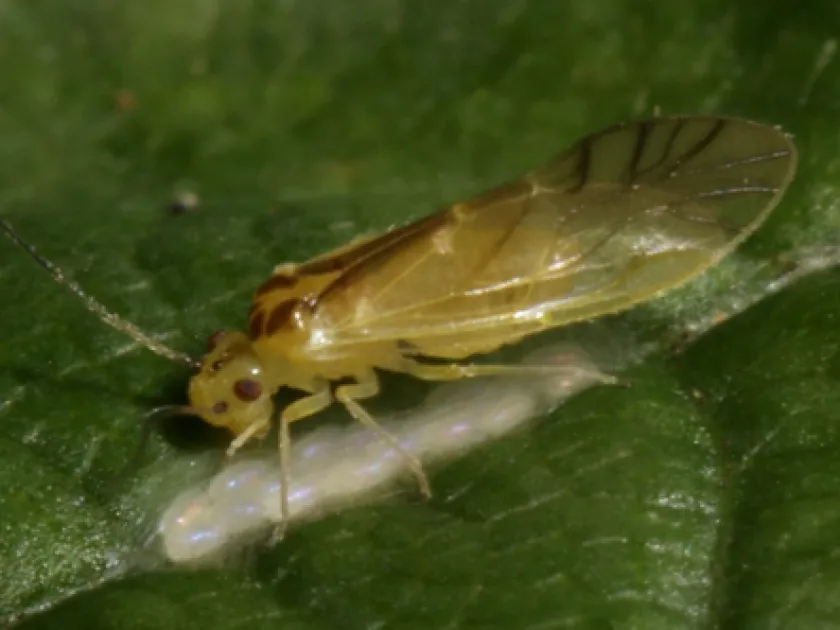
The booklouse (Lachesilla pedicularia) belongs to the order Psocoptera (barklice/booklice), family Lachesillidae. These are tiny insects, typically 1–2 mm in length, often appearing pale yellow or light brown.
Adults exhibit incomplete metamorphosis. Depending on the species and conditions, they may have vestigial wings or be wingless. Their bodies are soft, and they possess chewing mouthparts suitable for scraping mold and organic debris.
Their life cycle is highly sensitive to humidity and temperature. They thrive in environments where the relative humidity exceeds 60% and temperatures range from +20°C to +25°C, allowing for rapid population growth.
Booklice are cryptic by nature, preferring to hide in dark, damp crevices, under cardboard, in dust accumulations, or within the layers of stored grain bags where moisture creates a microhabitat.
Without sufficient humidity, their reproductive rate drops significantly, and they may dehydrate and die, making moisture control the primary factor limiting their survival in a storage setting.
What it damages
The booklouse is primarily a nuisance pest in grain storage, flour mills, and warehouses. Its presence is a strong indicator of dampness and improper sanitation, which threatens the safety of stored crops.
While they do not consume sound kernels of grain directly, they feed on the microscopic molds and fungi that grow on grain when moisture content is too high, thereby spreading fungal spores across the stock.
Heavy infestations can lead to significant contamination of grain products. Their shed skins and excrement degrade the quality of the raw material, potentially rendering it unfit for commercial use.
Beyond agricultural produce, they are known to damage paper products, including labels and warehouse documentation, by feeding on the starch-based glues and fungal growths present on paper surfaces.
In addition to physical damage, the presence of these insects can lead to increased heating within stored grain masses, as they contribute to a biological environment favorable for further spoilage.
Control measures
Management of the booklouse centers on sanitation and environmental control. Keeping warehouses dry is the most effective way to prevent and eliminate these pests from storage facilities.
Proper aeration of stored grain and maintaining a relative humidity below 60% effectively stops the life cycle of the booklouse, as they cannot survive or reproduce in dry conditions.
Regular sanitation programs are essential. Cleaning out dust, spilled grain, and debris from floors, conveyors, and corners removes the food sources and shelter that these insects depend upon.
For severe infestations, fumigation using approved pesticides for grain stores may be necessary, but this must always be combined with corrective actions on moisture management to prevent re-infestation.
Prevention involves inspecting all incoming materials for signs of dampness or existing pests and ensuring that storage buildings are well-maintained, dry, and properly sealed against external moisture.
Taxonomy
- Latin name
- Lachesilla pedicularia
- Family
- Lachesillidae
- EPPO code
- LACSPE
Discussion
No discussions yet — be the first.