
Lachesilla
Lachesilla
Description
How to identify
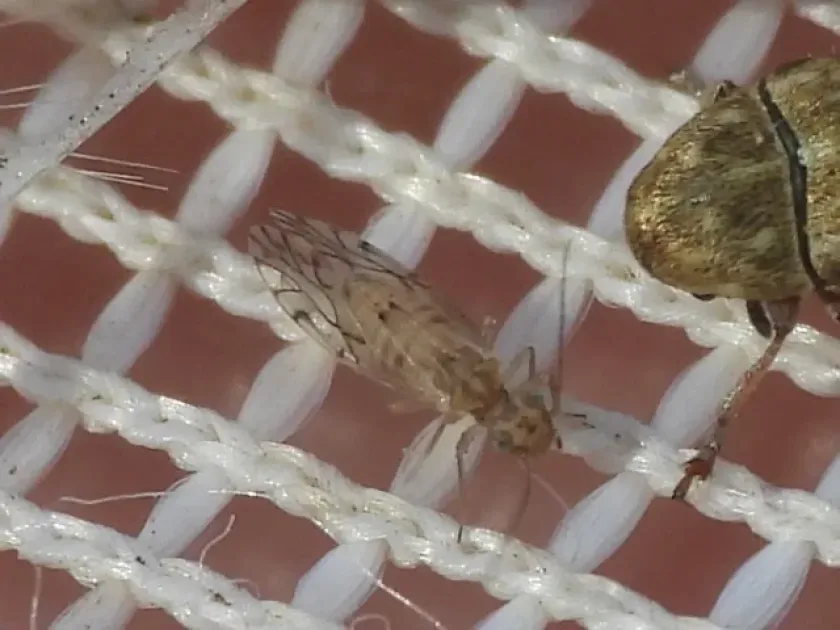
Lachesilla belongs to the order Psocoptera and the family Lachesillidae. These insects are small, typically ranging from 1 to 3 mm in length, with soft bodies and chewing mouthparts.
Adults are generally yellowish-brown or dark brown in color. Sexual dimorphism is common in many species, and they often possess transparent wings with a distinct venation pattern.
Their life cycle consists of the egg, nymph, and adult stages. Females lay eggs in concealed locations, often protecting them with a secretion that hardens into a protective cover.
The rate of development is heavily dependent on temperature and humidity levels. Under optimal conditions, the entire cycle from egg to adult can take just a few weeks, leading to rapid population growth.
Precise species identification often requires microscopic examination of the genitalia, as the external morphological features of many Lachesilla species are quite similar.
What it damages
Lachesilla are typical storage pests found in warehouses, grain elevators, and residential buildings. They feed on stored grains, cereals, flour, and processed grain products.
These insects are frequently associated with mold growth. They often feed on the microscopic fungi developing on damp plant materials, serving as indicators of poor storage conditions.
The economic damage is primarily caused by the contamination of products with insect parts and excreta, which reduces the quality and market value of the stored goods.
Although they are not typically primary pests capable of damaging sound grain, their mass presence creates conditions that promote grain heating and spoilage.
Beyond food products, they can damage heritage items such as books, paper, and dried herbarium specimens by consuming mold and the starch-based glues used in bindings.
When it appears
The activity of Lachesilla is directly linked to the microclimate of their environment. In heated warehouses, they can reproduce continuously throughout the year without entering diapause.
In uncontrolled environments, mass outbreaks are observed during the spring and summer months when ambient temperature and humidity increase to optimal levels.
Extreme temperature fluctuations or prolonged dry periods can slow down nymph development and significantly decrease population density in affected areas.
Infestation risk in storage facilities peaks after periods of high humidity or rainfall, which encourage the growth of the mold upon which these psocids feed.
Seasonality is also influenced by storage intake cycles, particularly if grain is received with excessive moisture or has not been properly cleaned of fine impurities.
Signs of infestation
The primary sign of an infestation is the presence of numerous small, rapidly moving insects on the surface of packaging, walls, or within the grain mass.
Specific signs include the accumulation of fine excreta and discarded nymphal skins (exuviae) on surfaces, indicating an active feeding population.
A musty odor in grain stores is a classic indicator, as Lachesilla often congregate in areas where mold has begun to develop due to high moisture.
- Visible mold on grain products.
- Damaged or breached packaging.
- Rapid insect movement upon inspection.
When infestation is suspected, screening grain samples using fine-mesh sieves is an effective way to detect these pests, as they often hide in cracks and crevices.
Control measures
The cornerstone of Lachesilla control is maintaining strict storage hygiene; keeping grain moisture levels below 12-14% prevents population development.
Regular sanitation of storage facilities is crucial. Removing spilled grain, dust, and debris eliminates the food sources required for psocid survival.
Before new grain is stored, facilities should undergo thorough disinfestation, including the use of approved insecticides or professional fumigation services.
Installing effective ventilation systems helps manage humidity levels and prevents the development of mold, which is the main attractant for these insects.
In household settings, control involves discarding infested food, drying out damp areas, and disinfecting surfaces to eliminate eggs and nymphs.
Taxonomy
- Latin name
- Lachesilla
- Family
- Lachesillidae
- EPPO code
- LACSSP
Discussion
No discussions yet — be the first.