
Labidostomis taxicornis
Labidostomis taxicornis
Description
How to identify
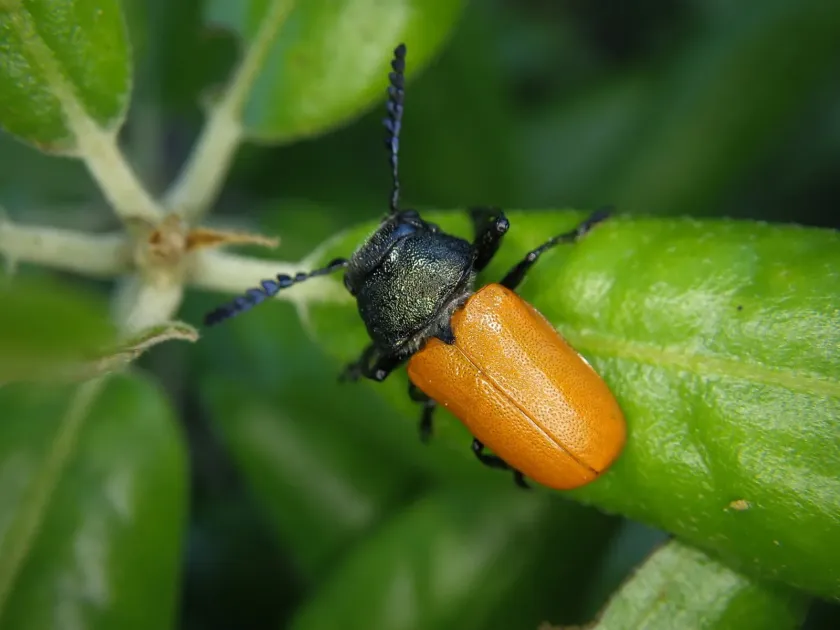
Labidostomis taxicornis is a species of leaf beetle belonging to the family Chrysomelidae within the order Coleoptera. Adult beetles are characterized by a medium-sized, elongated body.
The coloration of adults varies, typically displaying shades of brown or dark yellowish tones, sometimes with a metallic sheen, aiding in their camouflage within the canopy.
The life cycle of this insect involves complete metamorphosis: egg, larva, pupa, and adult. Hibernation occurs primarily in the soil or under debris in the adult stage.
Emergence from hibernation sites happens during the warming of spring days, after which the adults begin intensive feeding on the young foliage of host plants.
The larvae are known for their concealed lifestyle, often constructing protective cases from excrement, which provides them with high resistance to environmental factors.
What it damages
The primary damage is caused by adults, which act as active phytophages, feeding on the foliage, buds, and young stems of various plant species throughout the growing season.
The beetle hosts a wide range of plants, including vineyards, fruit trees, and various deciduous forest species, making it a generalist pest in certain agro-ecosystems.
Significant economic losses occur when beetles skeletonize leaves, which disrupts the plant's photosynthetic process and weakens the tree's overall vigor.
Young shoots are particularly vulnerable, as feeding can lead to severe deformation, stunted growth, and in some cases, the total loss of the annual growth increment.
The pest's ability to migrate from wild forest fringes to cultivated fields makes it a persistent challenge for orchard management in many regions.
Signs of infestation
The most distinctive symptom of infestation is the appearance of irregular, semi-circular feeding holes or ragged edges on the leaves, typical of leaf beetle damage.
Heavy infestations result in complete leaf skeletonization, leaving only the primary veins, which makes the plant look unhealthy and susceptible to secondary stressors.
During morning hours, the adult beetles can often be observed on the underside of leaves, where they tend to aggregate while feeding.
The presence of small, dark fecal pellets on the leaf surface is a reliable indicator that an active population is currently feeding on the plant tissue.
- Characteristic notched leaf edges.
- Presence of adult beetles on the canopy.
- Rapid browning of affected leaf tissues.
- Growth retardation in young trees and vineyards.
Control measures
Managing Labidostomis taxicornis requires a multifaceted approach, combining cultural practices with targeted chemical interventions when population thresholds are exceeded.
Deep cultivation of soil in the late autumn is recommended, as it disrupts the overwintering sites of the beetles and significantly reduces the spring emergence population.
If chemical control is necessary, applications should be timed during the early stages of infestation to protect the most sensitive parts of the plants.
Maintaining high hygiene standards in the orchard, including the removal of weeds that serve as alternative hosts, helps limit the pest's spread.
Continuous monitoring using traps or visual inspection is essential to ensure that control measures are implemented at the most effective stage of the beetle's life cycle.
Taxonomy
- Latin name
- Labidostomis taxicornis
- Order
- Coleoptera (beetles)
- Family
- Chrysomelidae
- EPPO code
- LABDTA
Discussion
No discussions yet — be the first.