
Ivy bark beetle
Kissophagus hederae
Description
How to identify
The ivy bark beetle (Kissophagus hederae) is a small wood-boring insect belonging to the Curculionidae family and the Scolytinae subfamily.
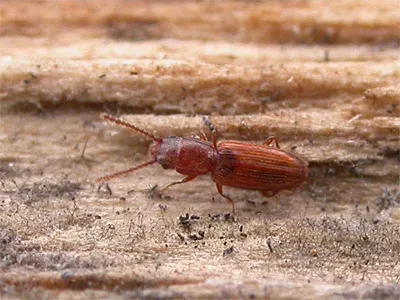
The adult beetle is very small, usually reaching 2–3 mm in length, and is characterized by a dark brown cylindrical body typical of its group.
The larvae are white, legless, and possess a robust head capable of chewing through the woody tissues of the host plant's stems.
Identifying this pest often involves looking for tiny, circular entry holes in the bark of ivy stems, which are often accompanied by fine frass.
These insects are elusive, often remaining hidden within the stems, which makes early detection difficult without a careful inspection of the plants.
What it damages
As the name suggests, the primary host plant for this beetle is the common ivy (Hedera helix), a popular ornamental climber.
The beetles bore into the stems, constructing tunnels that disrupt the plant's vascular system, hindering the transport of water and nutrients.
This physical damage weakens the structural integrity of the stems, making them prone to snapping and leading to the eventual death of affected parts.
Infested areas are often susceptible to secondary fungal infections, which exacerbate the damage caused by the beetles themselves.
In cases of severe infestation, the cumulative damage can lead to the decline and mortality of large sections of the ivy plant.
When it appears
The activity of Kissophagus hederae is closely tied to seasonal temperature shifts, with activity beginning when spring warmth sets in.
Adult beetles typically emerge to mate and seek new stems for egg-laying during the late spring and throughout the summer months.
During the summer, development from egg to larva and eventual adult beetle occurs, following a life cycle that depends on available resources.
As autumn temperatures decline, the insects seek shelter within the stems of the host plant to overwinter until the following season.
In warmer climates, these beetles can exhibit continuous or overlapping generations, making ongoing vigilance necessary for gardeners.
Signs of infestation
Early symptoms include localized yellowing of leaves or the wilting of specific ivy shoots, which may occur even if the plant is well-watered.
Closer observation reveals the presence of tiny entrance holes on the stem surface, sometimes surrounded by fine sawdust-like excrement.
The bark of the affected stem may appear slightly discolored, sunken, or show signs of cracking due to the galleries formed underneath.
If a stem is cut open, one can observe the characteristic labyrinthine galleries that demonstrate the extent of the larval feeding activity.
In advanced stages of infestation, large portions of the ivy curtain may turn brown and die back, clearly indicating significant vascular failure.
Control measures
The most effective management strategy involves proactive maintenance and the prompt removal of all stems showing signs of infestation.
Removing and burning infested plant material is crucial to prevent the spread of the beetles to healthy parts of the garden.
Systemic insecticides applied during the peak flight season can be effective, as they are absorbed by the plant and target larvae feeding inside.
Ensuring the plant is healthy through proper fertilization and watering helps increase its natural resistance to beetle attacks.
- Regular inspection of ivy stems for entry holes or wilting.
- Prompt pruning and disposal of infested stem sections.
- Application of systemic insecticides during active flight periods.
- Improving plant vigor through consistent irrigation and organic fertilizers.
Taxonomy
- Latin name
- Kissophagus hederae
- Order
- Coleoptera (beetles)
- Family
- Curculionidae
- EPPO code
- KISSHE
Discussion
No discussions yet — be the first.